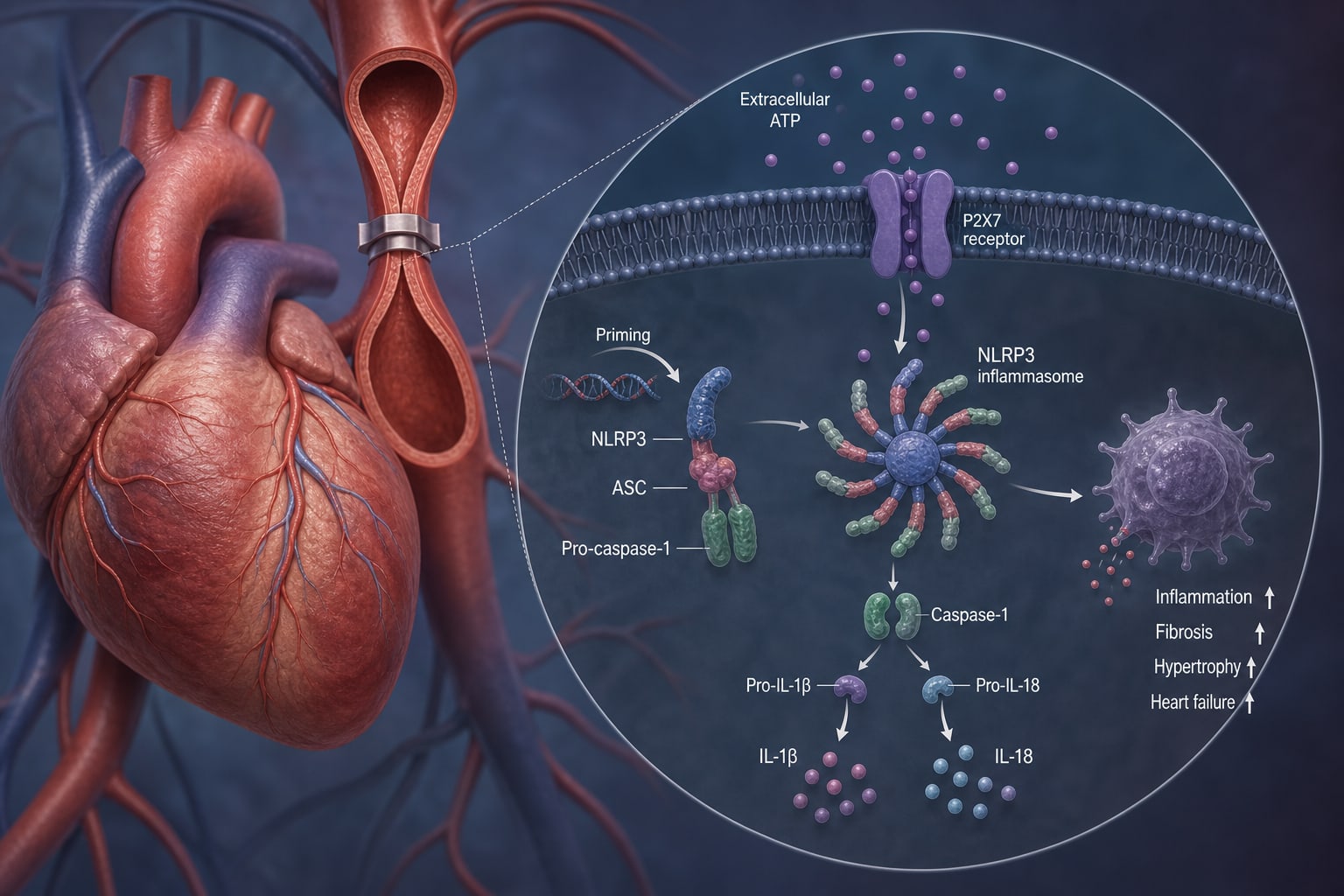
Clinical Report: The Impact of the NLRP3 Inflammasome on Chronic Heart Failure
Overview
This study investigates the role of the extracellular ATP–P2X7–NLRP3 inflammasome axis in chronic heart failure (CHF) due to hypertension.
Background
Chronic heart failure (CHF) is a significant health concern, particularly in patients with hypertension, where pressure overload leads to myocardial damage and inflammation. Understanding the mechanisms linking hypertension to CHF progression is crucial.
Data Highlights
Parameter
Findings
Extracellular ATP–P2X7 signaling
Amplified during pressure overload
NLRP3 inflammasome activation
Progressively activated across disease stages
Cardiac function
Declined with pressure overload
Pharmacologic disruption
Improved cardiac structure and function
Key Findings
Pressure overload leads to stage-dependent activation of the NLRP3 inflammasome.
Macrophage accumulation and fibrosis worsen with NLRP3 activation.
Disruption of the ATP–P2X7–NLRP3 axis reduces inflammation and remodeling.
Pharmacologic and genetic interventions improve cardiac outcomes in CHF models.
Extracellular ATP signaling is a critical upstream driver of NLRP3 activation.
Clinical Implications
Understanding the inflammatory mechanisms involved in CHF may help refine treatment approaches.
Conclusion
Further research is warranted to explore the clinical applications of the ATP–P2X7–NLRP3 inflammasome pathway in chronic heart failure associated with hypertension.