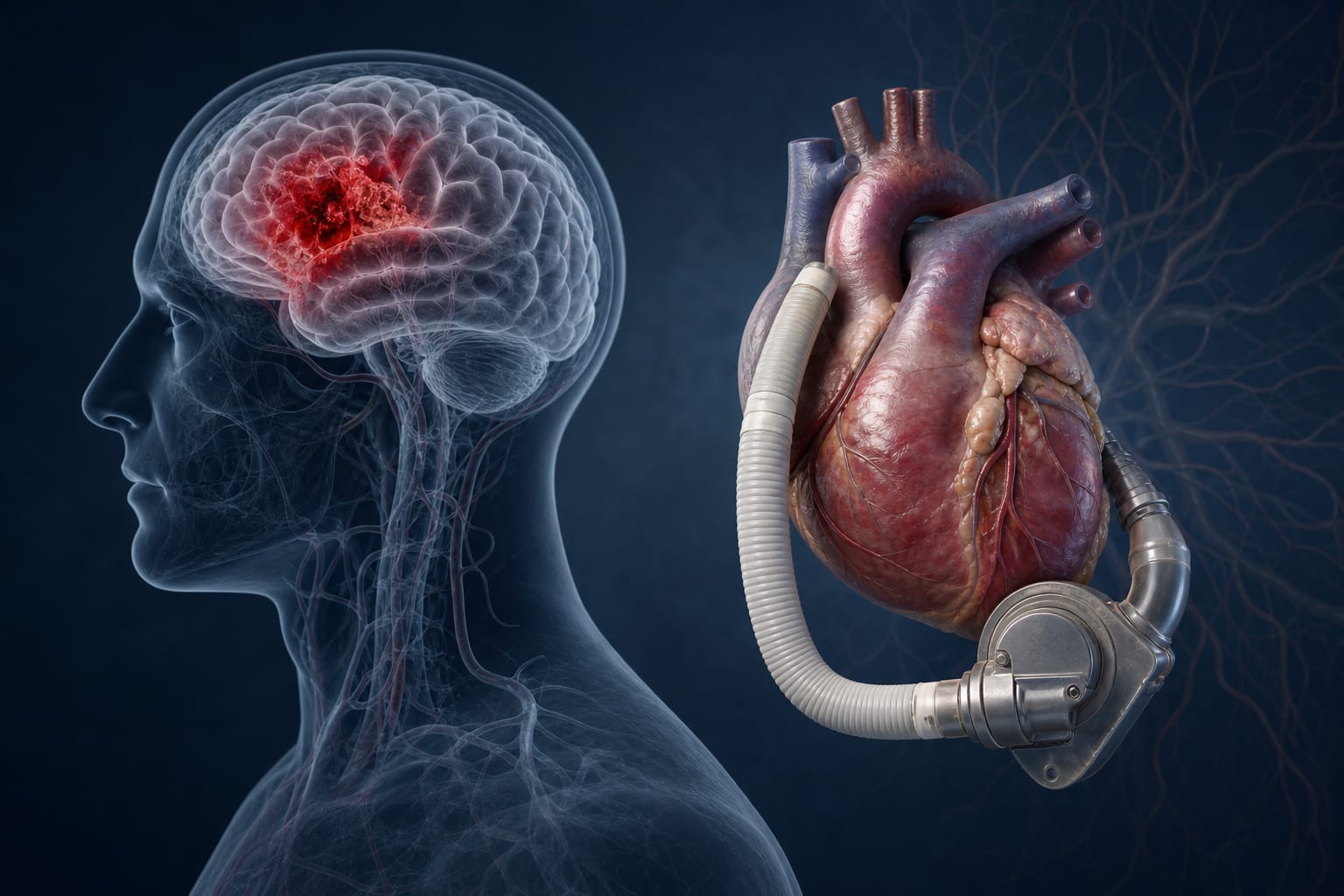
Clinical Report: Incidence of Macrovascular Events in Patients with ICD-Diagnosed Neuromyelitis Optica in Taiwan
Overview
This study investigates the risk of cardiovascular and cerebrovascular diseases in patients with ICD-defined Neuromyelitis Optica (NMO) compared to matched controls in Taiwan.
Background
Neuromyelitis optica spectrum disorder (NMOSD) is an autoimmune condition that primarily affects the optic nerves and spinal cord, leading to severe neurological symptoms. Previous studies have suggested an association between NMO and increased risks of cardiovascular and cerebrovascular diseases, but comprehensive population-based data are limited.
Data Highlights
Outcome
Adjusted Hazard Ratio (aHR)
95% Confidence Interval (CI)
CVD
1.40
1.11–1.77
CBD
3.37
2.69–4.22
Key Findings
Patients with NMO have a higher risk of cardiovascular disease (CVD) with an aHR of 1.40.
The risk of cerebrovascular disease (CBD) in NMO patients is significantly elevated, with an aHR of 3.37.
Significant associations were found between NMO and ischemic stroke, hemorrhagic stroke, and transient ischemic attack.
No significant association was observed between NMO and acute myocardial infarction, atrial fibrillation, coronary artery disease, or heart failure.
This study utilized a large, population-based dataset from Taiwan's National Health Insurance Research Database.
Clinical Implications
Healthcare providers should be aware of the increased risk of cerebrovascular events in patients with NMO.
Conclusion
The study identifies an association between NMO and an increased risk of cerebrovascular disease, while certain cardiovascular diseases do not show a similar risk elevation.