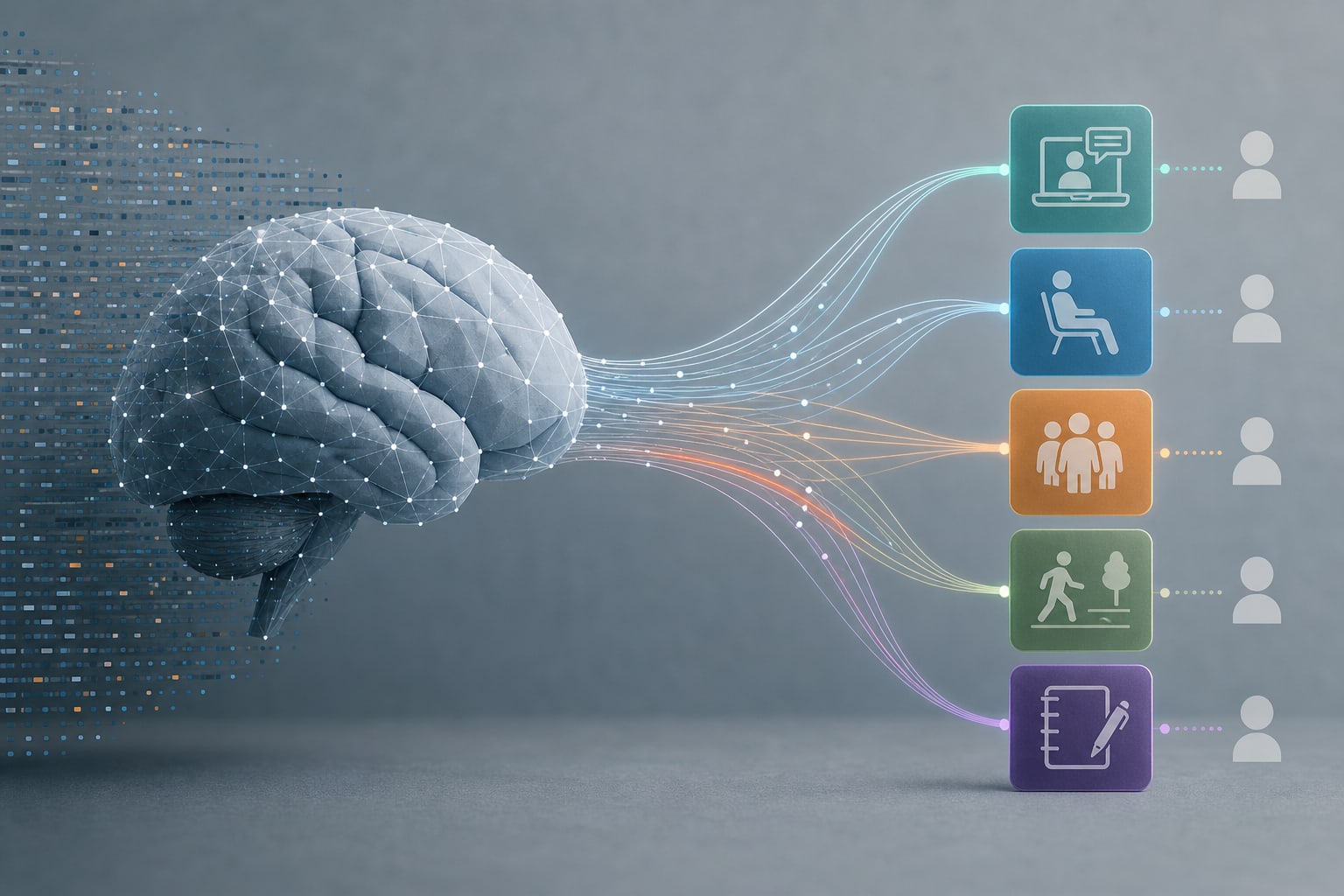
Do Machine Learning Models Have the Ability to Identify Effective Treatments for Specific Patients?
-
By
-
Nili Solomonov
-
Michael R. Gallagher
-
August 28, 2026
Clinical Report: Do Machine Learning Models Identify Effective Treatments?
Overview
Machine learning models analyze extensive patient data in mental health care. However, current models face challenges in accurately identifying which patients would benefit most from specific treatments, as demonstrated in recent studies.
Background
The integration of artificial intelligence in mental health care aims to address significant challenges, including unmet needs and practitioner shortages. Machine learning models can analyze large datasets to inform treatment decisions, but their effectiveness depends on the quality and representativeness of the training data used.
Data Highlights
Recent studies indicate that machine learning models can analyze patient demographics, treatment history, and symptom severity to predict treatment outcomes. However, the lack of diverse and representative training datasets limits the models' predictive accuracy.
Key Findings
Machine learning models can analyze extensive patient data to inform treatment recommendations.
Schefft et al. developed a model to determine the suitability of internet-based cognitive behavioral therapy (iCBT) for patients with depression.
The model could rank patients by anticipated benefit but failed to identify individuals who would not require iCBT.
Providing iCBT selectively to predicted high-benefit patients resulted in poorer outcomes than offering it to all patients.
Reliable prediction models require heterogeneous and representative training samples to be clinically useful.
Only one of five validation datasets showed promising predictive performance for distinguishing benefit levels from iCBT.
Clinical Implications
Accurate treatment assignment in mental health care relies on understanding patient heterogeneity and ensuring diverse training datasets.
Conclusion
Challenges remain in model accuracy and data representativeness in machine learning for treatment assignment in mental health.
Related Resources & Content
Schefft et al., 2024 -- Do Machine Learning Models Have the Ability to Identify Effective Treatments for Specific Patients?
the asco post — Effectiveness of Multimodal Machine-Learning Model in Predicting Response to Treatment in Breast Cancer Subtype
the asco post — AI Model May Help Predict Treatment Responses, Select Most Effective Cancer Therapies in Patients With Cancer
Basic Research in Cardiology — A Cardiologist's Perspective on Utilizing Machine Learning for Predicting Outcomes in Cardiovascular Disease
DIGITAL HEALTH — Predicting cancer treatment outcomes using machine learning enabled clinical decision support systems
Effectiveness of Multimodal Machine-Learning Model in Predicting Response to Treatment in Breast Cancer Subtype
AI Model May Help Predict Treatment Responses, Select Most Effective Cancer Therapies in Patients With Cancer
A Cardiologist's Perspective on Utilizing Machine Learning for Predicting Outcomes in Cardiovascular Disease
Overview | Depression in adults: treatment and management | Guidance | NICE
VA/DoD Clinical Practice Guidelines - VA/DOD Clinical Practice Guidelines
Resource Document on Artificial Intelligence in Psychiatric Care
Ethics and governance of artificial intelligence for health: large multi-modal models. WHO guidance
Machine learning in the prediction of treatment response for emotional disorders: A systematic review and meta-analysis - ScienceDirect
Predicting depression treatment outcomes for cognitive behavioural therapy using machine learning: A systematic review and meta-analysis - ScienceDirect
https://www.psychiatrist.com/wp-content/uploads/2025/07/artificial-intelligence-depression-medication-enhancement-AID-ME-cluster-randomized-trial-clinical-decision-support-system-personalized-depression-treatment-selection-management-24m15634.pdf
Based on findings from:
Can Machine Learning Models Tell Us What Treatment Works for Whom?
Nili Solomonov, Michael R. Gallagher. Jama Network Open, 2026.
https://jamanetwork.com/journals/jamanetworkopen/fullarticle/2853383
This content is an AI-generated, fully rewritten summary based on a published scholarly article. It does not reproduce the original text and is not a substitute for the original publication. Readers are encouraged to consult the source for full context, data, and methodology.