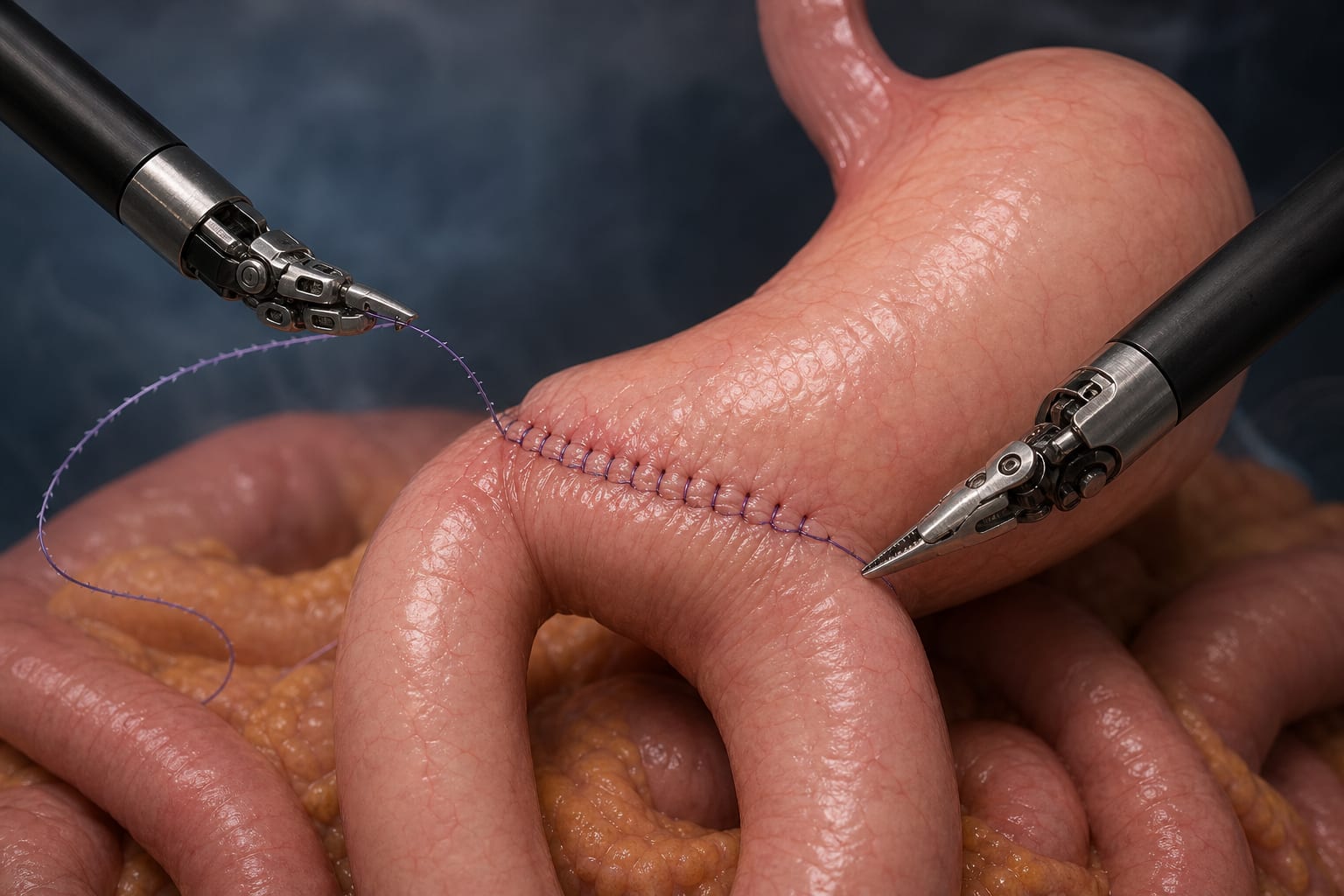
Evaluation of Deep Neuromuscular Blockade During Laparoscopic OAGB Surgery
Overview
This randomized controlled study evaluates the effects of deep versus moderate neuromuscular blockade (NMB) during laparoscopic one-anastomosis gastric bypass (OAGB).
Background
Bariatric surgery is crucial for achieving significant weight loss and improving obesity-related comorbidities. The laparoscopic approach is integral to enhanced recovery after surgery (ERAS) protocols, yet challenges such as abdominal muscle contractions can hinder surgical visibility.
Data Highlights
No numerical data provided in the source material.
Key Findings
Deep NMB was associated with improved surgical workspace quality compared to moderate NMB.
Intraoperative evaluation utilized the five-point Leiden Surgical Rating Scale (LSRS).
Deep NMB was associated with better lung mechanics during surgery.
Postoperative complications, including atelectasis, were assessed using objective imaging methods.
All procedures were performed by a single experienced surgeon to maintain consistency.
Clinical Implications
The study presents findings on deep NMB in laparoscopic bariatric procedures, focusing on surgical conditions and respiratory complications.
Conclusion
Further investigation is warranted regarding the role of deep neuromuscular blockade during laparoscopic OAGB surgery.