Ultrasound-guided stellate ganglion acupuncture for chronic insomnia disorder using fNIRS: study protocol for a randomized controlled trial - Report - MDSpire

Ultrasound-guided stellate ganglion acupuncture for chronic insomnia disorder using fNIRS: study protocol for a randomized controlled trial

  • By

  • Jiaqi Zhang

  • Jiacheng Song

  • Jun Hu

  • Wentao Zhang

  • Yongjie Feng

  • Wanqi Ding

  • Caixia Xu

  • Hao Liu

  • June 29, 2026

  • 0 min

Share

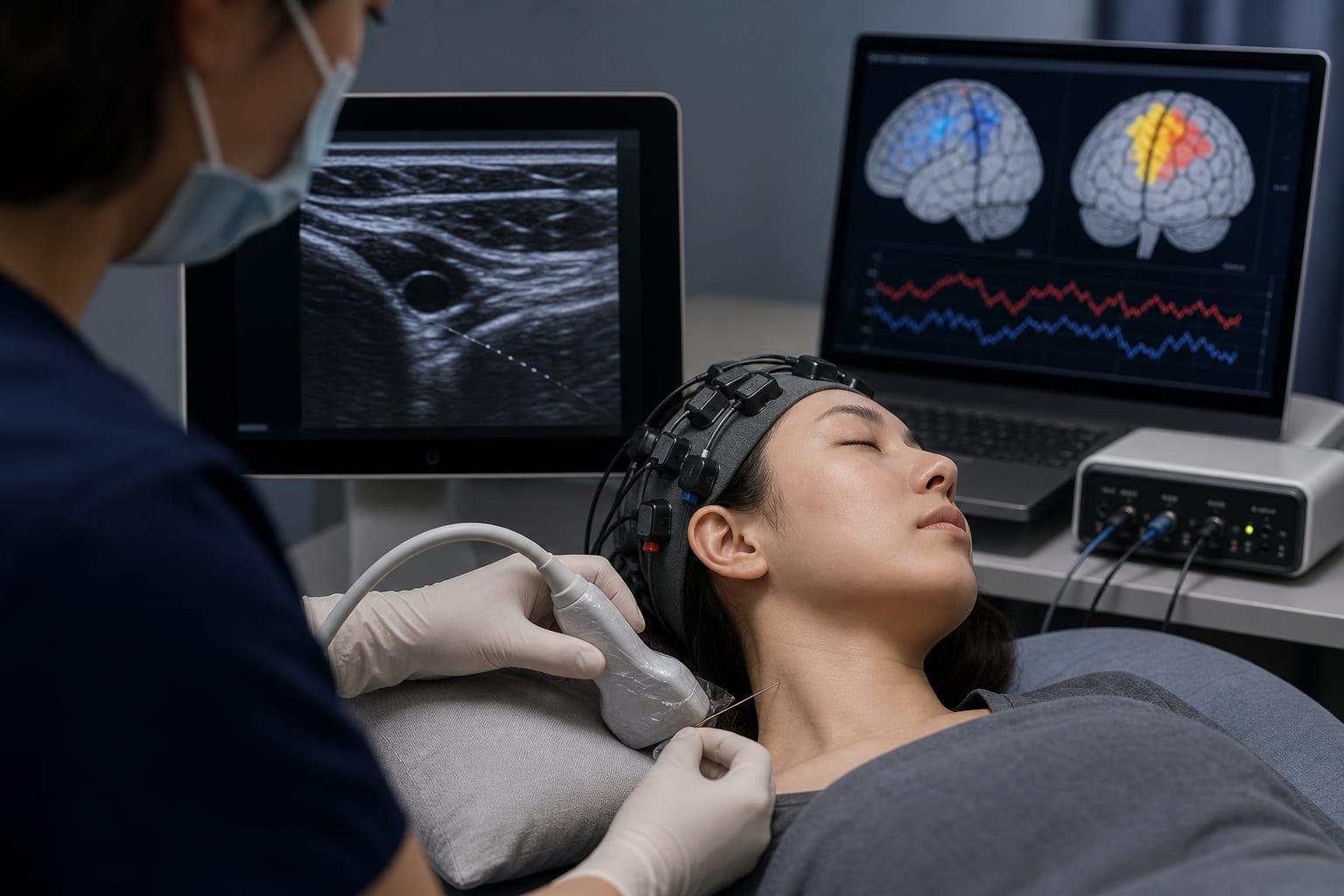
Protocol for a Randomized Controlled Trial on Ultrasound-Guided Stellate Ganglion Acupuncture for Chronic Insomnia Disorder Utilizing fNIRS

Background

Chronic insomnia disorder (CID) affects 10-15% of adults globally and is associated with significant impairments in quality of life and daytime functioning. Current treatments, including cognitive behavioral therapy and pharmacotherapy, have limitations that may affect patient adherence.

Data Highlights

This trial will enroll 80 patients with CID, randomized into treatment and control groups, with outcomes assessed at baseline, week 4, and week 8.

Key Findings

  • The trial will compare ultrasound-guided stellate ganglion acupuncture plus conventional acupuncture against conventional acupuncture alone.
  • Primary outcomes include the Insomnia Severity Index (ISI) and fNIRS data of brain function.
  • Secondary outcomes will assess sleep quality and anxiety using the Pittsburgh Sleep Quality Index (PSQI) and Hamilton Anxiety Rating Scale (HAMA).
  • The study aims to explore treatment-related changes in brain function alongside clinical scales.

Clinical Implications

The findings from this trial may provide objective evidence for the efficacy of acupuncture-based treatments for CID. Understanding the neurofunctional mechanisms involved could enhance treatment strategies for insomnia.

Conclusion

This trial aims to clarify the potential benefits of combining ultrasound-guided stellate ganglion acupuncture with conventional acupuncture for patients with chronic insomnia disorder.
Related Resources & Content

  1. Frontiers in Psychiatry, 2026 -- Wearable low-level laser therapy versus manual acupuncture for chronic insomnia: protocol for a randomized, assessor-blinded, superiority trial
  2. BMC Psychiatry, 2025 -- Individualized Transcranial Direct Current Stimulation Guided by Models for Insomnia Disorder Treatment: A Protocol for a Double-Blind, Randomized, Sham-Controlled Trial
  3. BMC Psychiatry, 2025 -- Forecasting therapeutic outcomes of transcutaneous auricular vagus nerve stimulation in individuals with insomnia: analysis of resting-state functional connectivity through multivoxel pattern techniques
  4. Frontiers in Psychiatry, 2026 -- Effects of bifrontal-transcranial direct current stimulation combined with music listening on sleep quality, cortical activation and functional connectivity in patients with insomnia: a randomized controlled trial by fNIRS
  5. AASM -- New guideline supports behavioral, psychological treatments for insomnia
  6. VA/DoD -- 2025 Guideline for Insomnia
  7. New guideline supports behavioral, psychological treatments for insomnia - AASM
  8. https://www.healthquality.va.gov/HEALTHQUALITY/guidelines/CD/insomnia/I-OSA-CPG_2025-Guideline_final_20250915.pdf
  9. Safety and efficacy of daridorexant in patients with insomnia disorder: results from two multicentre, randomised, double-blind, placebo-controlled, phase 3 trials - ScienceDirect
  10. Acupuncture for chronic insomnia disorder: a systematic review with meta-analysis and trial sequential analysis - PMC
  11. Efficacy and safety of stellate ganglion block with different volumes of ropivacaine to improve sleep quality in patients with insomnia: a comparative study

Original Source(s)

Related Content