Dendritic cells in cancer immunotherapy: functional barriers, reprogramming strategies and translational challenges - Report - MDSpire

Dendritic cells in cancer immunotherapy: functional barriers, reprogramming strategies and translational challenges

  • By

  • Ningping Xiao

  • Chao Chen

  • Xiuyu Yang

  • Jiajia Hao

  • Mian Xie

  • Jiangtao Wang

  • Jiayu Xiang

  • Chang Liu

  • Xiulin Jiang

  • Siwei Huang

  • Zijia Wang

  • Yi Jin

  • July 3, 2026

  • 0 min

Share

Clinical Report: Dendritic Cells in Cancer Immunotherapy: Overcoming Limitations

Overview

Dendritic cells (DCs) are crucial for effective cancer immunotherapy, yet their function is often impaired in the tumor microenvironment. This report discusses various therapeutic strategies aimed at enhancing DC activity and the challenges faced in clinical translation.

Background

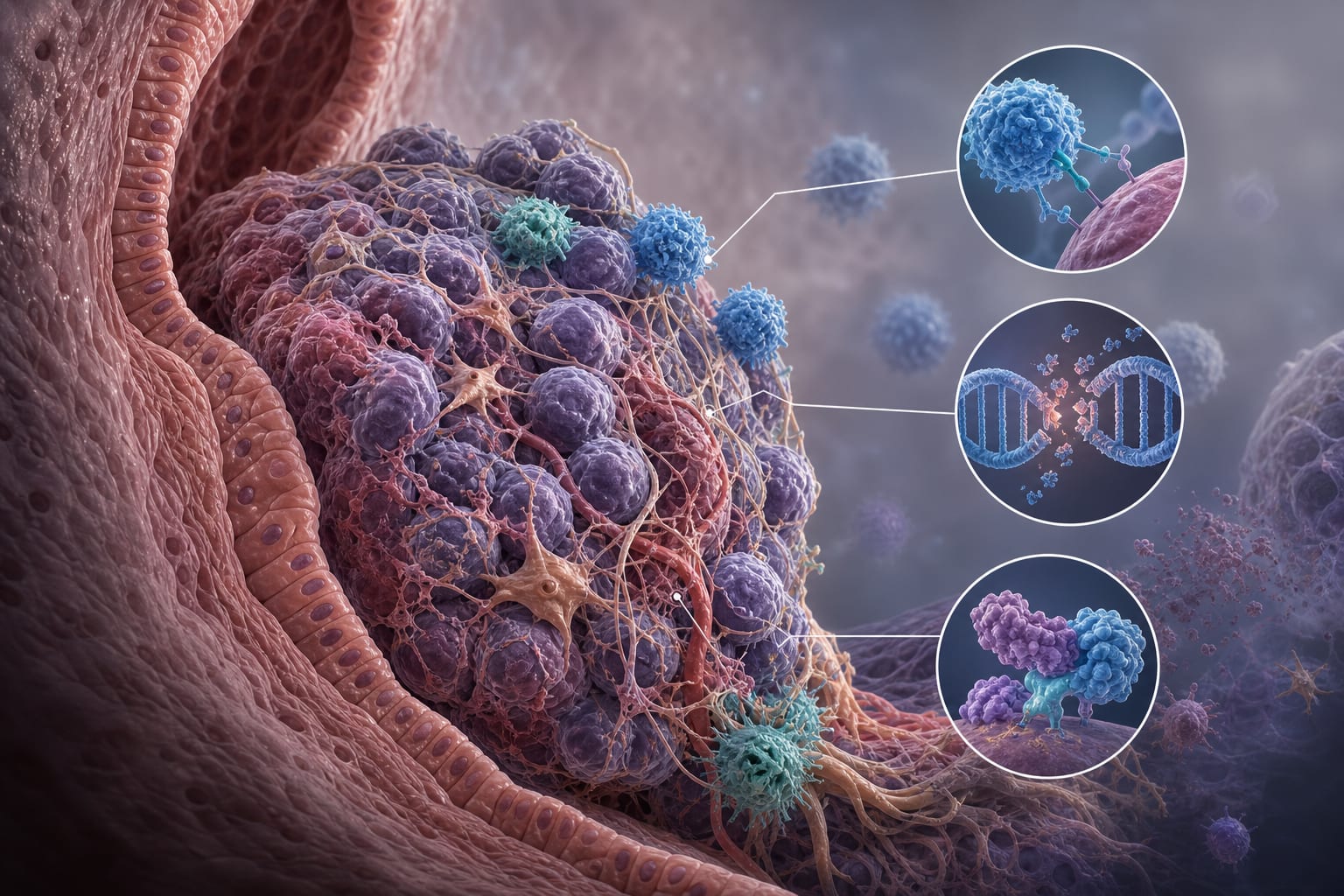
Dendritic cells are the most potent antigen-presenting cells and play a vital role in initiating and regulating antitumor immune responses. Their ability to capture and present tumor antigens is essential for T cell activation. However, the tumor microenvironment often hampers their function, leading to ineffective immune responses.

Data Highlights

No numerical data provided in the source material.

Key Findings

  • APCs, particularly dendritic cells, are essential for effective antigen presentation and T cell activation.
  • Impairments in DC function within the tumor microenvironment contribute to immune escape.
  • Current therapeutic strategies include DC vaccines, nanoparticle-based antigen delivery, and mRNA vaccine platforms.
  • Functional reprogramming approaches aim to restore DC activity through various mechanisms.
  • Clinical translation of these strategies is limited by factors such as tumor antigen heterogeneity.

Clinical Implications

Understanding the mechanisms of dendritic cell dysfunction can inform the development of immunotherapies.

Conclusion

Dendritic cells play a pivotal role in cancer immunotherapy, and overcoming their functional limitations is crucial.

Related Resources & Content

  1. Frontiers in Immunology, 2026 -- Editorial: A new perspective on the importance of dendritic cells in cancer immunity: from bench to patient’s bedside
  2. The ASCO Post, 2014 -- Vaccine Targeting Tumor Antigen to Dendritic Cell Receptors Induces Antigen-Specific Immunity
  3. The ASCO Post, 2024 -- Improving Hepatocellular Carcinoma Outcomes Through Enhanced Immunotherapy
  4. PROVENGE (sipuleucel-T) | FDA -- FDA information on sipuleucel-T
  5. JAMA Oncology -- Association of DCVax-L With Extension of Survival Among Patients With Glioblastoma
  6. Frontiers, 2026 -- Reprogramming dendritic cells to overcome tumor-mediated immune suppression
  7. roswell park comprehensive cancer center — Strategy for Overcoming Resistance to Immunotherapy Unleashes Power of Dendritic Cells
  8. PROVENGE (sipuleucel-T) | FDA
  9. Association of DCVax-L With Extension of Survival Among Patients With Glioblastoma
  10. Frontiers | Reprogramming dendritic cells to overcome tumor-mediated immune suppression

Original Source(s)

Related Content