Clinical application of diffusion tensor tractography in classification of pediatric optic chiasmatic gliomas: a retrospective cohort study - Report - MDSpire
Advertisement
Clinical application of diffusion tensor tractography in classification of pediatric optic chiasmatic gliomas: a retrospective cohort study
Clinical Report: Utilization of Diffusion Tensor Tractography for Classifying Pediatric Optic Chiasmatic Gliomas
Overview
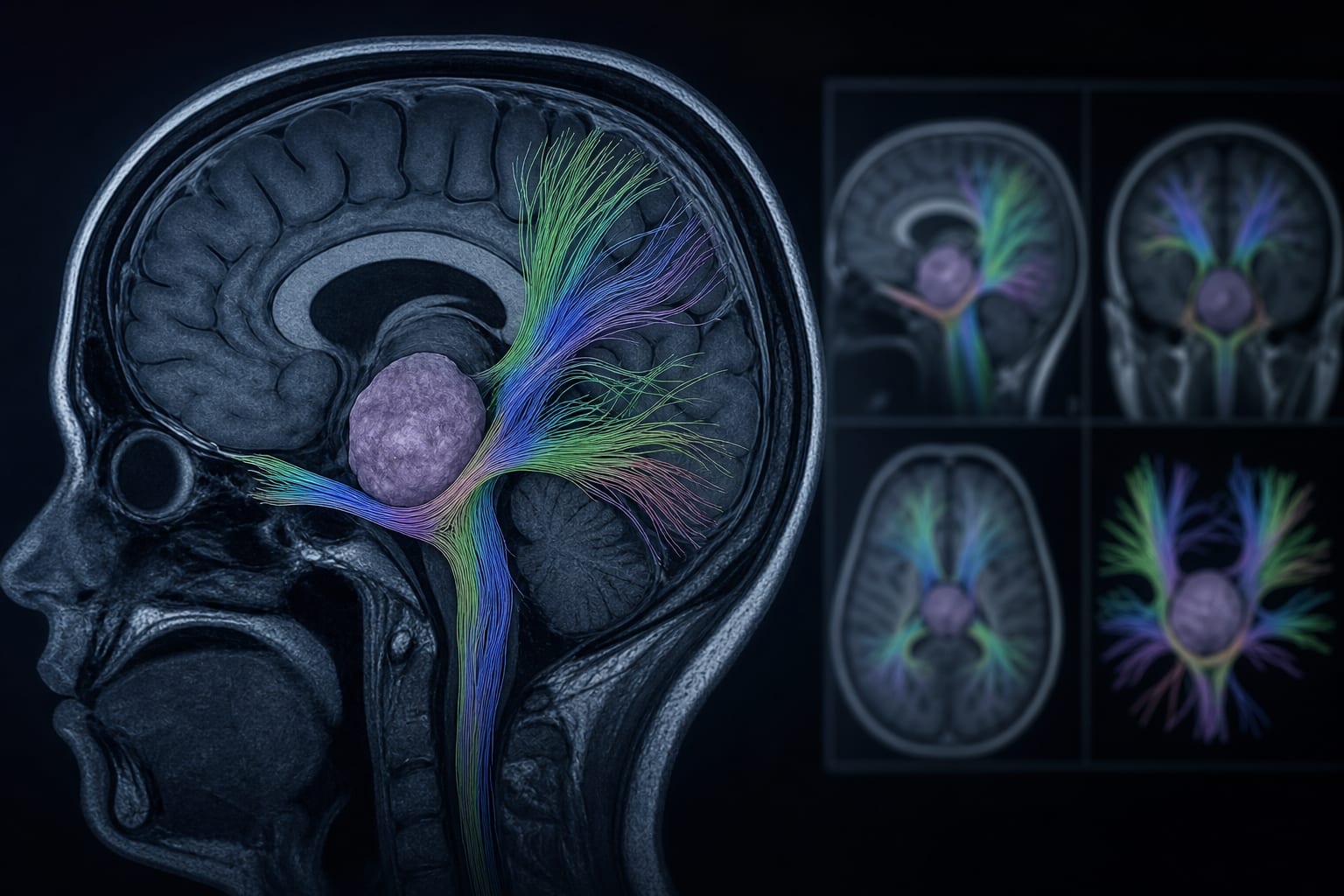
This study evaluates the predictive value of diffusion tensor tractography (DTT) classification in pediatric optic chiasmatic gliomas (OCGs) and identifies prognostic factors affecting patient outcomes. The findings suggest that DTT effectively classifies tumor types and that adjuvant chemotherapy significantly improves overall survival and event-free survival.
Background
Optic pathway gliomas are a significant subset of pediatric brain tumors, often leading to visual impairment and other neurological complications. Accurate classification and treatment strategies are crucial for optimizing patient outcomes. The introduction of diffusion tensor tractography (DTT) offers a novel approach to better visualize tumor characteristics and guide clinical management.
Data Highlights
Parameter
Finding
Proportion of males in inflating exogenous type
10%
Median body weight of inflating endophytic type
9.5 kg (range 4.2–25.4 kg)
Protective effect of postoperative chemotherapy on OS
p = 0.032
Protective effect of postoperative chemotherapy on EFS
p = 0.017
Key Findings
The inflating endophytic type is associated with a higher incidence of diencephalic syndrome.
Body weight at surgery differs among tumor types, with the inflating endophytic type having lower weights.
The DTT classification provides a more intuitive understanding of tumor anatomy compared to traditional classifications.
Male patients are less represented in the inflating exogenous type.
Clinical Implications
The DTT classification can enhance preoperative planning and surgical guidance for pediatric OCGs. Clinicians should consider the type of glioma when determining treatment strategies, particularly the role of adjuvant chemotherapy in improving long-term outcomes.
Conclusion
DTT-based classification is a valuable tool in managing pediatric optic chiasmatic gliomas, with significant implications for treatment and prognosis. Further research is warranted to optimize therapeutic approaches based on tumor characteristics.