The Missing Step in Fall Prevention: Why Recommendations Fail in Practice - Report - MDSpire

The Missing Step in Fall Prevention: Why Recommendations Fail in Practice

  • By

  • Taisuke Kodama

  • Daiki Kobayashi

  • Gautam A. Deshpande

  • Osamu Takahashi

  • June 24, 2026

  • 0 min

Share

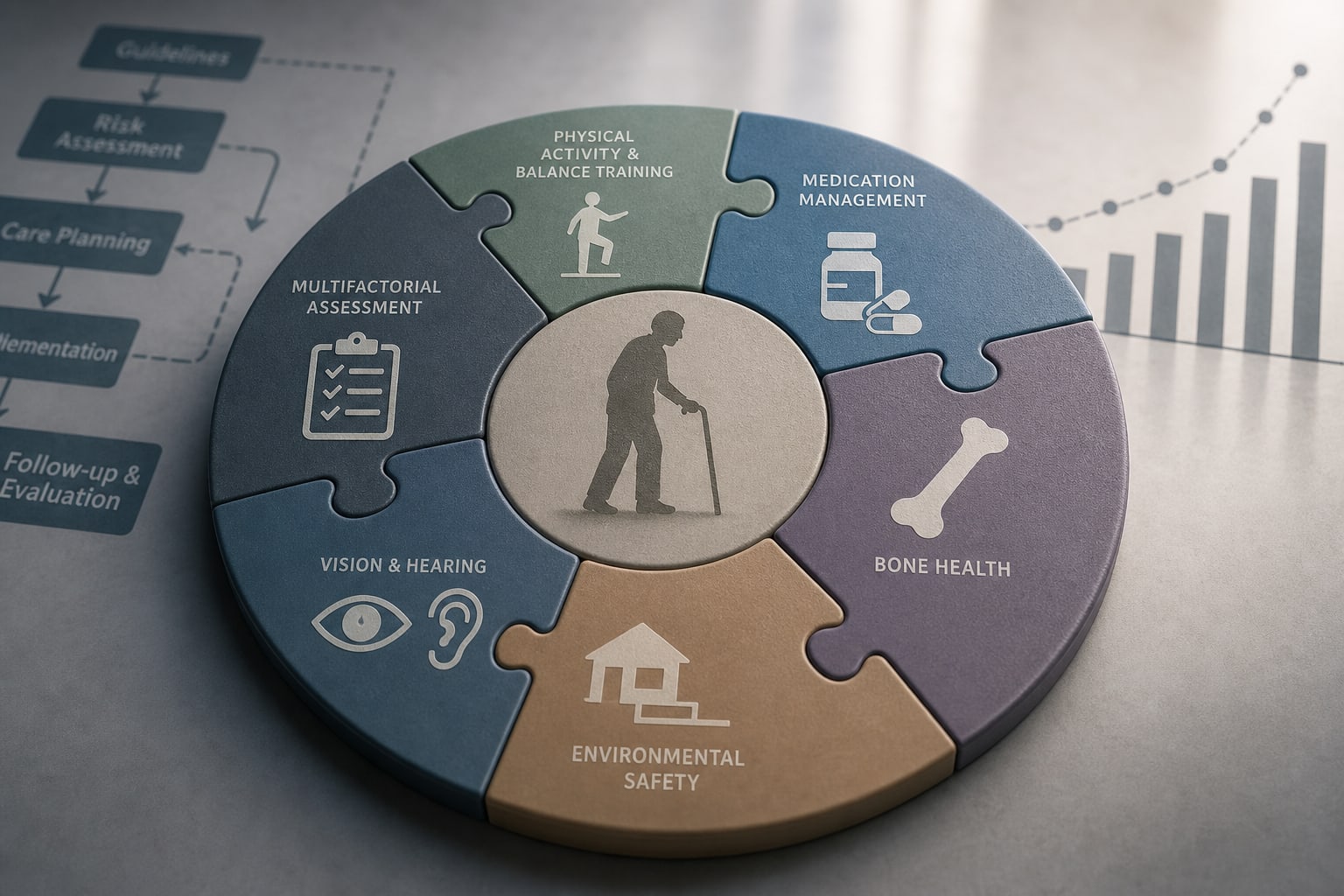
Clinical Report: Addressing Gaps in Fall Prevention

Overview

Falls are a significant health threat for older adults, with increasing incidence and mortality rates. A recent study evaluated a fall prevention clinic's effectiveness, revealing that only 40% of recommendations were implemented within a year (Lee et al., 2023).

Background

Falls are a leading cause of mobility limitations and disability-adjusted life years (DALYs) among older adults, with over 200 million incident cases globally in 2021 (source needed). Despite advancements in fall prevention strategies, gaps remain in the implementation of evidence-based recommendations, particularly in high-income countries. Understanding these gaps is crucial for improving care delivery and reducing fall-related morbidity and mortality.

Data Highlights

Recommendation TypeImplementation Rate
Physical Therapy46–58% (Lee et al., 2023)
Bisphosphonate Therapy50% (Lee et al., 2023)
Referral-based RecommendationsLess than 25% (Lee et al., 2023)

Key Findings

  • Falls are a leading cause of morbidity and mortality among older adults.
  • Only 40% of fall prevention recommendations were implemented in a study of 94 older adults (Lee et al., 2023).
  • Directly actionable interventions had higher implementation rates compared to referral-based recommendations (Lee et al., 2023).
  • Physical therapy and bisphosphonate therapy were implemented more frequently than other interventions (Lee et al., 2023).
  • Fall-related emergency department visits and hospitalizations were numerically lower after clinic participation (Lee et al., 2023).

Clinical Implications

Understanding the barriers to implementation can help enhance the effectiveness of fall prevention strategies in clinical practice.

Conclusion

The study highlights significant gaps in the implementation of fall prevention recommendations.
Related Resources & Content

  1. Lee et al., Journal of General Internal Medicine, 2023 -- Addressing Gaps in Fall Prevention
  2. Frontiers in Medicine — Bridging the Visual-to-Physical Gap: Physically Aligned Representations for Fall Risk Analysis
  3. Frontiers in Digital Health — User acceptance and continuance intention of the BeSt age mHealth application for physical activity promotion and fall prevention in nursing homes
  4. DIGITAL HEALTH — Admission clinical and functional assessments for predicting inpatient fall risk using machine learning models
  5. Journal of Medical Internet Research (JMIR) — Machine Learning and Deep Learning Models for Predicting Future Falls in Community-Dwelling Older Adults: Systematic Review and Meta-Analysis of Longitudinal Evidence
  6. Older Adult Falls Data | Older Adult Fall Prevention | CDC
  7. Recommendation: Falls Prevention in Community-Dwelling Older Adults: Interventions | United States Preventive Services Taskforce
  8. Recommendations | Falls: assessment and prevention in older people and in people 50 and over at higher risk | Guidance | NICE
  9. Physical Therapy Management of Fall Risk in Community-Dwelling Older Adults (CPG+) | APTA
  10. A Randomized Trial of a Multifactorial Strategy to Prevent Serious Fall Injuries | New England Journal of Medicine
  11. Interventions to Prevent Falls in Older Adults: Updated Evidence Report and Systematic Review for the US Preventive Services Task Force | Geriatrics | JAMA | JAMA Network
  12. How effective are interventions designed to reduce falls in older people in care facilities? | Cochrane

Original Source(s)

Related Content