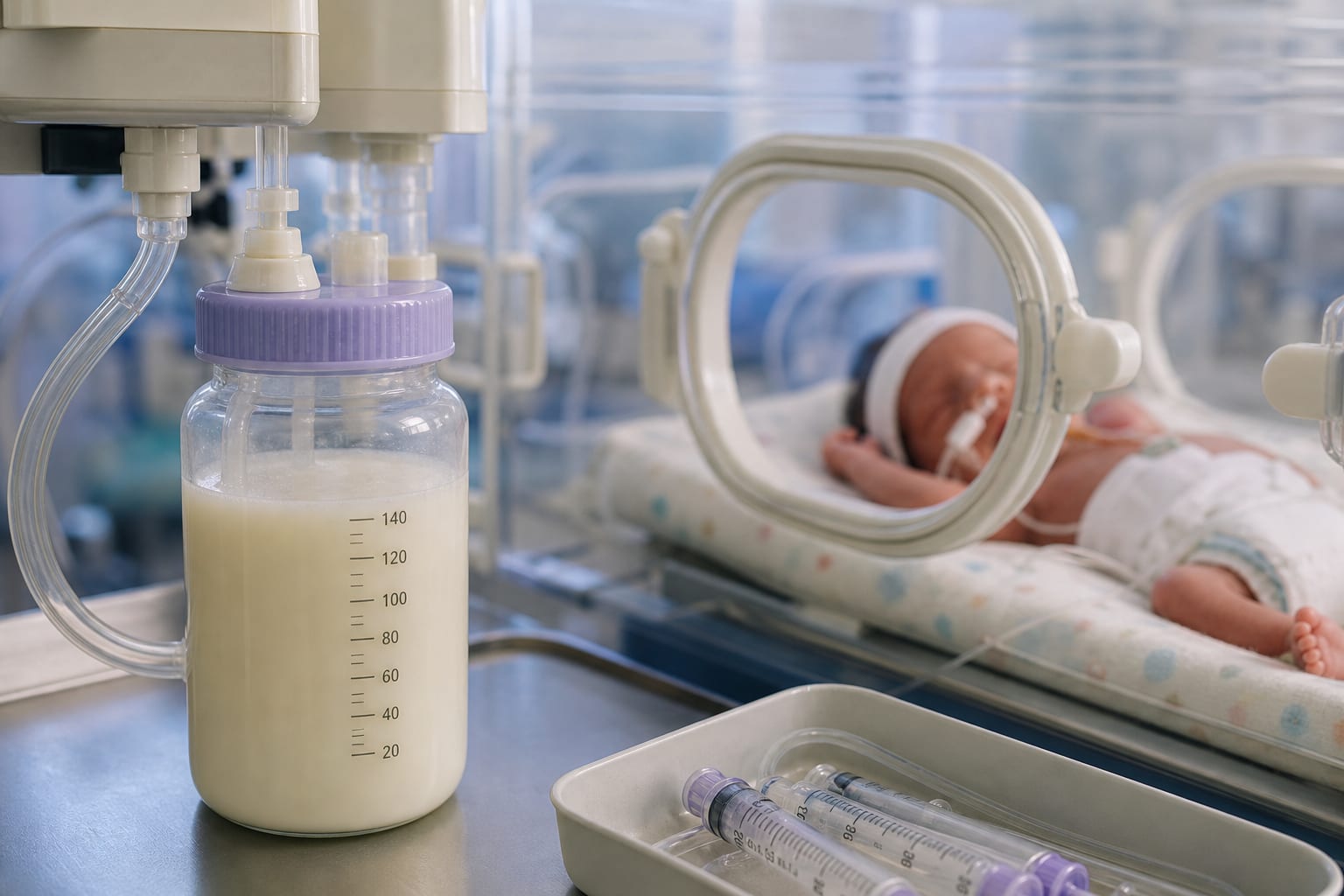
Impact of standardized fortified donor human milk on growth parameters and biomarkers in preterm very low birth weight infants: a single-center propensity score-matched analysis - Report - MDSpire
Advertisement
Effects of Standardized Fortified Donor Human Milk on Growth Metrics and Biomarkers in Preterm Infants with Very Low Birth Weight: A Propensity Score-Matched Study from a Single Center
Clinical Report: Effects of Standardized Fortified Donor Human Milk on Growth Metrics
Overview
This study evaluates the impact of standardized fortified donor human milk (SF-DHM) on growth metrics and biomarkers in preterm very low birth weight infants.
Background
Preterm very low birth weight (VLBW) infants face significant challenges, including postnatal growth failure and impaired immune function. Adequate nutritional support is crucial for their growth and development, yet many are unable to receive sufficient maternal milk. Standardized fortified donor human milk (SF-DHM) presents a potential solution to meet the nutritional needs of these vulnerable infants.
Data Highlights
Parameter
Observation Group
Control Group
Weight Gain Velocity
Data needed
Data needed
Head Circumference Growth Velocity
Data needed
Data needed
Length Growth Velocity
Data needed
Data needed
Length of Hospital Stay
Data needed
Data needed
Incidence of Growth Restriction
Data needed
Data needed
Key Findings
The observation group receiving SF-DHM showed differences in weight gain velocity compared to the control group.
Head circumference and length growth velocities were also observed in the SF-DHM group.
Infants in the SF-DHM group had variations in length of hospital stay.
There was a difference in the incidence of extrauterine growth restriction at discharge in the SF-DHM group.
Nutritional biomarkers such as prealbumin, albumin, and total protein levels were measured in both groups.
Feeding intolerance and complications were reported in both groups.
Clinical Implications
The findings suggest that SF-DHM can be an effective nutritional strategy for preterm VLBW infants, potentially improving growth and reducing complications. Clinicians may consider prioritizing SF-DHM in the nutritional management of these infants when maternal milk is insufficient.
Conclusion
SF-DHM demonstrates significant benefits in promoting growth and improving nutritional status in preterm VLBW infants. Its use in NICU settings is recommended for better clinical outcomes.