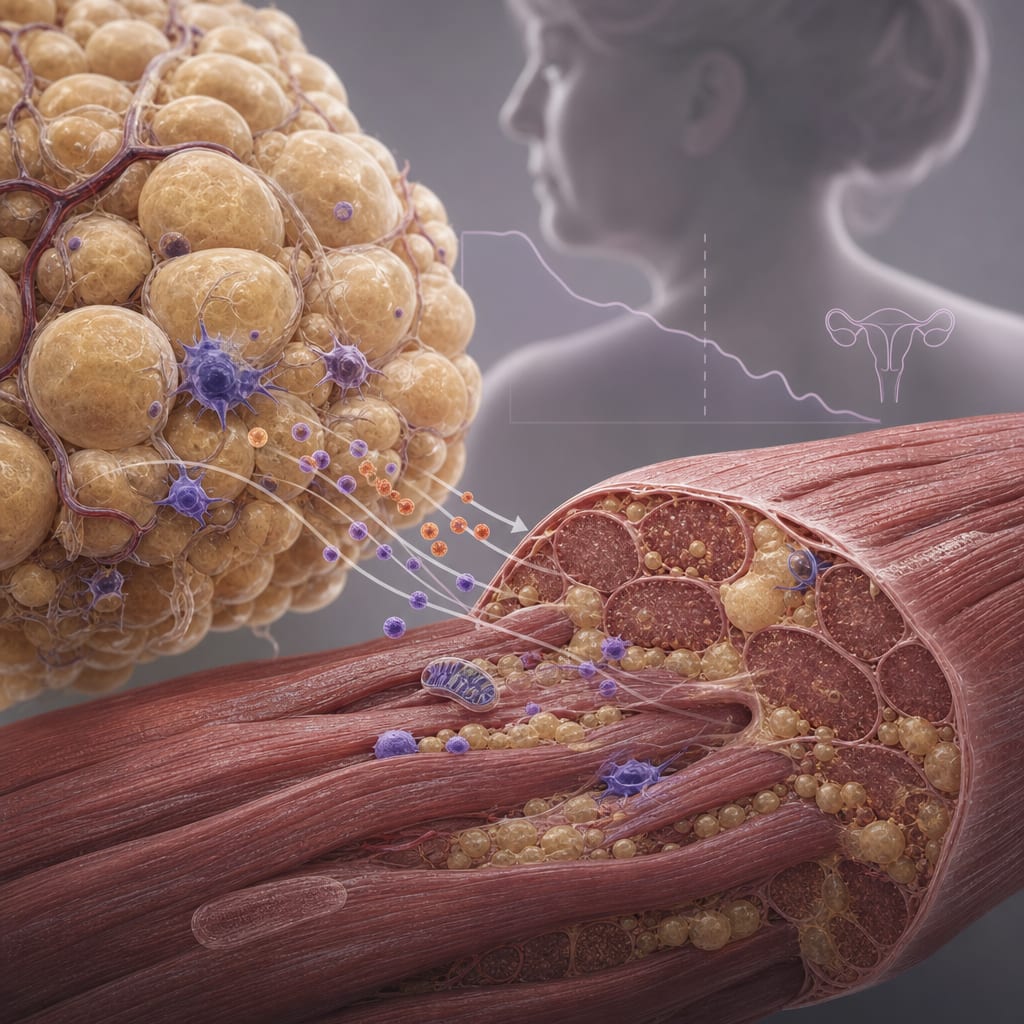
Clinical Report: Interactions Between Adipose Tissue and Muscle During Menopause
Overview
This report highlights the increased risk of sarcopenic obesity in midlife women, particularly during the menopausal transition. It emphasizes the need for improved screening and intervention strategies that address changes in body composition beyond traditional BMI measurements.
Background
Sarcopenic obesity, characterized by excess body fat and reduced muscle mass, poses significant health risks, particularly in middle-aged women. The menopausal transition is a critical period for these changes, which can lead to increased cardiovascular and metabolic complications. Understanding the mechanisms behind these shifts is essential for developing effective prevention and treatment strategies.
Data Highlights
No numerical data presented in the article.
Key Findings
The menopausal transition accelerates fat accumulation and lean mass decline in women.
Standard BMI measurements may fail to identify women with sarcopenic obesity.
Myosteatosis, the accumulation of fat within muscle, negatively impacts muscle function.
Estrogen depletion exacerbates metabolic and regenerative challenges during menopause.
Progressive resistance training and protein distribution are critical for managing sarcopenic obesity.
Clinical Implications
Healthcare providers should consider comprehensive assessments of body composition in midlife women, focusing on muscle quality and fat distribution. Interventions should prioritize resistance training and dietary strategies to mitigate the risks associated with sarcopenic obesity.
Conclusion
Addressing sarcopenic obesity in midlife women requires a multifaceted approach that includes improved screening and targeted interventions during the menopausal transition.
A two-marker methylated DNA assay identified endometrial cancer with 96% sensitivity in self-collected vaginal fluid — but prospective validation is needed before it can reduce biopsies in routine care.