Prevalence and Clinical Associations of Hyperuricemia in Patients with Heart Failure During Hospitalization
Overview
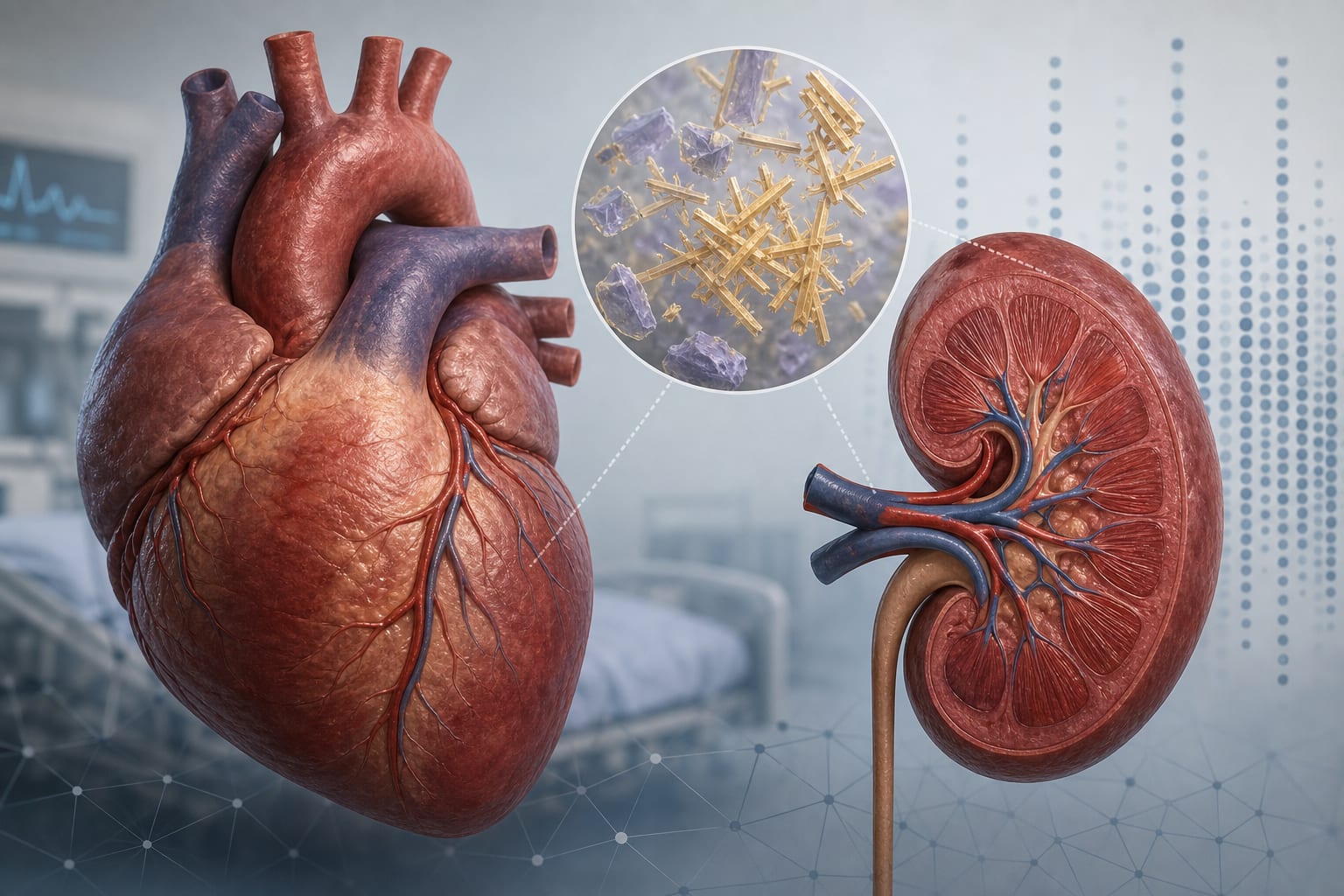
This study evaluated the prevalence of hyperuricemia in hospitalized heart failure patients in China, finding a prevalence of 69.42%. Hyperuricemia was independently associated with renal dysfunction, hemodynamic impairment, electrolyte imbalance, and metabolic disturbance.
Background
Hyperuricemia is commonly observed in patients with heart failure and is linked to various chronic conditions.
Data Highlights
No numerical data available for tabulation.
Key Findings
The overall prevalence of hyperuricemia in hospitalized heart failure patients was 69.42%.
Prevalence of hyperuricemia was consistent across sex, age, and BMI groups.
Hyperuricemia was independently associated with renal dysfunction markers.
Nonlinear associations were observed for potassium, BNP, eGFR, and HDL-C.
Hyperuricemia varied by NYHA class among heart failure patients.
Clinical Implications
Clinicians should be aware of the high prevalence of hyperuricemia in heart failure patients and its association with renal and metabolic disturbances.
Conclusion
Hyperuricemia is prevalent among hospitalized heart failure patients and is associated with significant clinical correlates.