Diagnosis and treatment of neurofibromatosis type 1 with malignant transformation and multiple gastrointestinal stromal tumors: a case report and literature review - Report - MDSpire
Advertisement
Diagnosis and treatment of neurofibromatosis type 1 with malignant transformation and multiple gastrointestinal stromal tumors: a case report and literature review
Management and Diagnosis of Neurofibromatosis Type 1 with Malignant Transformation
Overview
This report presents a rare case of a 51-year-old female with neurofibromatosis type 1 (NF1) who developed malignant peripheral nerve sheath tumor (MPNST) and gastrointestinal stromal tumors (GISTs). The case underscores the importance of comprehensive imaging and pathological examination in managing complex NF1 presentations.
Background
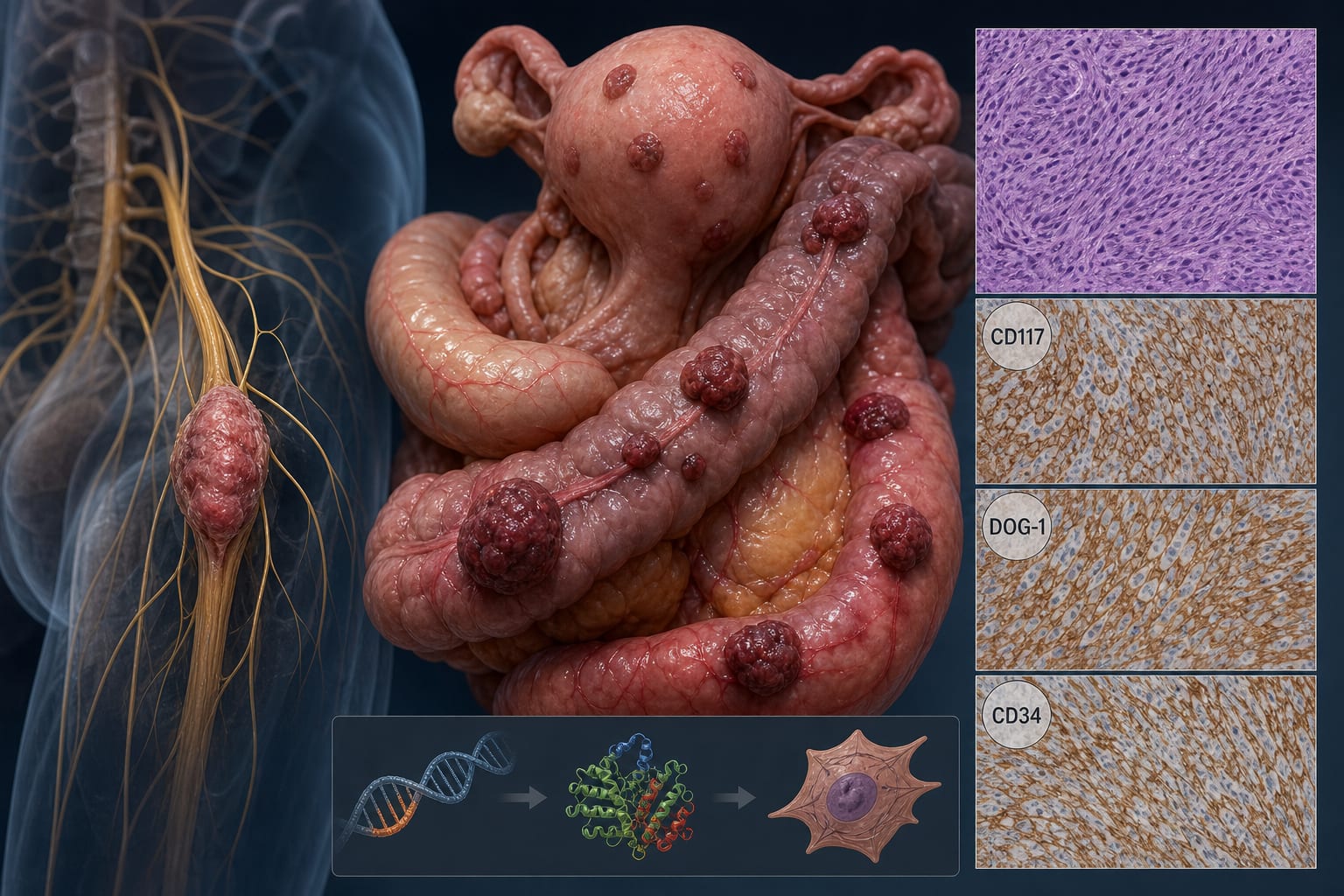
Neurofibromatosis type 1 (NF1) is an autosomal dominant disorder with a significant incidence of malignant transformations, particularly MPNSTs, which are a leading cause of mortality in NF1 patients. GISTs, the most common mesenchymal tumors of the gastrointestinal tract, frequently occur in NF1 patients, often lacking typical mutations. The co-occurrence of MPNSTs and GISTs in a single NF1 patient is rare and highlights the need for careful monitoring and management.
Data Highlights
No numerical data or trial data was presented in the article.
Key Findings
The patient had a history of NF1 with multiple neurofibromas and café-au-lait spots.
She underwent surgical resection for MPNST and neurofibroma in 2015.
In 2021, she was diagnosed with multiple GISTs and underwent combined gynecological and gastrointestinal surgery.
Postoperative pathology confirmed all masses as GISTs, including uterine EGISTs, with negative C-kit/PDGFRA mutations.
After 4 years of follow-up, there was no recurrence or metastasis of GIST and EGIST.
Comprehensive imaging and pathological examination are critical in preventing misdiagnosis in NF1 patients.
Clinical Implications
Clinicians should maintain a high index of suspicion for malignant transformations in NF1 patients presenting with new symptoms. Comprehensive imaging and careful pathological evaluation are essential for accurate diagnosis and management of concurrent tumors.
Conclusion
This case highlights the complexity of managing NF1 with concurrent malignancies and the necessity for tailored surveillance and treatment strategies in affected patients.