A novel ventricular septal reconstruction device for post-myocardial infarction ventricular septal rupture: preclinical and first-in-human study results - Report - MDSpire
Coming Soon: Introducing MDSpire News. Learn more
Conexiant’s news site is now MDSpire News. Learn more

Innovative Device for Ventricular Septal Reconstruction Following Post-Myocardial Infarction Rupture: Findings from Preclinical and Initial Human Trials

  • By

  • Changjing Huang

  • Nan Cai

  • Youqian Li

  • Yao Yao

  • Zexun Zhu

  • Weike Wu

  • Kaibing Ren

  • Siwei Wu

  • Jingfeng Liu

  • Jingyuan Hou

  • Haifeng Hong

  • Hanlin Li

  • Zhihui Hu

  • Zhixiong Zhong

  • Wei Zhong

  • September 9, 2026

Share

Clinical Report: Innovative Device for Ventricular Septal Reconstruction

Overview

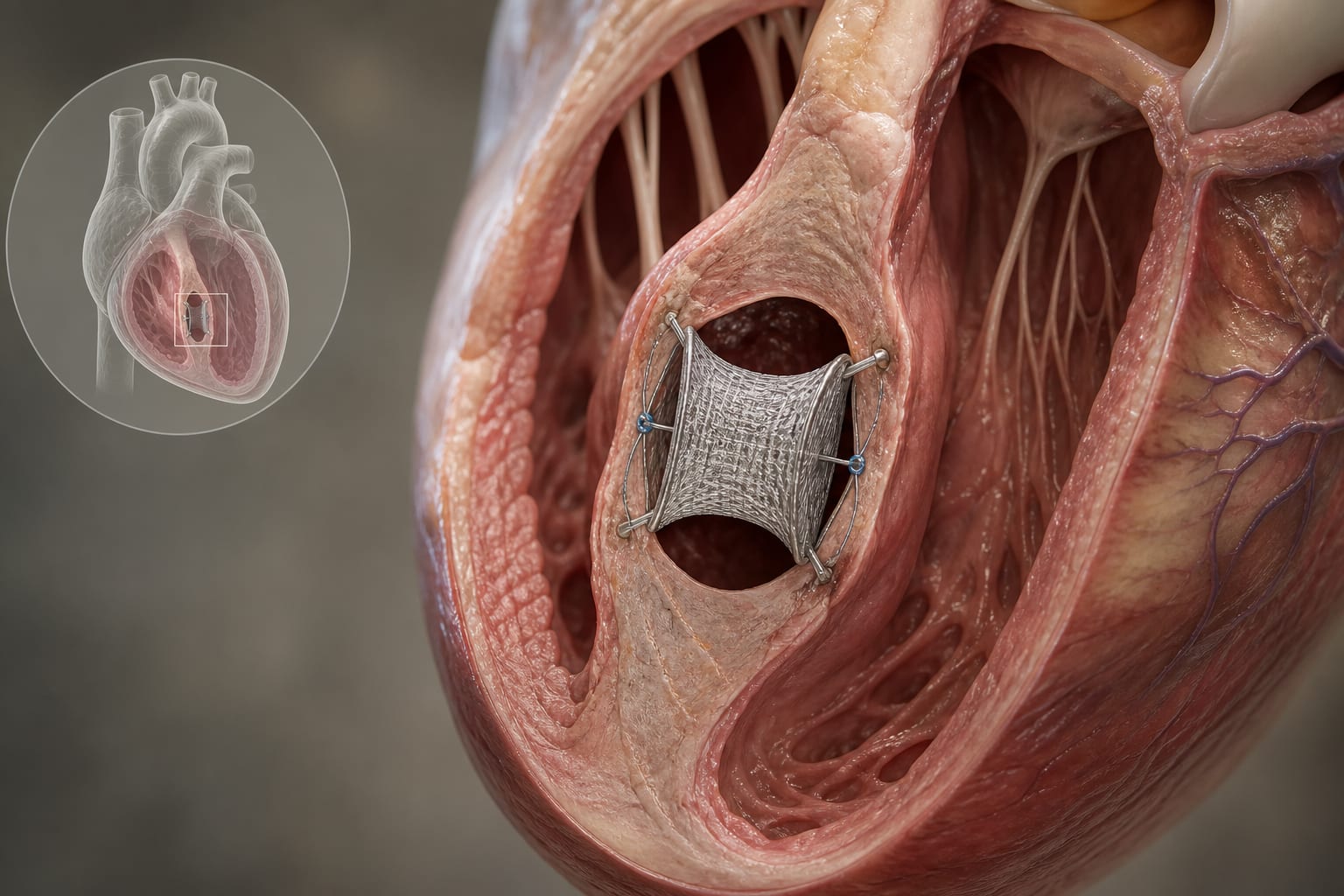
This study evaluates the feasibility and safety of a novel Ventricular Septal Reconstruction Device (VSRD) for treating post-myocardial infarction ventricular septal rupture (PIVSR). Initial findings from preclinical and first-in-human trials indicate procedural feasibility.

Background

Post-myocardial infarction ventricular septal rupture (PIVSR) is a severe complication of acute myocardial infarction (AMI) with a poor prognosis. Current treatment options, including pharmacotherapy and surgery, have significant limitations.

Data Highlights

Study PhaseAnimal ModelHuman Study
Device Placement Attempts11 of 144 patients
Successful Implantation104
Residual ShuntsMinor leakage in 4/5 on day 1, none at day 60≤2 mm during follow-up
Adverse EventsNoneNo high-grade AV block or pacemaker

Key Findings

  • The VSRD was successfully implanted in 10 out of 11 attempts in a preclinical animal model.
  • Minor residual leakage was observed in 4 of 5 animals on day 1, with no leakage at day 60.
  • All four patients in the first-in-human study had successful device implantation.
  • Residual shunts remained ≤2 mm during follow-up in human subjects.
  • No adverse events were reported in either the animal or human studies.

Clinical Implications

The VSRD demonstrates procedural feasibility and safety in both animal and human studies.

Conclusion

The initial evaluation of the VSRD indicates feasibility and safety.

Related Resources & Content

  1. MicroPort Scientific Corporation, Innovative Device for Ventricular Septal Reconstruction, 2023 -- Findings from Preclinical and Initial Human Trials
  2. Pediatric Cardiology — Closure of Isolated Congenital Ventricular Septal Defects Using a Percutaneous Approach: A Retrospective Analysis of 412 Cases from a Single Institution
  3. Pediatric Cardiology — Outcomes of Interventional Closure for Ventricular Septal Defects: Insights from a Single-Center Study in Pediatric and Adult Populations
  4. Clinical Research in Cardiology — Outcomes of Long-Term Closure of Perimembranous Ventricular Septal Defects with the Nit-Occlud® Lê VSD Coil System
  5. Frontiers in Cardiovascular Medicine — Assessment of the Viability and Initial Results of Transcatheter Closure for Moderate-to-Large Perimembranous Ventricular Septal Defects in Pediatric Patients Using Bioabsorbable Occluders: A Prospective Case Study
  6. 2025 ACC/AHA/ACEP/NAEMSP/SCAI Guideline for the Management of Patients With Acute Coronary Syndromes
  7. Surgical closure versus transcatheter closure for ventricular septal defect post-infarction: a meta-analysis

Original Source(s)

Related Content