Comparison of lattice and pipeline flow diverters for the treatment of distal intracranial aneurysms: an inverse probability of treatment weighting analysis - Report - MDSpire
Advertisement
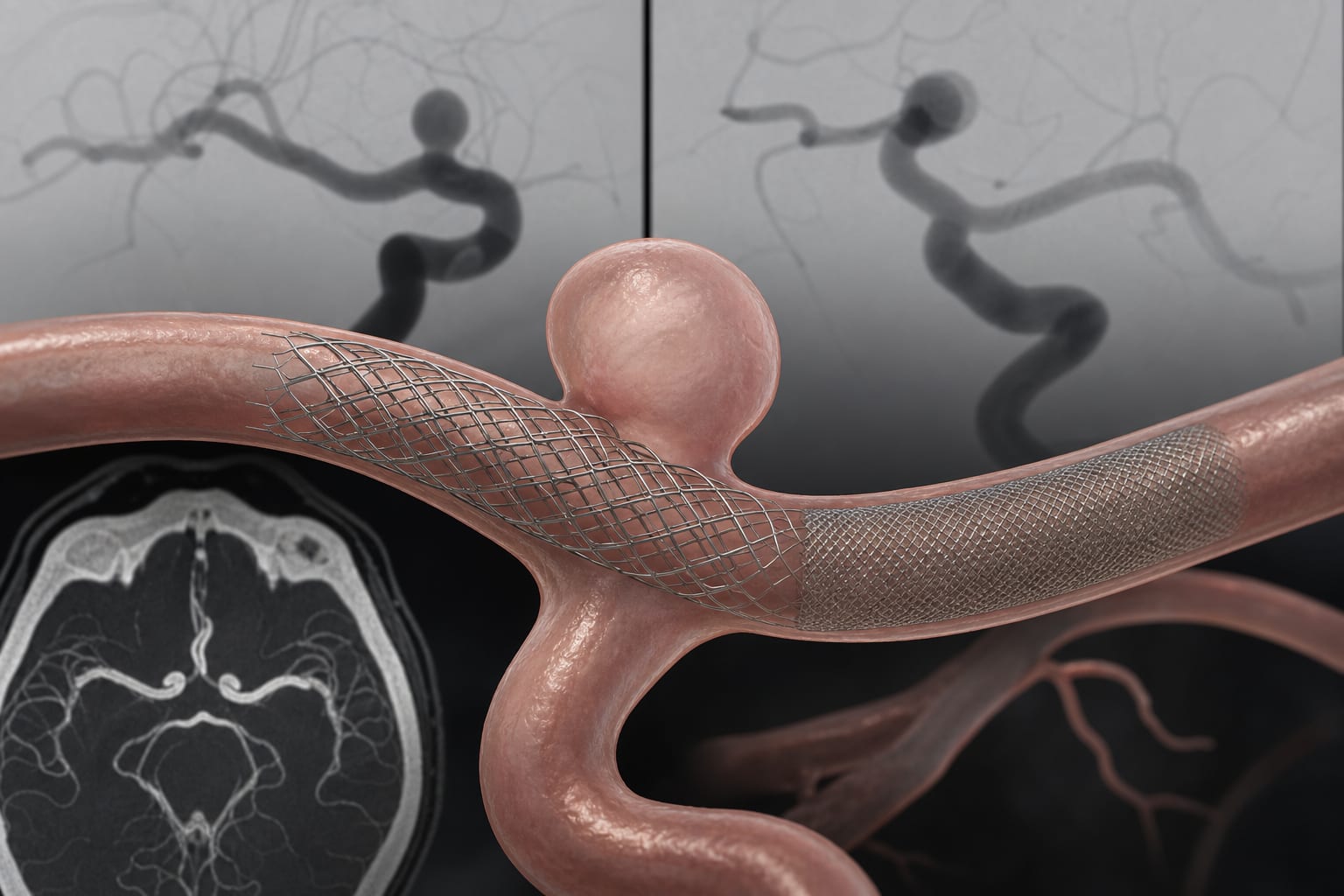
Comparison of lattice and pipeline flow diverters for the treatment of distal intracranial aneurysms: an inverse probability of treatment weighting analysis
Clinical Report: Evaluation of Lattice versus Pipeline Flow Diverters
Overview
This study compares the efficacy and safety of Lattice and Pipeline flow diverters in treating distal intracranial aneurysms. Both devices demonstrated similar aneurysm occlusion rates and complications.
Background
Distal intracranial aneurysms are challenging to treat due to their location and the risk of complications. Flow diverters have emerged as a treatment option, yet comparative data between different devices is limited.
Data Highlights
Device
Aneurysm Occlusion Rate
Branch Vessel Occlusion Rate
Lattice
77.8%
16.7%
Pipeline
75.9%
6.9%
Key Findings
No significant difference in aneurysm occlusion rates between Lattice (77.8%) and Pipeline (75.9%) devices (p = 0.586).
Branch vessel occlusion occurred in 16.7% of Lattice cases and 6.9% of Pipeline cases (p = 0.317).
The inflow angle (IFAA) was associated with delayed or incomplete aneurysm healing, with a 3.5% decrease in odds of occlusion per degree increase.
Larger aneurysm neck diameter and presence of branch vessel origin were linked to unfavorable outcomes.
Study included 47 patients treated between January 2020 and July 2025.
Follow-up imaging was conducted at a median of 179 days postoperatively.
Clinical Implications
The findings indicate that both Lattice and Pipeline flow diverters show similar efficacy and safety profiles.
Conclusion
Lattice and Pipeline flow diverters exhibit comparable efficacy and safety in managing distal cerebral aneurysms.
This internationally-recognized symposium is the premier global platform for showcasing the fast advancement of technology and the rapid integration of MRI into radiotherapy applications into the field of radiation oncology.