An exploratory integrative analysis of plasma transcriptomic and proteomic predictors of response to total neoadjuvant therapy in locally advanced rectal cancer - Report - MDSpire
Advertisement
An exploratory integrative analysis of plasma transcriptomic and proteomic predictors of response to total neoadjuvant therapy in locally advanced rectal cancer
Clinical Report: Plasma Biomarkers Predicting Response to Neoadjuvant Therapy
Overview
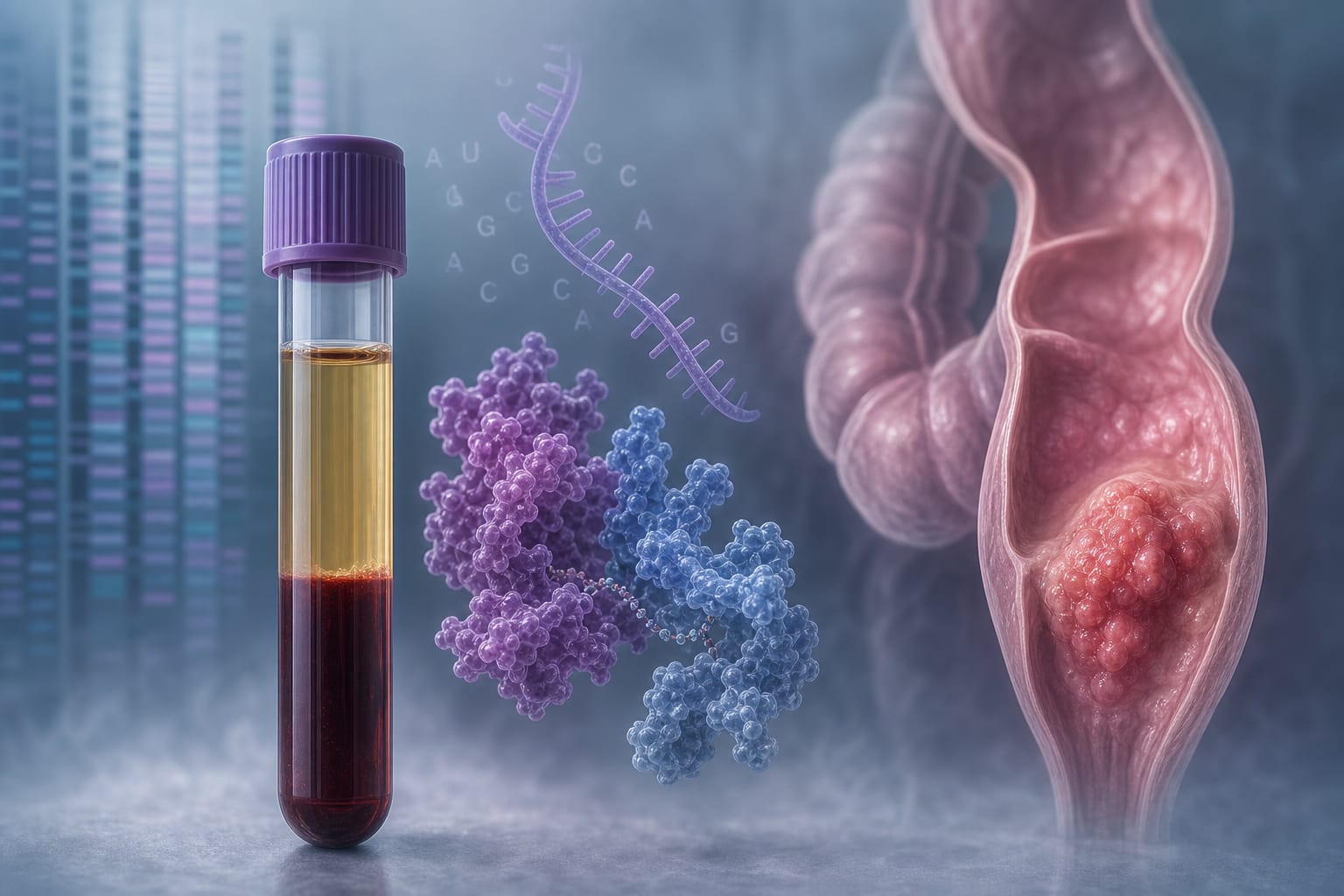
This study identifies plasma biomarkers associated with treatment response to total neoadjuvant therapy (TNT) in patients with locally advanced rectal cancer (LARC). A multi-marker panel including FASLG, CD160, and LYPD3 was found to predict pathological complete response (pCR).
Background
Locally advanced rectal cancer (LARC) presents significant treatment challenges, with variability in patient responses to total neoadjuvant therapy (TNT). Accurate preoperative prediction of pathological complete response (pCR) is crucial for optimizing treatment strategies. Current biomarkers for predicting pCR are insufficient, highlighting the need for further research in this area.
Data Highlights
Biomarker
Expression in pCR Group
Expression in non-pCR Group
FASLG
Higher
Lower
CD160
Higher
Lower
LYPD3
Higher
Lower
Key Findings
365 differentially expressed genes (DEGs) were upregulated and 198 downregulated in the pCR group compared to the non-pCR group.
DEGs are involved in pathways related to cell growth, metabolism, and immune response.
Plasma levels of FASLG, CD160, and LYPD3 were significantly higher in the pCR group.
The multi-marker panel had an AUC of 0.791 in predicting pCR.
High expression of the multi-marker panel was associated with EMVI-negative status and higher pCR rates.
Clinical Implications
The identification of plasma biomarkers such as FASLG, CD160, and LYPD3 may enhance the ability to predict treatment responses in LARC patients undergoing TNT.
Conclusion
The multi-marker panel may serve as a predictive tool for treatment response in LARC patients, warranting further validation in larger cohorts.