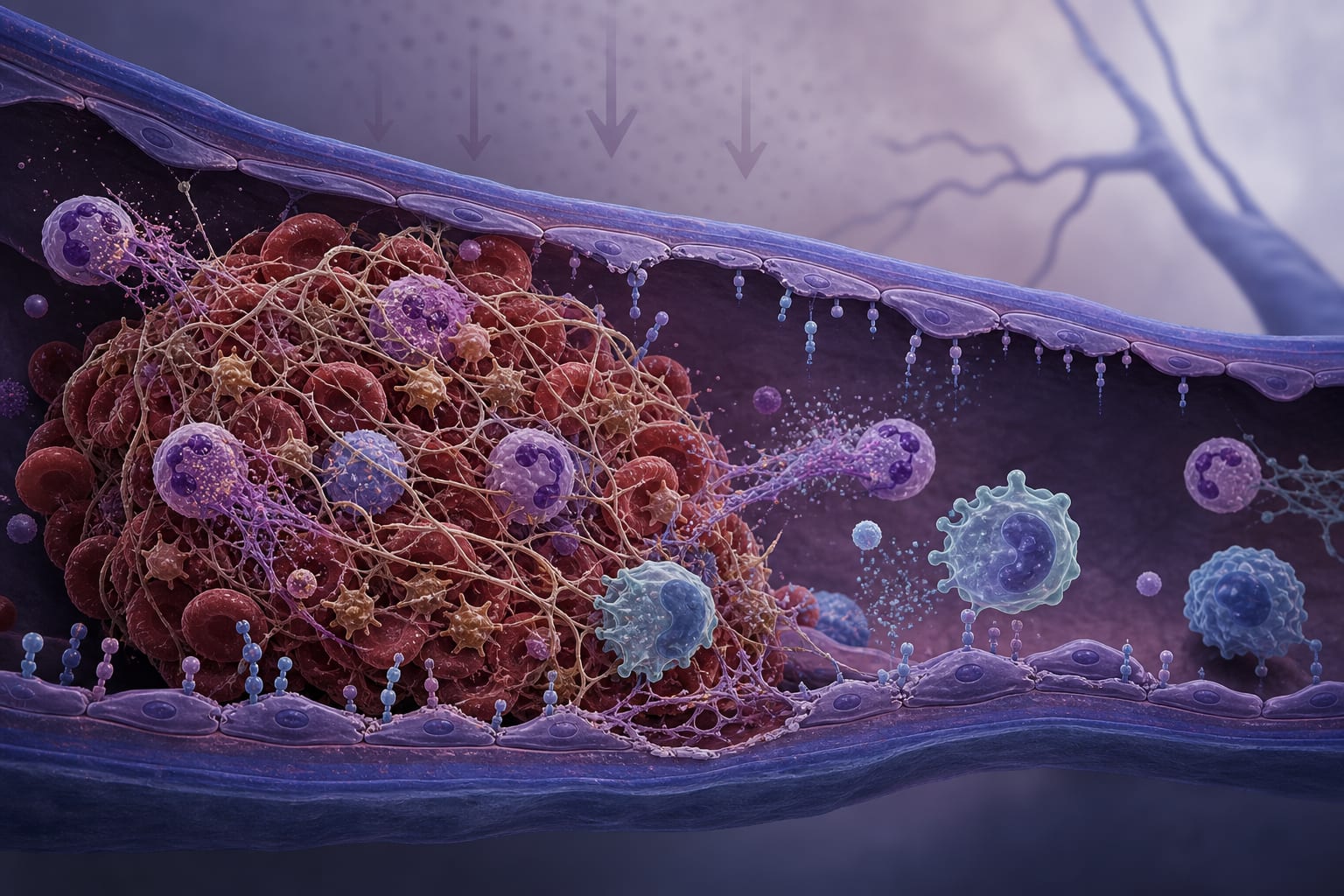
Clinical Report: Exosomes from the hematopoietic niche influence immune-related hematopoiesis in Drosophila
Overview
This study demonstrates that exosomes released from the Drosophila hematopoietic niche play a role in mediating immune-related hematopoiesis.
Background
Hematopoietic stem and progenitor cells (HSPCs) are vital for continuous blood cell production, and their regulation is influenced by the niche environment. Understanding the mechanisms by which the niche communicates with HSPCs during stress conditions is essential.
Data Highlights
No numerical or trial data provided in the source material.
Key Findings
The Drosophila lymph gland releases extracellular vesicles (EVs) that mediate communication necessary for blood cell progenitor homeostasis.
In response to wasp parasitism, reactive oxygen species (ROS) elevation in the niche triggers the release of a heterogeneous population of EVs, including exosomes.
Niche-derived exosomes activate the EGFR pathway in lymph gland progenitors.
Exosomes promote the differentiation of progenitors into lamellocytes, which are crucial for pathogen neutralization.
Up-regulation of metalloproteinase Mmp1 in niche cells is necessary for the spreading of exosomes through the extracellular matrix.
Clinical Implications
The findings provide insights into the role of exosomes in hematopoiesis under immune stress.
Conclusion
This research establishes the Drosophila lymph gland as a valuable model for studying exosome-mediated cell communication and its implications for immune-related hematopoiesis.