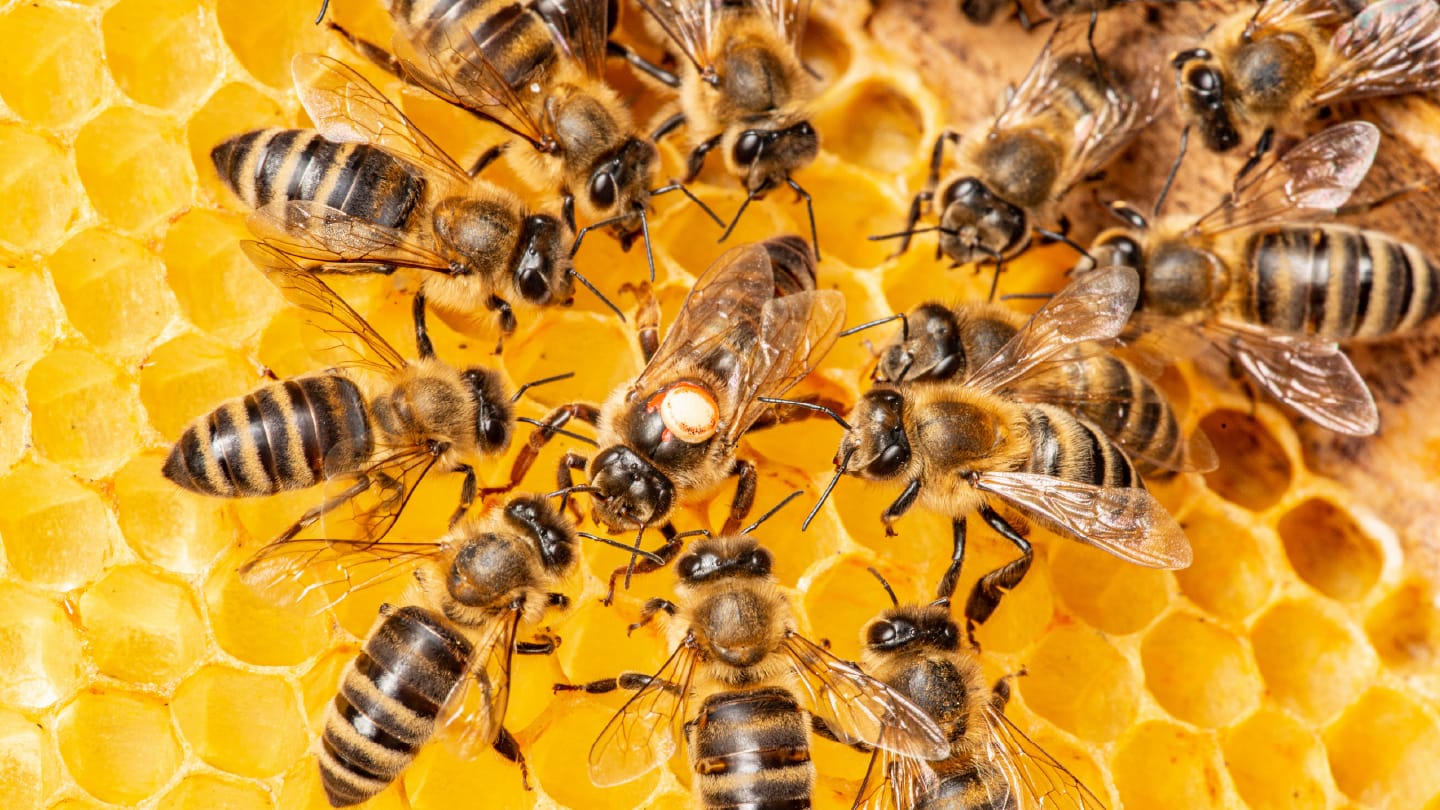
Clinical Report: The Queen Bee’s Toxic Legacy
Overview
This study reveals that honeybee queens can transfer pesticide residues into their eggs when the colony's defenses are overwhelmed.
Background
Understanding the impact of pesticide exposure on honeybee populations is critical, as these insects play a vital role in pollination and ecosystem health. The transfer of contaminants from worker bees to queens and subsequently to eggs raises concerns about the health of bee colonies.
Data Highlights
The study utilized radiolabeled methyl parathion to trace pesticide movement within laboratory honeybee nanocolonies over 10 days, revealing significant findings about pesticide accumulation and transfer.
Key Findings
- Worker bees initially reduced pesticide levels before they reached the queen.
- Over time, the stored diet in comb cells became more contaminated, indicating a weakening of the workers' filtering capacity.
- Queens exhibited lower whole-body pesticide burdens compared to workers, but residues were detected in their reproductive pathways.
- By day 10, pesticide concentrations were higher in eggs than in queen bodies or ovaries, suggesting maternal offloading.
- The presence of the queen altered the chemical distribution within the colony, increasing pesticide deposition in wax.
- Chronic exposure may lead to a tipping point where contaminated eggs fail to develop properly, potentially contributing to delayed colony collapse.
Clinical Implications
The findings suggest that chronic pesticide exposure can compromise the reproductive health of honeybee queens, which may have downstream effects on colony sustainability. Monitoring pesticide levels in bee populations is essential for understanding and mitigating these risks.
Conclusion
This study underscores the importance of assessing pesticide impacts on bee health, particularly regarding maternal transfer mechanisms that may affect future generations.
Related Resources & Content
- Queen bees offload pesticide burden to eggs when social buffering is overwhelmed - ScienceDirect, 2026 -- Queen bees offload pesticide burden to eggs when social buffering is overwhelmed
- Pollinator Risk Assessment Guidance | US EPA -- Pollinator Risk Assessment Guidance
- the pathologist — Toxicant Exposure Echoes for Generations
- The ASCO Post — Cancer Is Trying to Steal My Body, but I Will Not Allow It to Steal My Joy
- inside dentistry — How do I handle a team member who is toxic?
- ophthalmic professional — How to Identify Toxic Culture in Your Practice
- Pollinator Risk Assessment Guidance | US EPA
- Queen bees offload pesticide burden to eggs when social buffering is overwhelmed - ScienceDirect
- Unbounded bees: A systematic review and meta-analysis investigating pesticide contamination in Brazilian bees and hive products - ScienceDirect
This content is an AI-generated, fully rewritten summary based on a published scholarly article. It does not reproduce the original text and is not a substitute for the original publication. Readers are encouraged to consult the source for full context, data, and methodology.