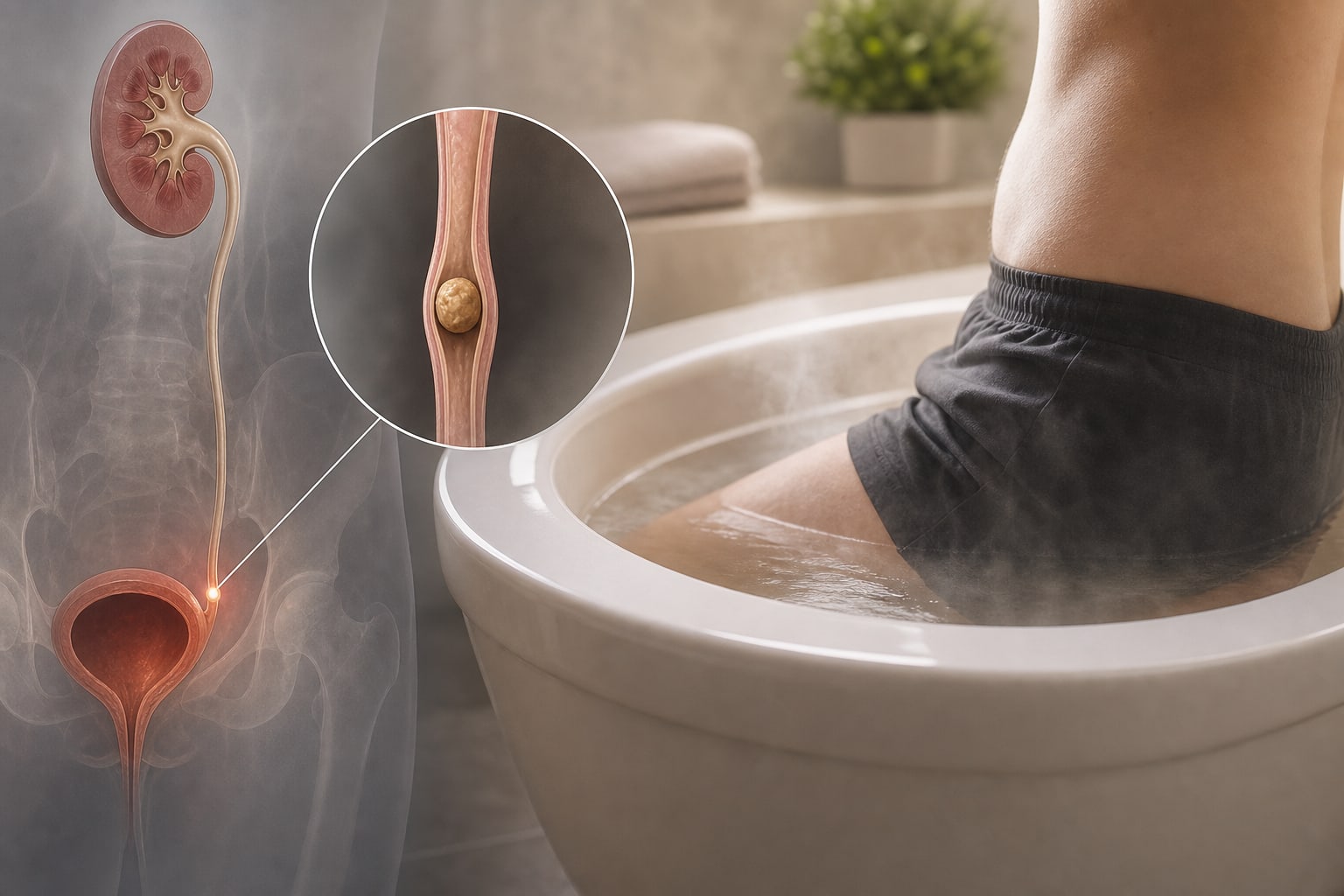
Clinical Report: Efficacy of Warm Sitz Baths for Distal Ureteral Stones
Overview
This study evaluates the efficacy of warm sitz baths (WSB) as an adjunctive treatment for patients with distal ureteral stones ≤5 mm. Results indicate that WSB significantly shortens stone expulsion time and reduces pain episodes compared to a control group.
Background
Urolithiasis is a prevalent condition that poses a significant public health challenge, with a high incidence of renal colic and associated complications. Distal ureteral stones <5 mm have a high likelihood of spontaneous passage, yet patients often endure discomfort and pain during this period. Non-pharmacological interventions like warm sitz baths may provide symptomatic relief.
Data Highlights
Parameter
WSB Group
Control Group
P-value
Stone Expulsion Time (days)
9.3 ± 2.9
14.3 ± 4.2
< 0.001
Stone Expulsion Rate at Week 1
40.7%
21.0%
0.019
Stone Expulsion Rate at Week 2
81.4%
61.3%
0.015
4-week Stone Expulsion Rate
93.2%
87.1%
0.260
Daily Pain Episodes
0.8 ± 0.3
1.3 ± 0.4
< 0.001
Post-treatment VAS Score
3.1 ± 1.0
4.2 ± 1.7
< 0.001
Analgesic Requirements
4.1 ± 1.5
8.4 ± 3.1
< 0.001
Key Findings
WSB significantly reduced stone expulsion time compared to the control group (9.3 vs. 14.3 days, P < 0.001).
Higher stone expulsion rates were observed in the WSB group at week 1 (40.7% vs. 21.0%, P = 0.019) and week 2 (81.4% vs. 61.3%, P = 0.015).
No significant difference in the 4-week stone expulsion rate between groups (93.2% vs. 87.1%, P = 0.260).
WSB group reported fewer daily pain episodes (0.8 vs. 1.3, P < 0.001) and lower post-treatment VAS scores (3.1 vs. 4.2, P < 0.001).
Analgesic requirements were significantly lower in the WSB group (4.1 vs. 8.4, P < 0.001).
No significant differences in adverse events between the two groups.
Clinical Implications
The study results suggest that warm sitz baths may reduce stone expulsion time and pain episodes in patients with distal ureteral stones ≤5 mm.
Conclusion
Warm sitz baths may shorten expulsion time and alleviate pain for patients with distal ureteral stones ≤5 mm, though they do not significantly affect overall stone expulsion rates at 4 weeks.
Integrated proteomic and metabolomic analyses identified redox-metabolic signatures associated with chronic posttraumatic stress disorder and accelerated biological aging across multiple organ systems.