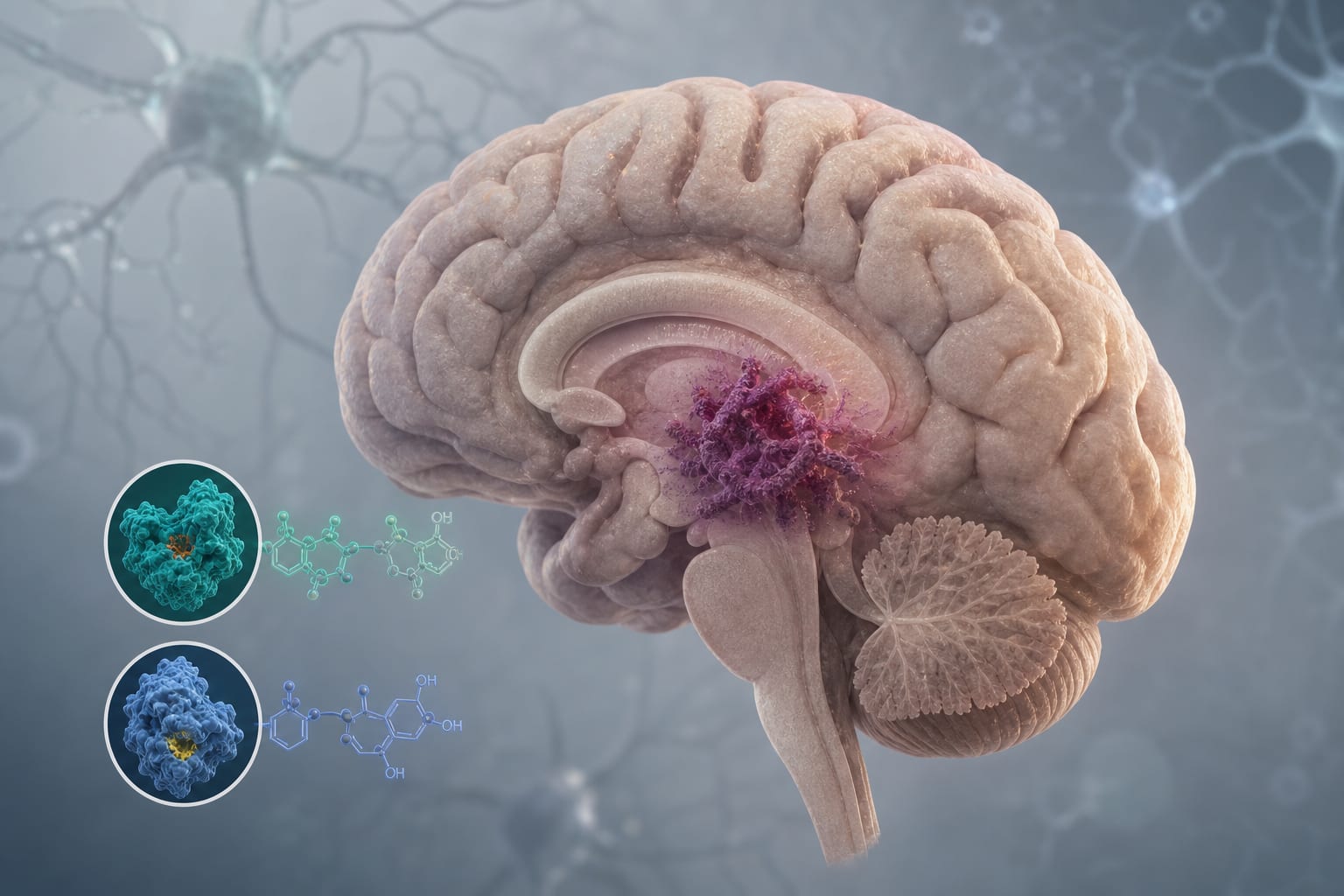
Clinical Report: Exploring Anti-Diabetic Drugs for Parkinson's and DLB
Overview
This pilot study investigates the tolerability and preliminary effects of sitagliptin and dapagliflozin in patients with Parkinson's disease (PD) and Dementia with Lewy Bodies (DLB). Significant improvements in MDS-UPDRS scores were observed, particularly in the dapagliflozin group, suggesting potential symptomatic benefits.
Background
Parkinson's disease and Dementia with Lewy Bodies are progressive neurodegenerative disorders with significant impacts on motor and cognitive functions. Current treatments primarily address symptoms, highlighting the need for disease-modifying therapies. Recent evidence suggests a link between these disorders and glucose metabolism dysregulation, indicating that antidiabetic agents may offer therapeutic potential beyond glycemic control.
Data Highlights
Group
MDS-UPDRS Part 1
MDS-UPDRS Part 2
Total Score
Placebo
-
-
-
Sitagliptin
-
-
-
Dapagliflozin
Significant improvement (P = 0.008)
Significant improvement (P = 0.047)
Significant improvement (P = 0.020)
Key Findings
Both sitagliptin and dapagliflozin were well-tolerated with no adverse events reported.
Significant improvements in MDS-UPDRS scores were noted for dapagliflozin compared to placebo.
No significant changes were observed in cognitive function scores across groups.
Only one participant in the DPP4 inhibitor group had DLB, limiting generalizability.
The study supports the need for larger, long-term trials to explore these findings further.
Clinical Implications
The findings suggest that dapagliflozin may provide symptomatic benefits in PD patients, warranting further investigation in larger studies. Clinicians should consider the potential of antidiabetic agents in managing neurodegenerative disorders, while remaining aware of the current lack of established disease-modifying therapies.
Conclusion
This pilot study indicates that DPP4 and SGLT2 inhibitors are safe for use in PD and DLB patients, with dapagliflozin showing promising preliminary effects on motor symptoms. Further research is essential to validate these findings and explore their implications for treatment.