Surgical treatment and prognosis in patients with intestinal metastases originated from advanced epithelial ovarian cancer - Report - MDSpire

Surgical treatment and prognosis in patients with intestinal metastases originated from advanced epithelial ovarian cancer

  • By

  • Hongxia Wang

  • Yijie Li

  • Zhifen Yang

  • Jinxiu Wang

  • Kaiyun Qin

  • Yu Yu

  • Na Wang

  • Jingde Jia

  • Wenhong Zhao

  • Fenghua Zhang

  • Mario M. Leitao

  • Ran Meng

  • Yueping Liu

  • Yan Ding

  • Zhengmao Zhang

  • June 15, 2026

  • 0 min

Share

Clinical Report: Surgical Interventions and Outcomes for Patients with Intestinal Metastases from Advanced Epithelial Ovarian Cancer

Overview

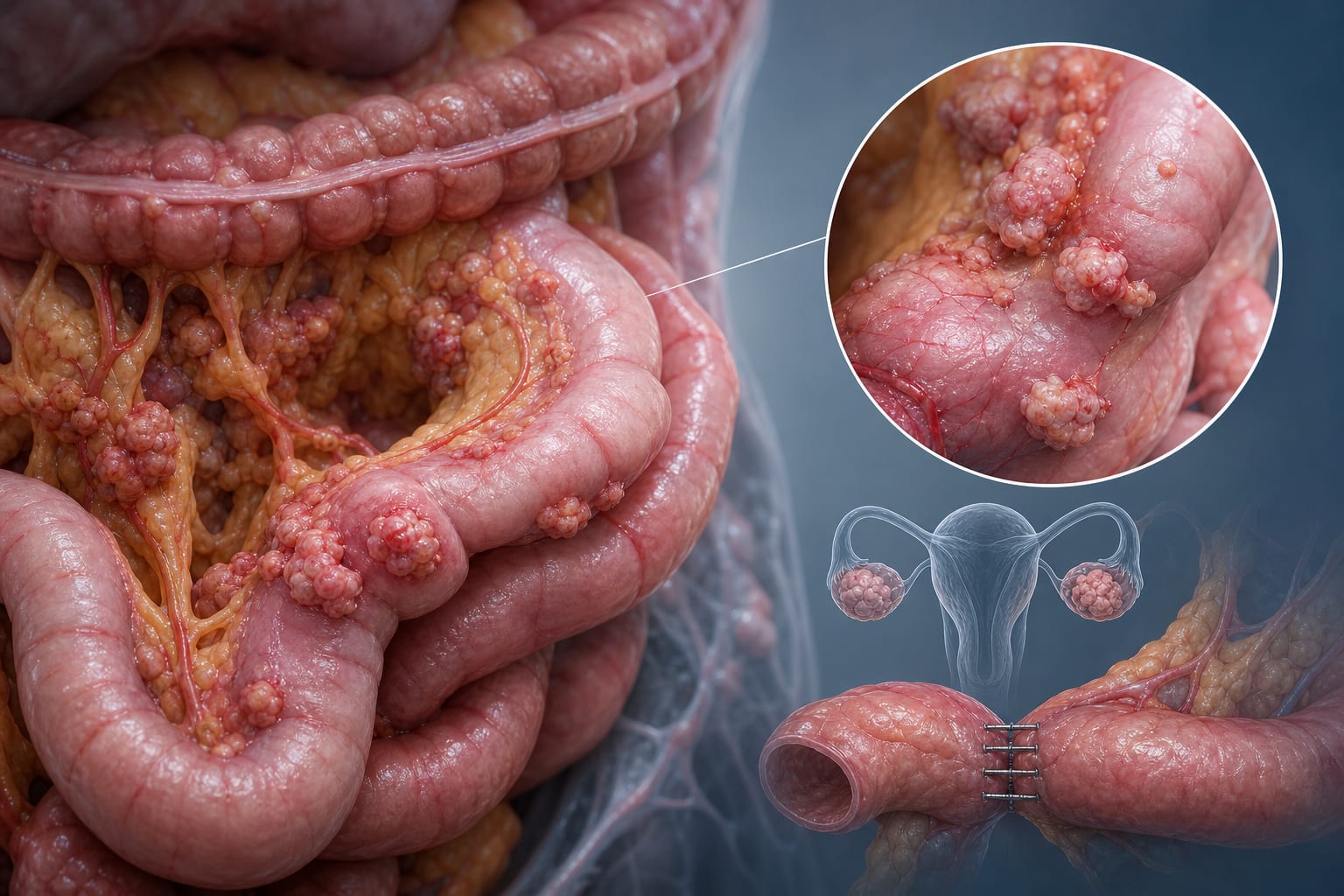
This study analyzes surgical treatment and prognosis in 255 patients with advanced epithelial ovarian cancer and intestinal metastases. It compares outcomes between bowel resection and bowel tumor stripping.

Background

Advanced epithelial ovarian cancer often presents with intestinal metastases, necessitating surgical intervention. The choice of surgical technique can impact postoperative outcomes.

Data Highlights

GroupR0 Rate5-Year OS5-Year PFSAnastomotic Fistula Rate
Bowel Resection75.4%65.8%70.6%1.98%
Bowel Tumor Stripping-73.8%80.3%0%

Key Findings

  • R0 resection rate was 75.4% in the cohort.
  • Patients in the bowel resection group had higher surgical complexity scores (P=0.021).
  • Lower incidence of intraoperative blood transfusion, pneumonia, and pleural effusion in the tumor stripping group.
  • 5-year overall survival was similar between groups, but 5-year progression-free survival was significantly higher in the bowel resection group (P=0.032).

Clinical Implications

The findings suggest that bowel tumor stripping can be a viable option for patients with advanced ovarian cancer and intestinal metastases, particularly when R0 resection is achieved. Clinicians should weigh the risks of complications associated with bowel resection against the potential benefits in survival outcomes.

Conclusion

Bowel tumor stripping may be sufficient in managing intestinal metastases from advanced ovarian cancer without compromising prognosis, provided that complete cytoreduction is achieved.

Related Resources & Content

  1. Surgical Removal of Liver Metastases from Oesophageal and Oesophagogastric Junction Cancers — A Review of Existing Evidence
  2. Mortality in Advanced-Stage Ovarian Cancer—Effect of Neoadjuvant Chemotherapy and Cytoreductive Surgery Case Volume
  3. Hyperthermic Intraperitoneal Chemotherapy With Primary or Interval Cytoreductive Surgery for Advanced Ovarian Cancer
  4. ESMO Clinical Practice Guideline Express Update on the management of epithelial ovarian cancer
  5. The ASCO Post — Surgery Plus Immunotherapy Improves Survival in Melanoma Patients With Gastrointestinal Metastases
  6. Neoadjuvant Chemotherapy for Newly Diagnosed, Advanced Ovarian Cancer: ASCO Guideline Clinical Insights
  7. Anastomotic leakage after rectosigmoid resection with primary anastomosis during cytoreductive surgery for advanced high-grade serous ovarian cancer: risk factors and oncologic outcomes
  8. ESMO Clinical Practice Guideline Express Update on the management of epithelial ovarian cancer - PMC

Original Source(s)

Related Content