Effectiveness and safety of switching biologics after secukinumab treatment failure in moderate-to-severe plaque psoriasis: a retrospective cohort study - Report - MDSpire
Conexiant’s news site is now MDSpire News. Learn more
Advertisement
Evaluating the Safety and Efficacy of Switching to Alternative Biologics Following Secukinumab Treatment Failure in Patients with Moderate-to-Severe Plaque Psoriasis: A Retrospective Cohort Analysis
Clinical Report: Evaluating the Safety and Efficacy of Switching Biologics
Overview
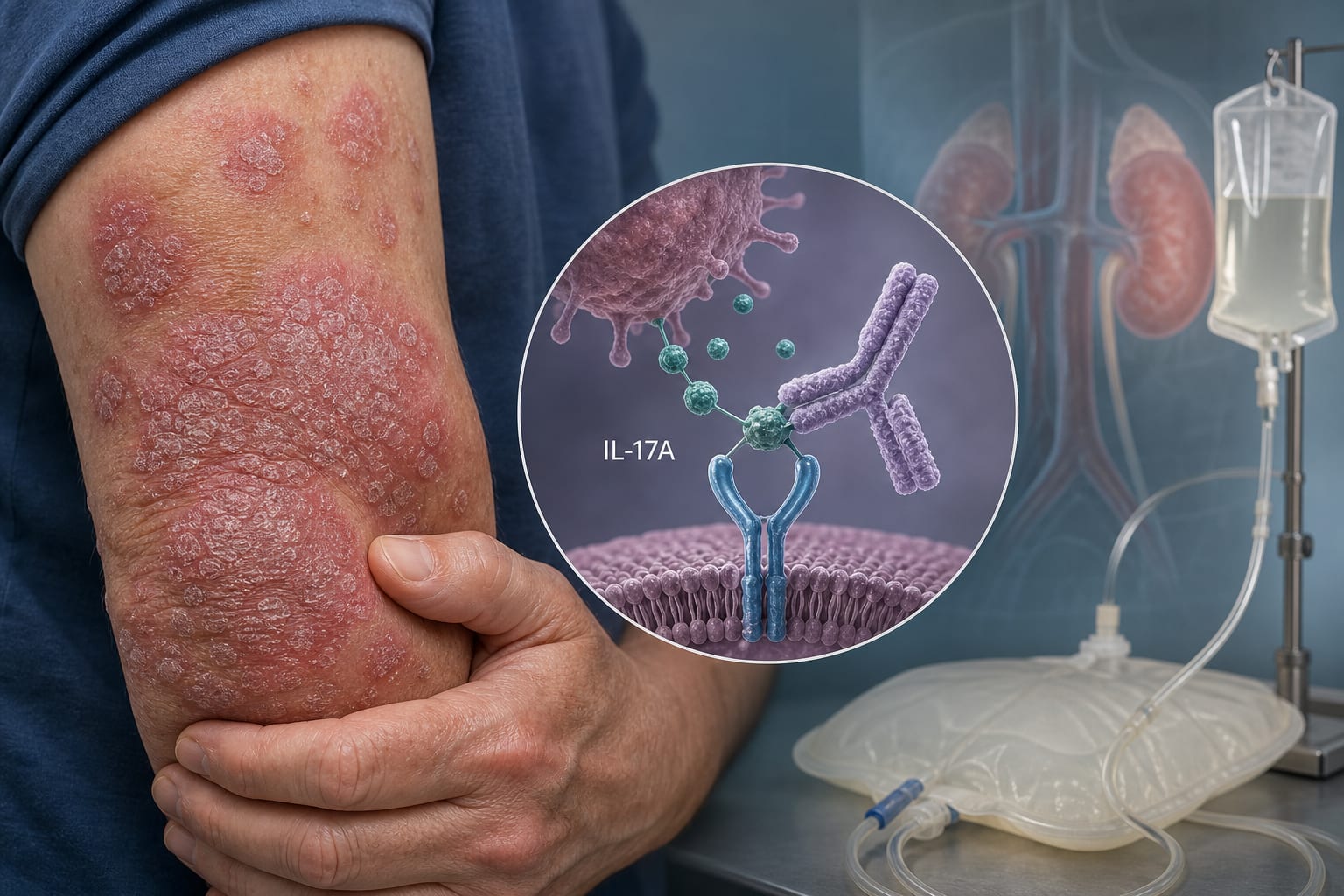
This study evaluates the effectiveness and safety of switching to ixekizumab, guselkumab, or ustekinumab in patients with moderate-to-severe plaque psoriasis who failed secukinumab therapy.
Background
Biologic switching is a common practice for patients with moderate-to-severe plaque psoriasis who do not respond to secukinumab.
Data Highlights
Biologic
PASI 75 Response Rate at Week 12
Adverse Event Rate
Ixekizumab
66.7%
28.6%
Guselkumab
28.1%
12.5%
Ustekinumab
16.7%
33.3%
Key Findings
Ixekizumab had a PASI 75 response rate of 66.7% at week 12, significantly higher than guselkumab (28.1%) and ustekinumab (16.7%) (P = 0.010).
In the secondary failure subgroup, ixekizumab showed a numerical advantage in PASI 75 response at all time points.
No significant differences in adverse event rates were observed among the three biologics (P = 0.281).
All adverse events reported were mild and did not lead to treatment discontinuation.
Clinical Implications
Clinicians should consider ixekizumab as a potentially more effective option for patients with secondary failure after secukinumab. The safety profiles of ixekizumab, guselkumab, and ustekinumab are favorable, allowing for flexibility in treatment decisions based on individual patient circumstances.
Conclusion
Switching to ixekizumab may provide better short- to mid-term effectiveness for patients with moderate-to-severe plaque psoriasis who fail secukinumab, especially in cases of secondary failure. Further studies are needed to confirm these findings.
Application of newly proposed GRAPPA and EULAR criteria in a longitudinal cohort identified progressively smaller groups of patients with early psoriatic arthritis who experienced persistently worse patient-reported outcomes.