Clinical Report: Positioning of Thoracic Paravertebral Catheters for Pain Relief
Overview
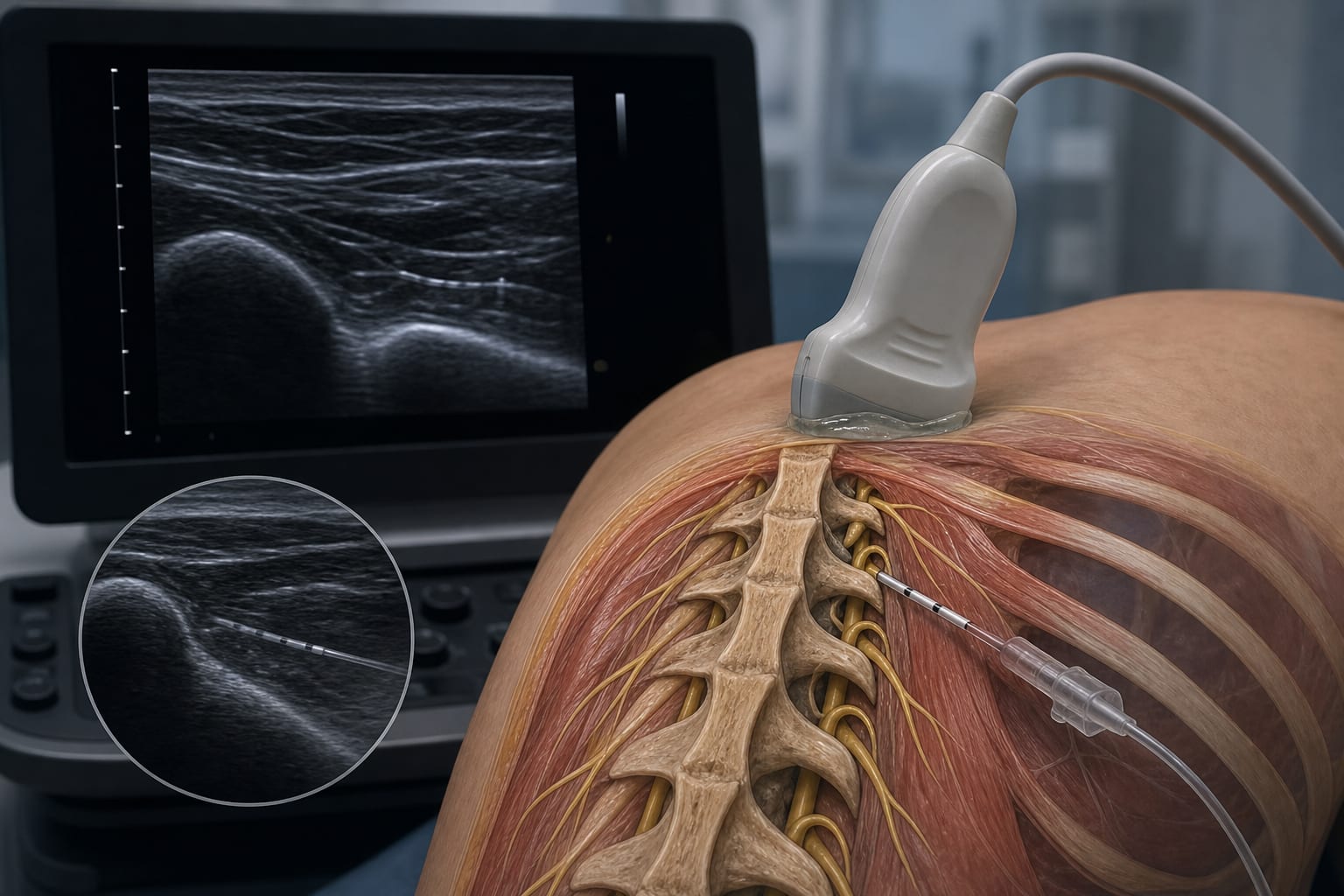
This case study demonstrates the effective use of an ultrasound-guided thoracic paravertebral catheter for continuous postoperative pain relief in a patient undergoing left video-assisted thoracic surgery (VATS) pneumonectomy. The technique resulted in satisfactory pain control with minimal complications.
Background
The thoracic paravertebral block (PVTB) is a regional anesthesia technique that provides effective analgesia for thoracic surgeries, including VATS. Continuous PVTB is often preferred due to the limited duration of single injections, but it poses challenges in catheter placement. Understanding effective techniques for catheter placement is crucial for optimizing postoperative pain management.
Data Highlights
No numerical data available in the article.
Key Findings
['Ultrasound-guided thoracic paravertebral catheter placement can provide effective postoperative analgesia.', "The saline 'bubble test' is a reliable method for confirming catheter position.", 'The patient experienced consistent pain relief with numerical rating scale scores below 3.', 'Continuous ropivacaine infusion was utilized for pain management.', 'The patient was discharged on the 8th postoperative day without complications.', 'Preoperative assessment indicated a need for optimal regional analgesia due to COPD.']
Clinical Implications
The findings support the use of ultrasound-guided thoracic paravertebral catheters as a viable alternative to epidural analgesia in thoracic surgeries. Clinicians should consider the saline “bubble test” for confirming catheter placement, especially in patients with obesity.
Conclusion
Ultrasound-guided thoracic paravertebral catheter placement is an effective technique for managing postoperative pain in thoracic surgeries, offering a reliable alternative to traditional methods.