Case Report: Tumor-related hemorrhage determined treatment sequencing in blastic plasmacytoid dendritic cell neoplasm coexisting with gastric cardia adenocarcinoma - Report - MDSpire

Case Report: Tumor-related hemorrhage determined treatment sequencing in blastic plasmacytoid dendritic cell neoplasm coexisting with gastric cardia adenocarcinoma

  • By

  • Yuze Li

  • Chenggong Zhang

  • Xudong Song

  • Guoquan Tao

  • May 1, 2026

  • 0 min

Share

Clinical Report: Management Sequence Influenced by Tumor-Associated Hemorrhage

Overview

This case study highlights the complexities in managing a 70-year-old male with blastic plasmacytoid dendritic cell neoplasm (BPDCN) who developed gastric cardia adenocarcinoma during treatment. The findings emphasize the need for immediate investigation of secondary malignancies in BPDCN patients presenting with gastrointestinal symptoms.

Background

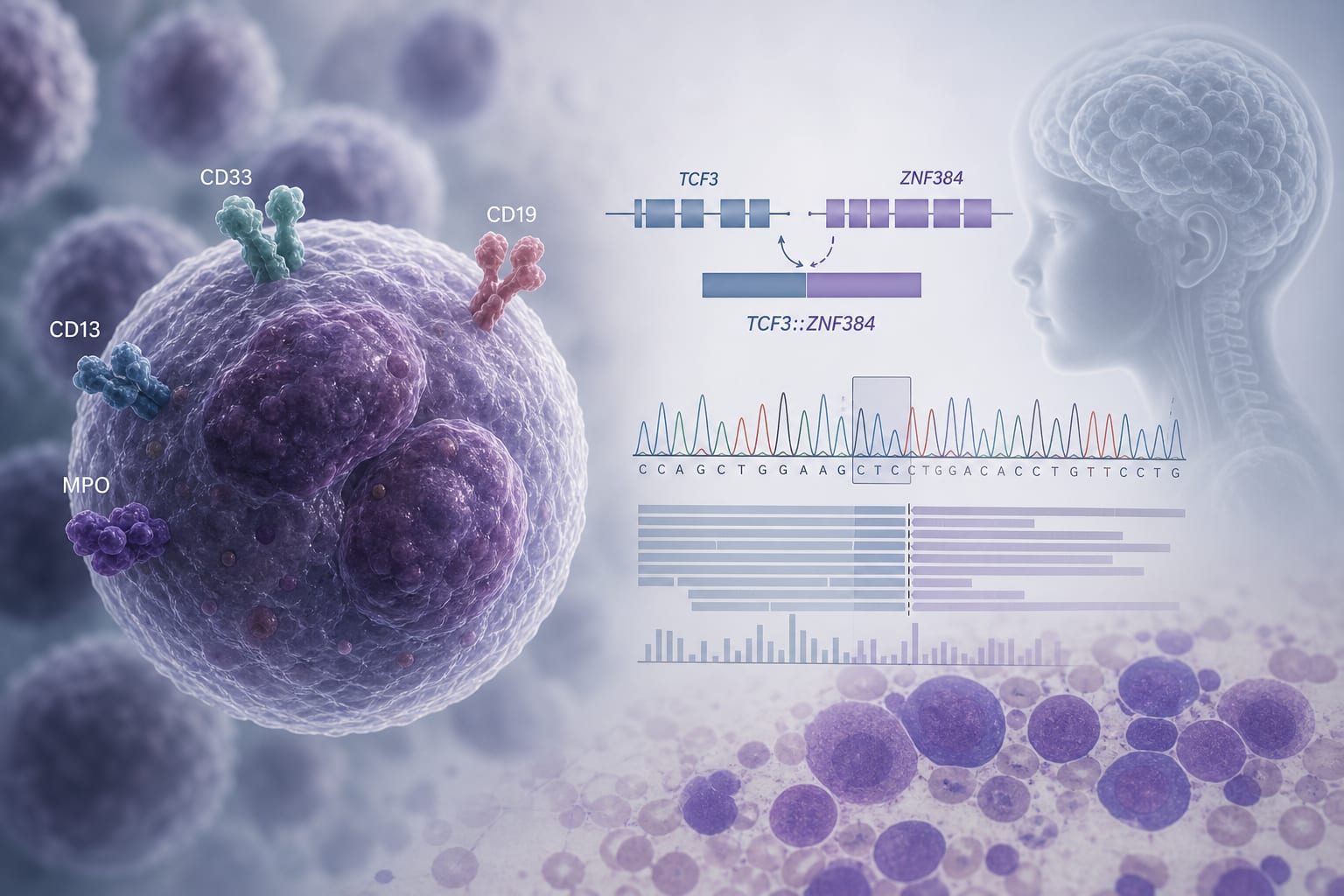
Blastic plasmacytoid dendritic cell neoplasm (BPDCN) is a rare and aggressive hematologic malignancy that often presents with cutaneous lesions. The coexistence of BPDCN with other primary solid tumors, such as gastric cancer, is extremely rare and poses significant diagnostic and therapeutic challenges. Understanding the management of such cases is crucial for improving patient outcomes.

Data Highlights

No numerical data available in the article.

Key Findings

  • The patient was diagnosed with BPDCN after excision of a forearm lesion.
  • Recurrent hematemesis led to the discovery of gastric cardia adenocarcinoma during BPDCN treatment.
  • Radical gastrectomy was prioritized to manage tumor-associated bleeding over BPDCN chemotherapy.
  • Immediate investigation for secondary malignancies is advised in BPDCN patients with gastrointestinal symptoms.
  • Management of active tumor-related bleeding may take precedence over hematologic treatment in complex cases.

Clinical Implications

Clinicians should maintain a high index of suspicion for secondary malignancies in patients with BPDCN who exhibit gastrointestinal symptoms. A multidisciplinary approach is essential for managing such complex cases, prioritizing life-threatening complications.

Conclusion

This case underscores the importance of timely diagnosis and management of secondary malignancies in patients with BPDCN, particularly when they present with acute complications such as bleeding.

References

  1. Blood Cancer Journal, Multi-Omics Analysis of Three Hematological Cancers in a Patient Identifies Their Origin from Clonal Hematopoietic Stem Cells, 2023
  2. Blood Cancer Journal, Association of Cutaneous Blastic Plasmacytoid Dendritic Cell Neoplasm with Myelodysplastic Syndrome Arising from Clonal Hematopoiesis, 2023
  3. Gastric Cancer, Initial Angiographic Alterations Following Hemostatic Radiotherapy for Bleeding in Gastric Cancer: Insights into Mechanisms and Immediate Treatment Outcomes, 2025
  4. Blood Cancer Journal, Molecular Profiling Reveals Two Distinct Subtypes of Blastic Plasmacytoid Dendritic Cell Neoplasm with Unique Clinical Features, 2022
  5. Blastic Plasmacytoid Dendritic Cell Neoplasm (BPDCN): 2025 Update on Diagnosis, Pathophysiology, Risk Assessment, and Management, PubMed
  6. FDA Receives BLA for Pivekimab Sunirine in Rare Hematologic Malignancy, CancerNetwork
  7. Guidelines for endoscopic management of nonvariceal upper gastrointestinal bleeding (second edition), PubMed
  8. Blastic Plasmacytoid Dendritic Cell Neoplasm (BPDCN): 2025 Update on Diagnosis, Pathophysiology, Risk Assessment, and Management - PubMed
  9. FDA Receives BLA for Pivekimab Sunirine in Rare Hematologic Malignancy | CancerNetwork
  10. Guidelines for endoscopic management of nonvariceal upper gastrointestinal bleeding (second edition)

Original Source(s)

Related Content