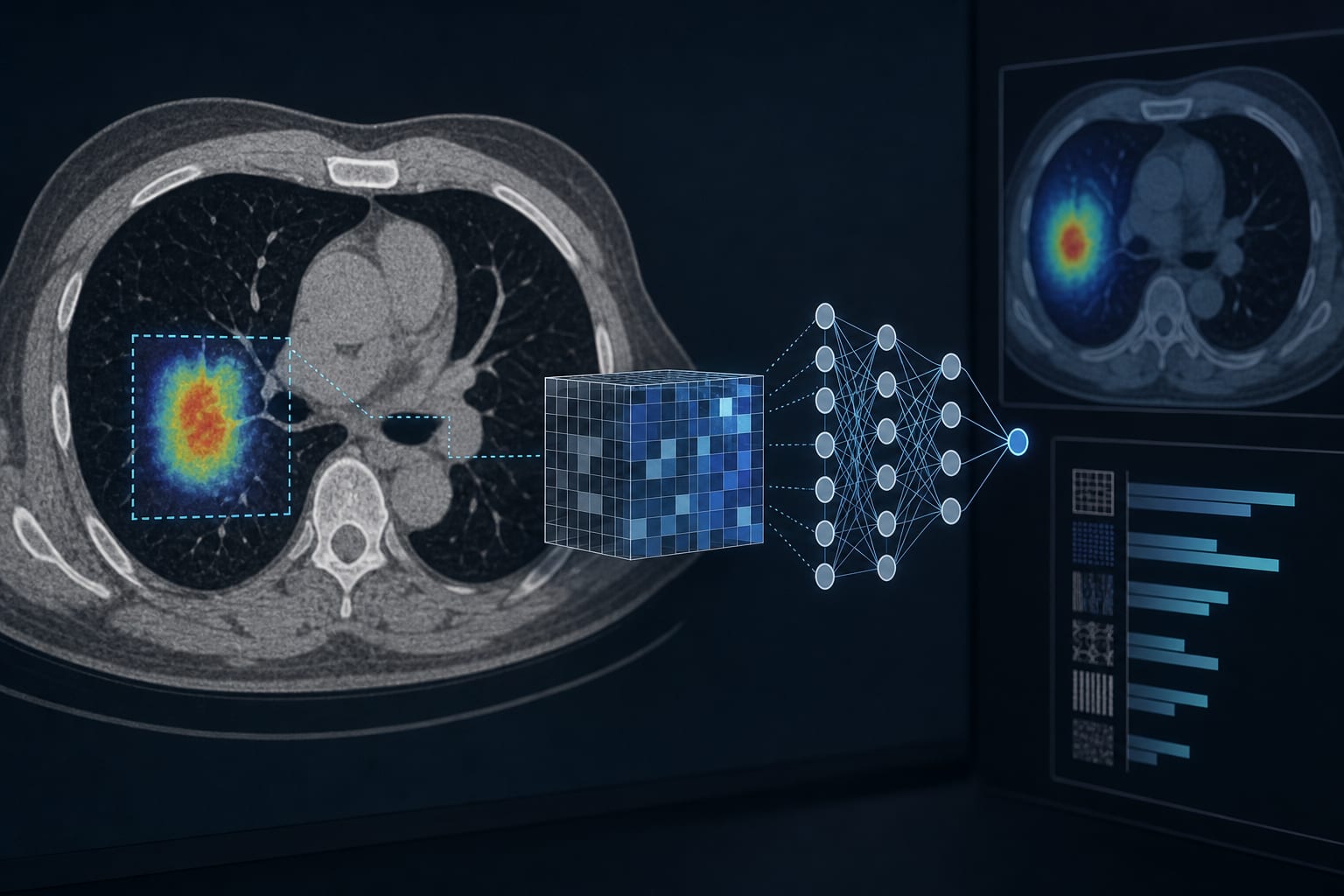
Clinical Report: A Comprehensive Review of Explainable AI Techniques in Cancer Imaging
Overview
This review highlights the critical role of explainable AI (xAI) in enhancing the interpretability of AI systems used in cancer imaging. It underscores the necessity for transparency in AI decision-making processes to foster trust and facilitate clinical adoption.
Background
Cancer remains a leading cause of mortality globally, necessitating advancements in diagnostic accuracy and treatment planning. AI-based systems have the potential to revolutionize cancer care by improving diagnostic capabilities and reducing analysis time. However, the opaque nature of many AI models poses significant challenges to their acceptance in clinical settings, emphasizing the need for explainable AI solutions.
Data Highlights
No numerical data available in the source material.
Key Findings
AI systems can enhance diagnostic accuracy and support preoperative risk assessment in cancer care.
Only 5% of AI-enabled radiology devices have undergone prospective testing, highlighting a gap in clinical validation.
The EU AI Act classifies AI systems for cancer diagnosis as high-risk, necessitating transparency and human oversight.
Explainable AI (xAI) aims to make AI decision-making processes transparent, which is essential for clinical confidence.
Real-world AI adoption in oncology requires integration into clinical workflows and extensive validation.
Recent advancements in xAI include visualization tools that help clinicians understand AI predictions.
Clinical Implications
Clinicians must prioritize the integration of explainable AI systems into their workflows to enhance trust and facilitate the safe adoption of AI technologies in cancer imaging. Ongoing training and validation are essential to ensure that these systems meet clinical needs and regulatory requirements.
Conclusion
The implementation of explainable AI in cancer imaging is crucial for bridging the gap between technological advancements and clinical practice. Ensuring transparency and interpretability will be key to fostering trust and improving patient outcomes.