Efficacy of wearable devices for upper and lower limb rehabilitation in stroke patients: A systematic review and meta-analysis of randomized controlled trials - Report - MDSpire

Efficacy of wearable devices for upper and lower limb rehabilitation in stroke patients: A systematic review and meta-analysis of randomized controlled trials

  • By

  • Chang Liu

  • Baojian Wei

  • Xiaolei Wang

  • Ning Jiang

  • Yuzhen Xu

  • May 14, 2026

  • 0 min

Share

Clinical Report: Effectiveness of Wearable Technology in Stroke Rehabilitation

Overview

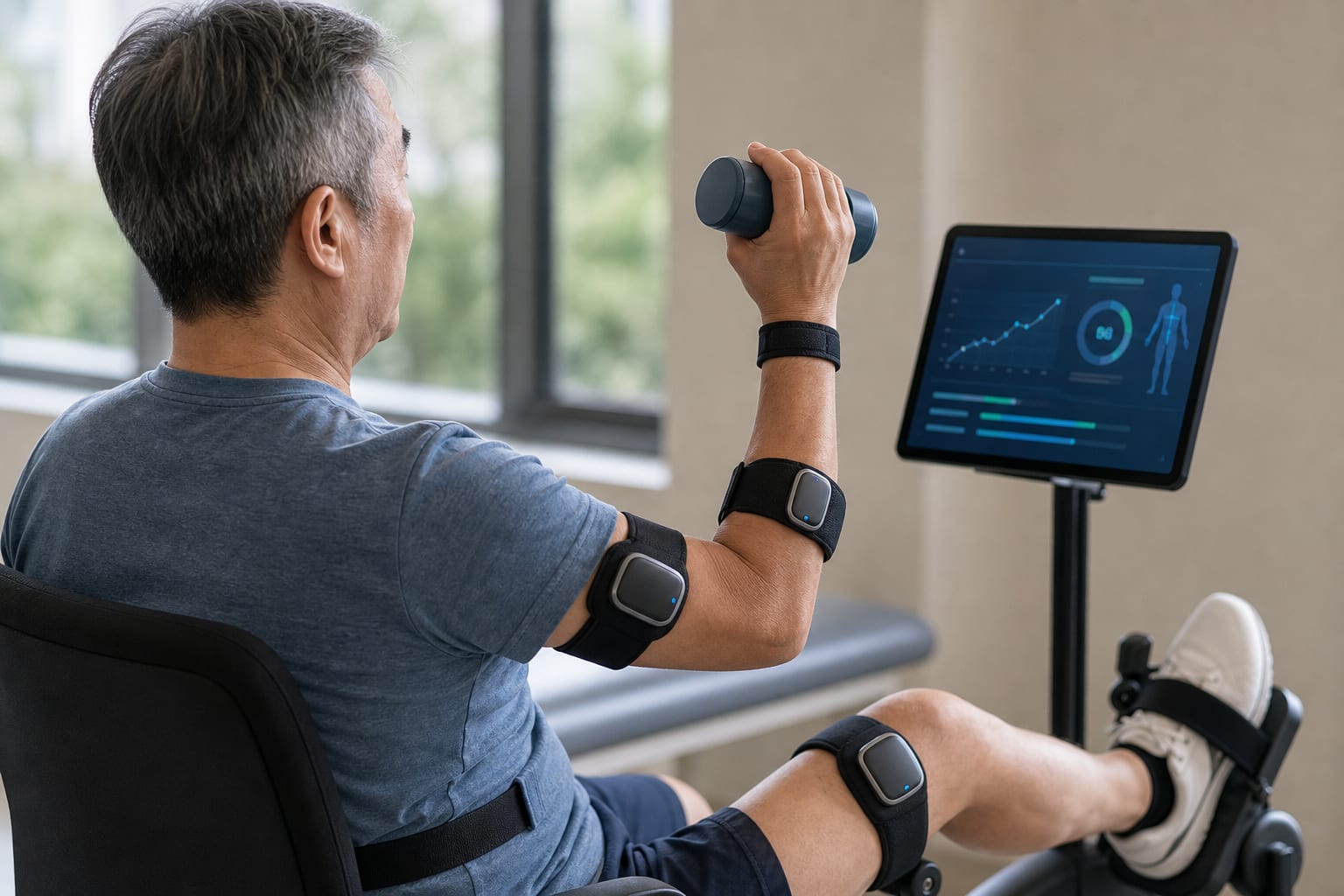
This systematic review and meta-analysis evaluates the effectiveness of wearable technology in enhancing rehabilitation outcomes for stroke survivors. The findings suggest that wearable devices significantly improve upper and lower limb function, promoting better recovery and quality of life.

Background

Stroke is a leading cause of disability worldwide, with many survivors facing challenges in regaining motor function. The integration of wearable technology into rehabilitation programs offers a promising approach to enhance self-management and compliance among stroke patients. Understanding the efficacy of these devices is crucial for optimizing rehabilitation strategies and improving patient outcomes.

Data Highlights

No specific numerical data provided in the source material.

Key Findings

  • Wearable devices can facilitate functional rehabilitation in stroke patients.
  • Rehabilitation programs incorporating wearable technology improve upper limb function and daily living activities.
  • Wearable devices enhance patients' perceptual abilities through stimulation, aiding recovery.
  • Pedometers and sensors promote physical activity via behavioral modification techniques.
  • Self-management models supported by wearable technology address rehabilitation challenges post-discharge.

Clinical Implications

Healthcare providers should consider incorporating wearable technology into rehabilitation programs for stroke survivors to enhance recovery outcomes. These devices can facilitate self-monitoring and improve patient engagement in their rehabilitation process.

Conclusion

The use of wearable technology in stroke rehabilitation presents a valuable opportunity to improve functional recovery and quality of life for survivors. Further research is warranted to optimize their application in clinical settings.

Related Resources & Content

  1. Frontiers in Neurology, 2026 -- Effects of Blood Flow Restriction Therapy for Lower Limb Dysfunction in Stroke Patients: A Systematic Review And Meta-Analysis
  2. npj Digital Medicine, 2026 -- Affordable AI-Powered Exergame for Stroke Rehabilitation and Upper-Limb Function Evaluation
  3. Frontiers in Neurology, 2026 -- Effectiveness of transcutaneous auricular vagus nerve stimulation in stroke rehabilitation: a systematic review and meta-analysis of randomized clinical trials
  4. Frontiers in Neurology, 2026 -- Effects of blood flow restriction combined with robot-assisted training on upper limb motor function after stroke: a randomized controlled trial protocol
  5. European Stroke Journal, 2023 -- Guidelines on motor rehabilitation for stroke patients
  6. PMC, Efficacy of Wearable Exoskeleton for Gait Recovery in Patients With Stroke: A Multicenter Randomized Controlled Trial
  7. https://academic.oup.com/esj/article/10/4/1160/8377197
  8. Efficacy of Wearable Exoskeleton for Gait Recovery in Patients With Stroke: A Multicenter Randomized Controlled Trial - PMC

Original Source(s)

Related Content