The impact of early nutritional and immune status assessment on all-cause mortality in patients with intracerebral hemorrhage in the intensive care unit: a retrospective study - Report - MDSpire
Advertisement
The impact of early nutritional and immune status assessment on all-cause mortality in patients with intracerebral hemorrhage in the intensive care unit: a retrospective study
Clinical Report: Evaluating the Role of Early Nutritional and Immune Status Assessment
Overview
This study investigates the association between the HALP score and all-cause mortality in patients with intracerebral hemorrhage (ICH). A lower HALP score correlates with increased mortality risk.
Background
Intracerebral hemorrhage (ICH) accounts for a significant proportion of stroke-related deaths, necessitating effective prognostic tools. The systemic status of ICH patients, including nutritional and immune factors, is increasingly recognized as critical to outcomes. The HALP score integrates these factors, offering a comprehensive assessment of patient risk.
Data Highlights
Time Point
Mortality Rate
30-day
29.08%
90-day
34.49%
365-day
41.84%
Key Findings
The HALP score is associated with increased mortality in ICH patients.
Patients in the Q1 group (HALP < 16.87) had significantly higher mortality rates (p < 0.001).
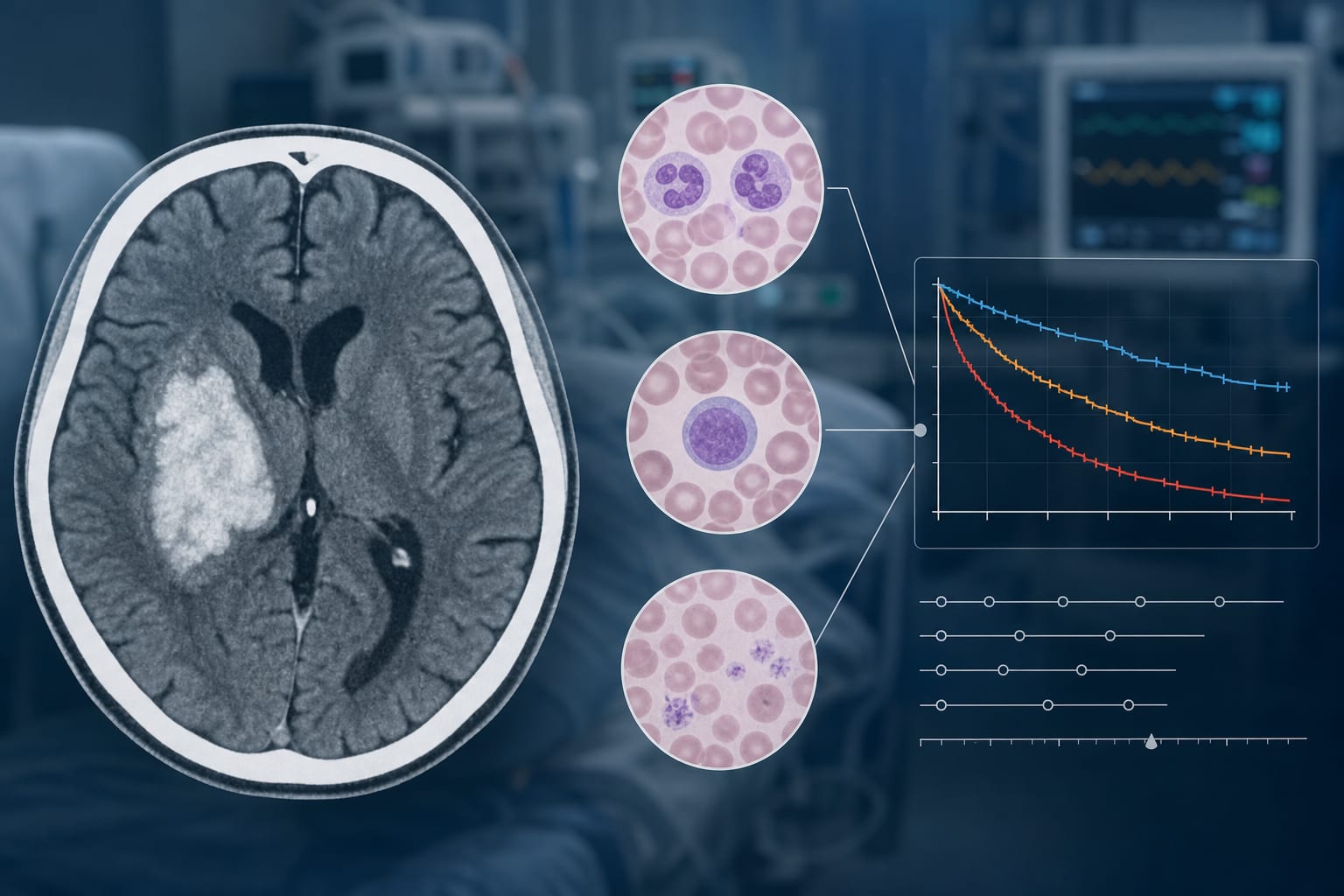
Kaplan–Meier survival curves and RCS regression analysis confirmed the non-linear correlation between HALP score and mortality risk.
The risk model based on nutritional assessment effectively identifies high-risk ICH patients.
The nomogram achieved an AUROC of 0.825 in the internal cohort, indicating strong predictive capability.
Clinical Implications
Clinicians may utilize the HALP score as a prognostic tool to identify high-risk ICH patients. This score can aid in stratifying patients for more intensive monitoring and intervention strategies.
Conclusion
The study indicates an association between the HALP score and mortality in ICH patients.