Exposure to multiple metallic elements and risk of thyroid tumors: insights from elemental profiling, diet, and molecular characteristics plasma levels of metallic elements - Report - MDSpire
Advertisement
Exposure to multiple metallic elements and risk of thyroid tumors: insights from elemental profiling, diet, and molecular characteristics plasma levels of metallic elements
Association Between Multiple Metallic Element Exposure and Thyroid Tumor Risk
Overview
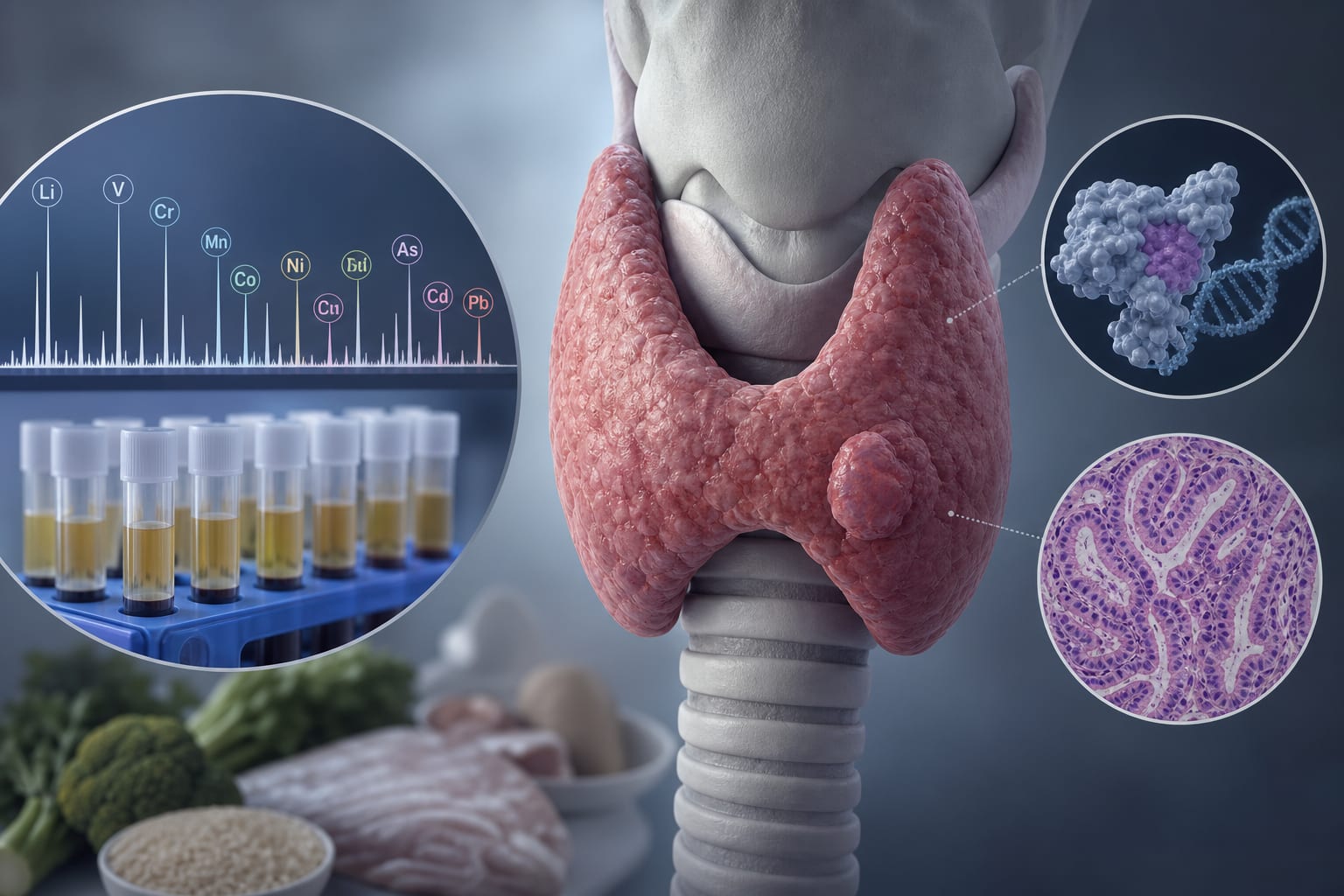
This study investigates the relationship between plasma metallic element levels, dietary influences, and the risk of thyroid tumors, particularly papillary thyroid carcinoma (PTC). Findings indicate significant alterations in elemental profiles among patients with thyroid disease, influenced by dietary habits, and suggest potential links to molecular characteristics such as the BRAF V600E mutation.
Background
Thyroid cancer, especially papillary thyroid carcinoma, is one of the fastest-growing malignancies globally, with increasing incidence rates. Environmental exposures, particularly to metallic elements, are hypothesized to play a role in thyroid tumorigenesis. Understanding the interactions between these exposures, dietary habits, and molecular characteristics is crucial for developing preventive strategies and improving patient outcomes.
Data Highlights
Element
Concentration in Patients
Concentration in Controls
Mercury
Higher in PTC
Normal
Cadmium
Higher in PTC
Normal
Youtiao Consumption
153% above normal
N/A
Key Findings
Patients with thyroid disease exhibited significantly altered plasma elemental profiles compared to healthy controls.
Dietary habits, such as Youtiao consumption, significantly influenced plasma elemental concentrations.
Specific alterations in elemental profiles correlated with abnormal thyroid hormone levels.
The BRAF V600E mutation was present in 51% of PTC cases, with a non-significant association to higher mercury and cadmium levels.
Environmental exposures to metallic elements may disrupt thyroid hormone regulation and contribute to thyroid tumorigenesis.
Clinical Implications
Healthcare professionals should consider the impact of dietary habits on plasma metallic element levels when assessing thyroid disease risk. Additionally, understanding the potential links between environmental exposures and molecular characteristics may inform targeted prevention strategies and patient management.
Conclusion
This study highlights the complex interplay between dietary influences and plasma metallic element profiles in thyroid tumor risk, underscoring the need for further research in this area to enhance prevention and treatment strategies.