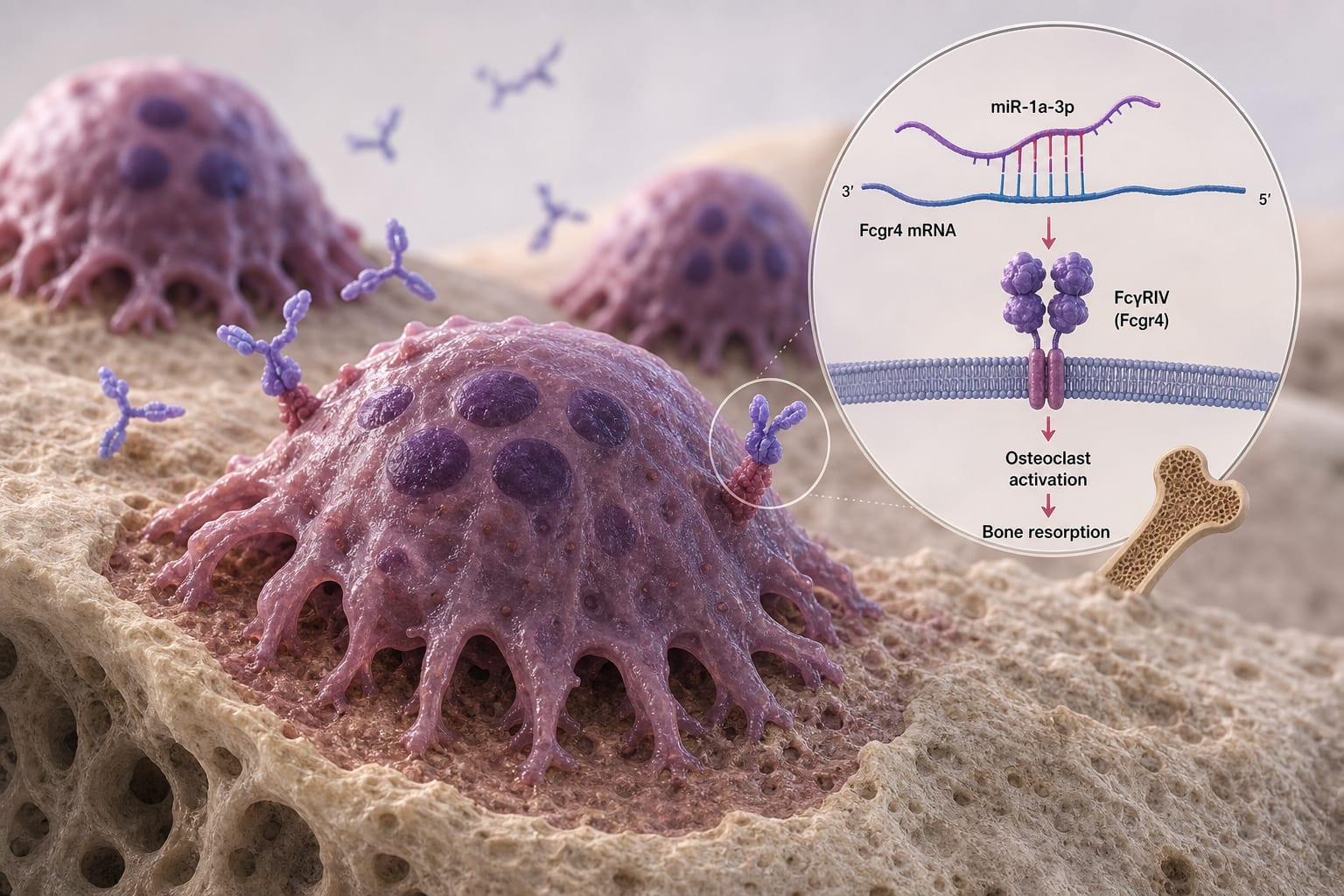
Regulation of Pathological Bone Loss through Osteoclast Activation Mediated by MiR-1a-3p and Fcgr4 Interaction
Overview
This study identifies miR-1a-3p as a key regulator of osteoclast activity through its interaction with Fcgr4, linking systemic pathological states to immune-mediated bone loss. The findings highlight the potential of targeting this axis for therapeutic strategies in osteoporosis.
Background
Osteoporosis is a significant health concern characterized by an imbalance between bone resorption and formation, leading to increased fracture risk. Understanding the mechanisms behind osteoclast dysregulation in the context of systemic diseases is crucial for developing effective treatments. This study explores the role of miR-1a-3p in regulating osteoclast activity and its implications for bone health.
Data Highlights
miR-1a-3p overexpression significantly suppressed osteoclast activity by inhibiting Fcgr4-dependent signaling. In human osteoporosis cohorts and animal models, miR-1a-3p expression was significantly reduced, correlating with increased osteoclast activity and bone loss.
Overexpression of miR-1a-3p inhibits osteoclast activity through Fcgr4-dependent signaling pathways.
Reduced expression of miR-1a-3p is observed in human osteoporosis cohorts and animal models of bone loss.
Chronic unpredictable mild stress (CUMS) decreases miR-1a-3p expression, leading to increased Fcgr4 expression and osteoclast activation.
The FcγRIV–SYK–NFATc1 signaling pathway is activated in response to decreased miR-1a-3p, contributing to osteoporotic bone loss.
Clinical Implications
Targeting the miR-1a-3p–Fcgr4 axis may offer new therapeutic avenues for managing osteoporosis and related bone loss. Understanding the impact of systemic stressors on this regulatory pathway could inform treatment strategies.
Conclusion
The study provides insights into the molecular mechanisms linking systemic pathological states to osteoclast dysregulation, emphasizing the role of miR-1a-3p in bone health.
Supervised rehabilitation and exercise-based therapies may improve function, pain, and bone health in ankylosing spondylitis, according to a new review.
Researchers urge caution in interpreting joint replacement predictors, noting that surgery reflects access and decision-making as well as disease biology.