Isoflurane for difficult sedation in critically ill children: a retrospective analysis in a mixed pediatric intensive care population - Report - MDSpire
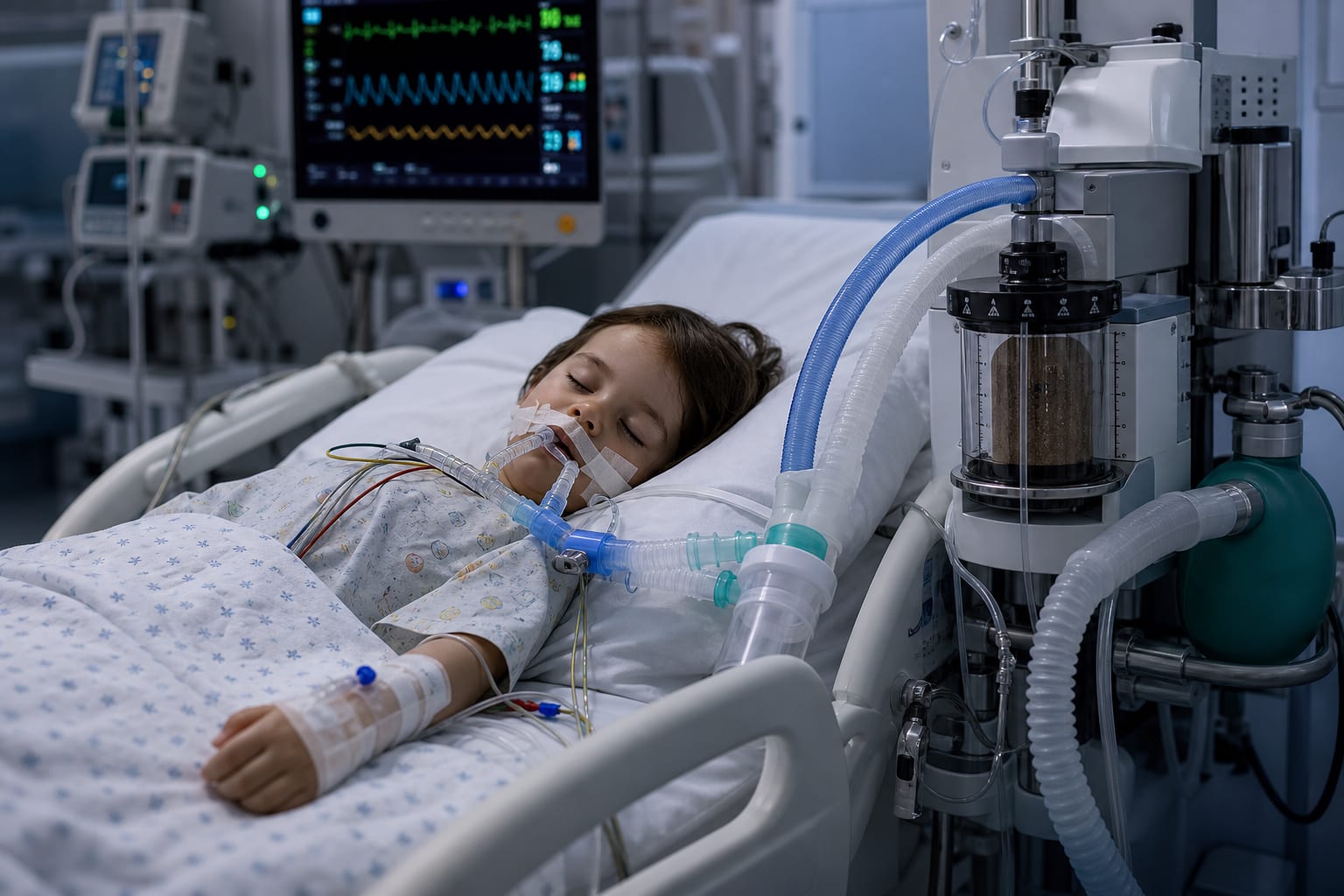
Clinical Report: Inhaled Isoflurane as a Rescue Sedation Method for Critically Ill Pediatric Patients
Overview
This study evaluates inhaled isoflurane as a rescue sedation strategy in critically ill pediatric patients who failed conventional sedation regimens. Results indicate a significant reduction in the number of sedative agents and breakthrough agitation, although an increase in vasoactive support and high rates of delirium were observed.
Background
Sedation management in pediatric intensive care units (PICUs) is complex, often leading to polypharmacy and associated risks. Standard sedatives may be insufficient for critically ill children, necessitating alternative strategies. Isoflurane, a volatile anesthetic, has potential as a rescue sedation method, but its use in this population is not well-documented.
Data Highlights
Parameter
Before Isoflurane
After Isoflurane
P-value
Number of sedative agents
4
3
< 0.001
Breakthrough agitation rescue medication use
100%
42.9%
< 0.001
Vasoactive-inotropic score
6.22
9.70
0.008
Key Findings
Isoflurane was initiated after a median of 3 days of prior sedation.
The median duration of isoflurane use was 8 days.
Concomitant sedative agents decreased significantly from 4 to 3.
Rescue medication use for agitation declined from 100% to 42.9%.
Vasoactive-inotropic score increased significantly from 6.22 to 9.70.
Delirium occurred in 87.5% of survivors, with withdrawal symptoms in 44%.
Clinical Implications
The use of isoflurane may effectively reduce the sedative burden in critically ill pediatric patients, but careful monitoring of hemodynamic status is essential due to the observed increase in vasoactive support and high rates of delirium.
Conclusion
Inhaled isoflurane presents a viable rescue sedation option in pediatric patients, though its use requires careful consideration of potential side effects and monitoring needs.