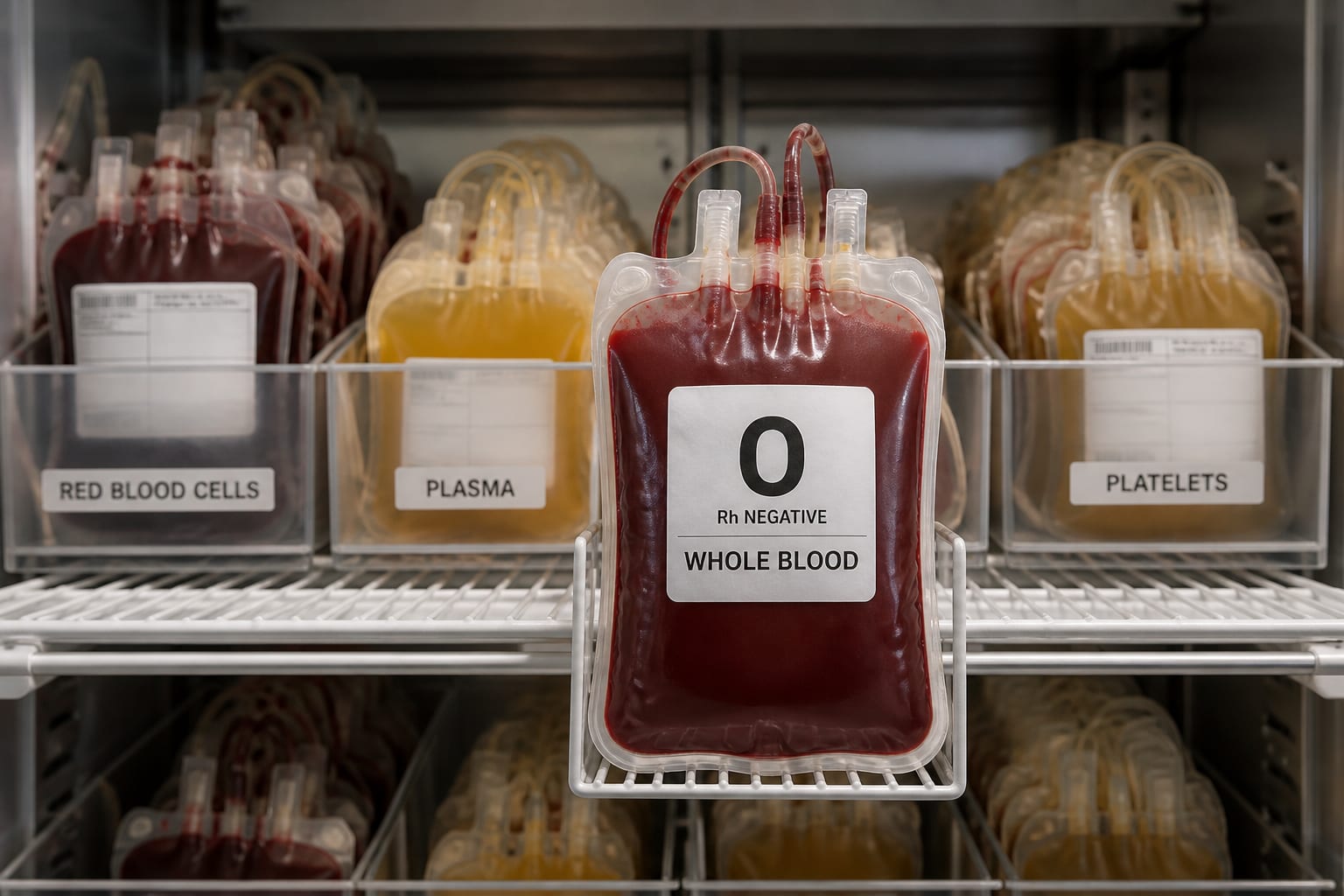
Transfusion Strategies for Components and Whole Blood in Trauma Centers
Overview
This study evaluates the adoption of balanced component transfusion and whole blood (WB) use in US trauma centers, revealing significant hospital-level variation. The findings indicate a rising trend in the use of these transfusion strategies over time.
Background
Hemorrhage is a leading cause of early mortality following traumatic injuries, necessitating effective resuscitation strategies. Balanced component transfusion, typically in a 1:1:1 ratio of plasma, platelets, and red blood cells, has been associated with improved outcomes. The increasing endorsement of WB for initial resuscitation highlights the need to understand its implementation across trauma centers.
Data Highlights
No numerical data provided in the source material.
Key Findings
Balanced component transfusion is central to damage control resuscitation.
Whole blood (WB) transfusion offers logistical advantages in trauma care.
National implementation of balanced transfusion and WB programs is not uniformly defined across US trauma centers.
Adoption of these transfusion strategies varies significantly between hospitals.
Factors influencing adoption include infrastructure, blood bank capability, and regulatory oversight.
Clinical Implications
Understanding the variation in transfusion practices among trauma centers is crucial.
Conclusion
The study highlights the need for standardized practices across institutions.
Investigators compared intra-articular microbial profiles and predicted metabolic pathways in patients with hip osteoarthritis and nonarthritic controls.