Effect of total ligamentum flavum removal on increased motion and reduced stiffness: an ex vivo biomechanical study in a lamb spine model - Report - MDSpire
Advertisement
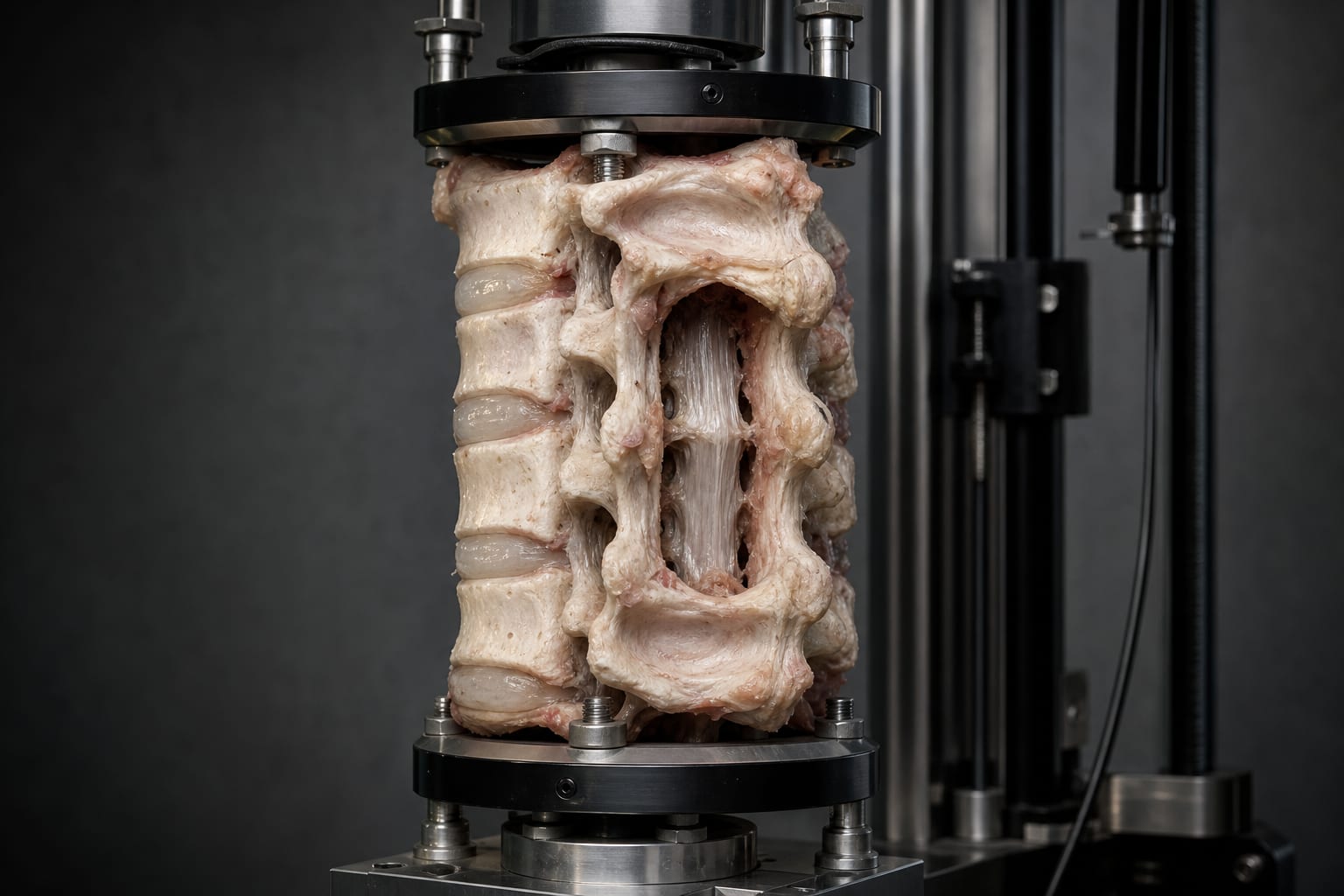
Effect of total ligamentum flavum removal on increased motion and reduced stiffness: an ex vivo biomechanical study in a lamb spine model
Impact of Complete Ligamentum Flavum Excision on Mobility and Rigidity
Overview
This study demonstrates that total excision of the ligamentum flavum significantly enhances spinal motion and reduces stiffness compared to laminotomy alone. The findings underscore the critical role of the ligamentum flavum in maintaining lumbar segmental stability.
Background
The ligamentum flavum is essential for lumbar stability and spinal motion regulation. Surgical procedures like laminotomy and flavectomy are common in treating lumbar conditions, yet their biomechanical impacts are not fully understood. Understanding these effects is crucial for minimizing postoperative instability and optimizing surgical outcomes.
Data Highlights
Group
Displacement (Axial Compression)
Stiffness (Left Bending)
Laminotomy + Flavectomy
Increased (p = 0.001)
Reduced (p < 0.001)
Control
Baseline
Baseline
Key Findings
Total flavectomy significantly increased displacement in axial compression, left bending, flexion, and extension compared to controls.
Stiffness was significantly reduced in left bending, flexion, and extension in the Laminotomy + Flavectomy group.
Isolated laminotomy resulted in only minor, non-significant biomechanical changes.
Effect sizes for biomechanical alterations ranged from moderate to large (η2 = 0.24–0.71).
The study highlights the essential role of the ligamentum flavum in maintaining posterior tension band stability.
Clinical Implications
Surgeons should consider preserving the ligamentum flavum during decompression procedures to maintain spinal stability. The findings suggest that total flavectomy may lead to increased postoperative instability, warranting careful evaluation of surgical strategies.
Conclusion
Total ligamentum flavum excision markedly affects spinal biomechanics, emphasizing the need for preservation strategies in surgical practice to mitigate the risk of postoperative instability.
Teriparatide followed by zoledronic acid increased bone mineral density but did not reduce fracture risk compared with standard care in adults with osteogenesis imperfecta.
In a UK cohort, patients with osteoarthritis who initiated centrally acting analgesics had a higher hazard of knee or hip replacement than those who initiated SSRIs, though residual confounding by pain severity remains a key limitation.