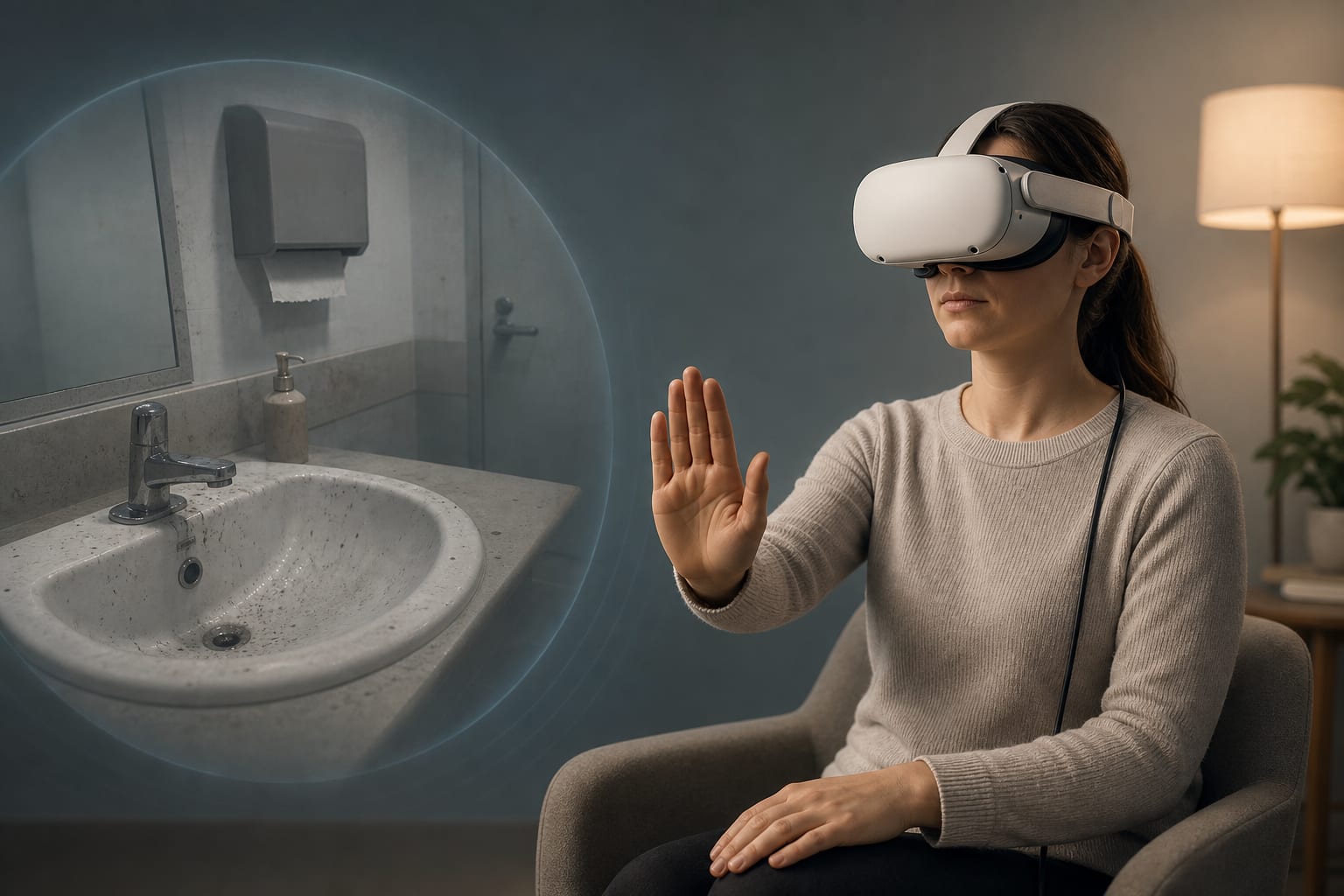
Clinical Report: Efficacy of Virtual Exposure Therapy in OCD Treatment
Overview
This study evaluates the efficacy of virtual exposure therapy with response prevention (VRET) for treating obsessive-compulsive disorder (OCD). The findings suggest that VRET may address barriers to traditional exposure therapy, potentially improving treatment access and patient engagement.
Background
Obsessive-compulsive disorder (OCD) is a prevalent and debilitating condition that significantly impacts patients' quality of life. Traditional cognitive behavioral therapy (CBT) with exposure and response prevention (ERP) is the recommended first-line treatment, yet its implementation faces numerous barriers. Virtual reality exposure therapy (VRET) presents a novel approach that may help overcome these challenges by providing a controlled and safe environment for exposure.
Data Highlights
No numerical data or trial results were provided in the source material.
Key Findings
OCD has a lifetime prevalence of 1.3% to 2.5% and is a leading cause of disability.
ERP is the first-line treatment for OCD, but its use is often below 50% due to various barriers.
VRET offers a safe environment that may enhance patient acceptance and reduce refusal rates for exposure therapy.
VRET has shown efficacy for various anxiety disorders, though its superiority to traditional ERP is not universally established.
Therapists report logistical challenges and stress associated with conducting traditional ERP.
Clinical Implications
VRET may provide a viable alternative to traditional ERP, potentially improving treatment adherence among patients with OCD. Clinicians should consider integrating VRET into their therapeutic practices to address common barriers faced in conventional exposure therapy.
Conclusion
The study highlights the potential of VRET as an innovative approach to enhance the treatment of OCD, addressing both patient and therapist-related barriers to traditional exposure therapy.