Hyperexcitability of the Precuneus Facilitates Inflammatory-Induced Pain Sensitivity
Overview
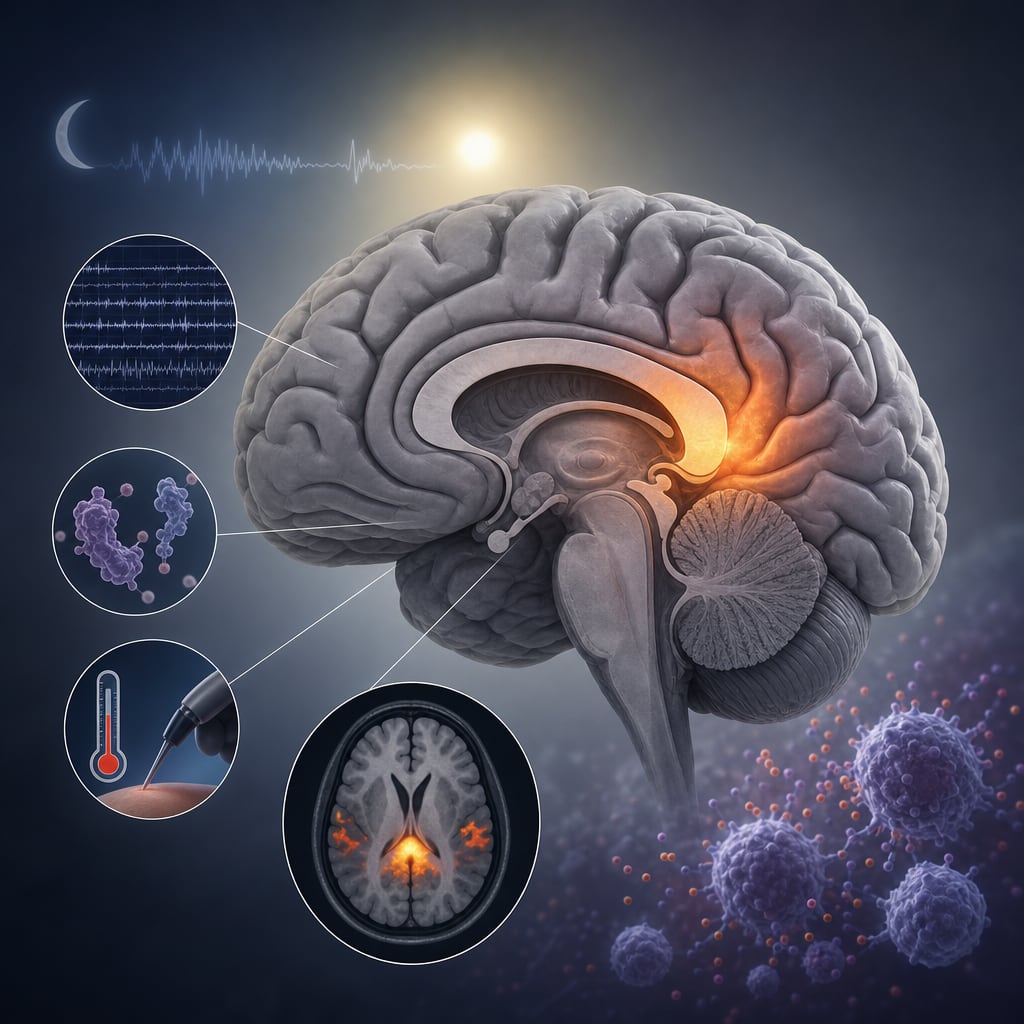
This study investigates the relationship between sleep disruption, inflammation, and pain sensitivity, highlighting the precuneus as a key brain region involved in these interactions. Findings indicate that sleep disturbances lead to increased inflammatory markers and heightened pain sensitivity, mediated by precuneus hyperactivity.
Background
Understanding the interplay between sleep disturbances and pain sensitivity is crucial for managing chronic pain conditions. Sleep disruption is known to enhance inflammatory responses, which can exacerbate pain perception. Identifying the neurobiological mechanisms underlying these interactions may inform targeted therapeutic strategies.
Data Highlights
Group
Total/Slow-Wave Sleep
IL-6 Levels
Pain Thresholds
Forced Awakening
Diminished
Increased
Decreased
Uninterrupted Sleep
Normal
Normal
Normal
Key Findings
Forced awakening (FA) participants had diminished total/slow-wave sleep compared to uninterrupted sleep (US) participants.
FA participants exhibited increased IL-6 levels and decreased pain thresholds.
Task-fMRI revealed heightened activation in the precuneus and middle temporal gyrus during pain processing in FA participants.
Serum IL-6 levels inversely correlated with pain thresholds and positively correlated with precuneus activation.
Mediation analysis indicated that precuneus hyperactivity mediates the relationship between IL-6 and pain hypersensitivity.
Clinical Implications
Clinicians should consider the impact of sleep disturbances on inflammatory responses and pain sensitivity in patients. Addressing sleep quality may be essential in managing chronic pain conditions, potentially through cognitive behavioral therapy for insomnia (CBT-I) and other interventions targeting sleep.
Conclusion
The precuneus serves as a critical link between sleep disturbances, inflammation, and pain sensitivity, suggesting a novel neuroimmune pathway that could be targeted for therapeutic interventions in chronic pain management.