Clinical heterogeneity and diagnostic challenges in CASK-related neurodevelopmental disorders: a longitudinal observational study - Report - MDSpire

Clinical heterogeneity and diagnostic challenges in CASK-related neurodevelopmental disorders: a longitudinal observational study

  • By

  • Iliyana Hristova Pacheva

  • Elena Timova

  • Tihomir Todorov

  • Iglika Sotkova

  • Katerina Gaberova

  • Ralitza Yordanova

  • Tzvetelina Tzvetanova

  • Fani Galabova

  • Nevyana Ivanova

  • Albena Todorova

  • July 13, 2026

Share

Clinical Report: Diverse Clinical Presentations and Diagnostic Difficulties in Neurodevelopmental Disorders Associated with CASK

Overview

This study highlights the clinical variability and diagnostic challenges associated with CASK-related neurodevelopmental disorders. It reports on three pediatric patients with distinct phenotypes.

Background

CASK-related disorders represent a spectrum of X-linked neurodevelopmental disorders characterized by significant clinical and genetic heterogeneity. The variability in clinical presentation complicates diagnosis and management.

Data Highlights

No numerical data or trial data provided in the source material.

Key Findings

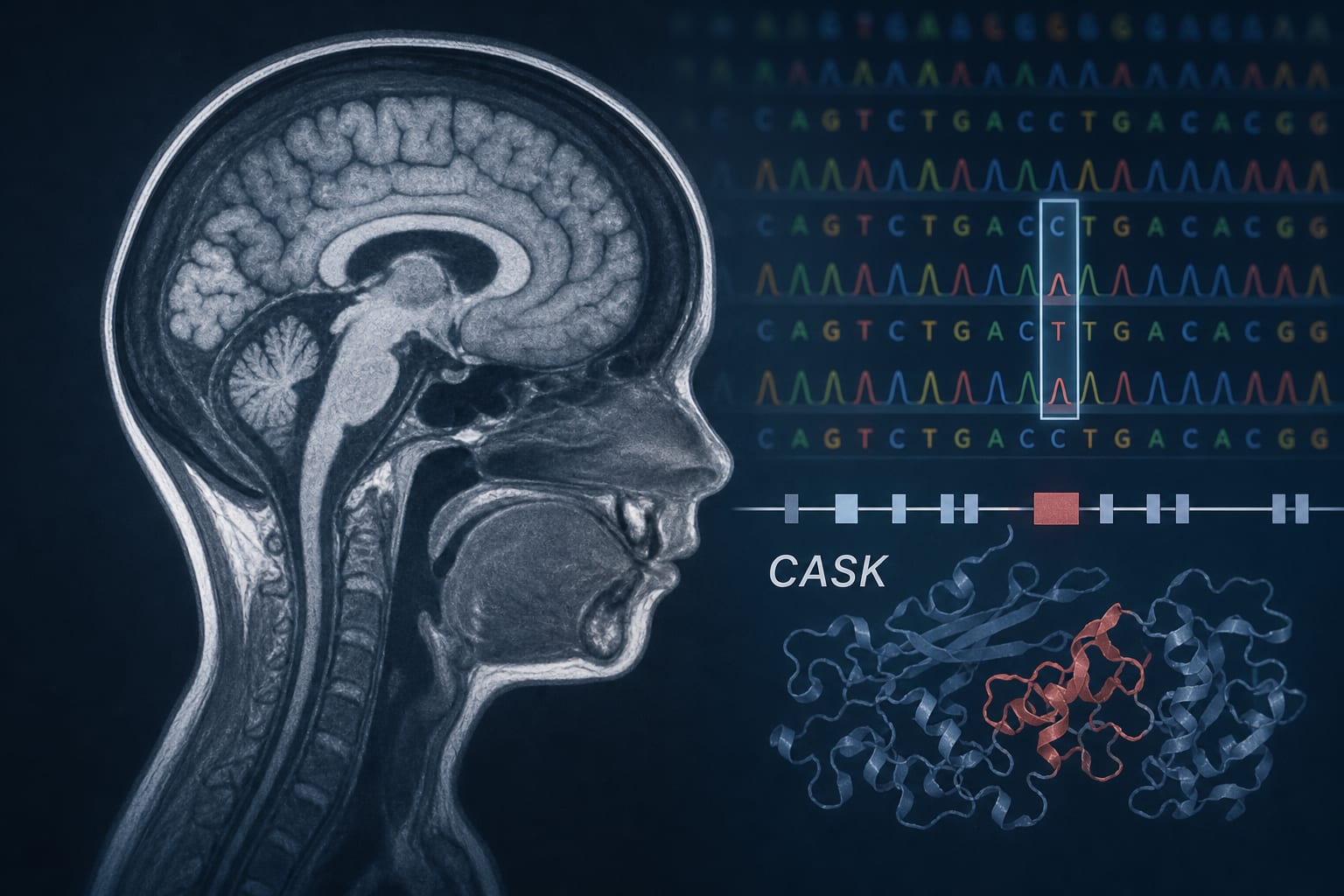
  • Two female patients with de novo loss-of-function CASK variants presented with MICPCH and developmental impairment.
  • A male patient with an inherited missense variant exhibited severe intellectual disability and drug-resistant epilepsy.
  • All patients demonstrated periods of developmental arrest or regression.
  • Marked intrafamilial phenotypic variability was observed among the patients.
  • Comprehensive genetic testing is essential for accurate diagnosis of CASK-related disorders.

Clinical Implications

CASK-related disorders should be considered in patients presenting with developmental delays, especially when accompanied by cerebral palsy-like features or postnatal growth retardation.

Conclusion

CASK-related disorders can manifest with a wide range of symptoms, necessitating a high index of suspicion for accurate diagnosis.
Related Resources & Content

  1. BMC Psychiatry (Springer), 2025 -- Characterizing Symptoms of SpLD, ADHD, and ASD in Chinese Children: A Biopsychosocial and Transdiagnostic Approach
  2. Pediatric Cardiology, 2026 -- Geographical and Language-Based Factors Associated with Neurodevelopmental Follow-Up in Children with Congenital Heart Disease
  3. BMC Psychiatry (Springer), 2025 -- Thorough clinical child psychiatric diagnostic evaluation and validation of the Autism- Tics, ADHD and other comorbidities inventory (A-TAC) in a population-based sample of 9-year-olds
  4. BMC Psychiatry (Springer), 2025 -- Caregiver psychiatric symptoms, assessment delay, and access to supports for children with neurodevelopmental conditions
  5. The neurodevelopmental spectrum of CASK-related disorder - PMC
  6. Clinical report outlines how, why to pursue genetic diagnosis for GDD/ID | AAP News | American Academy of Pediatrics
  7. Prenatal diagnosis of infratentorial anomalies: ultrasound, fetal MRI, and implications for counseling
  8. The neurodevelopmental spectrum of CASK-related disorder - PMC
  9. Clinical report outlines how, why to pursue genetic diagnosis for GDD/ID | AAP News | American Academy of Pediatrics
  10. Prenatal diagnosis of infratentorial anomalies: ultrasound, fetal MRI, and implications for counseling

Original Source(s)

Related Content