Clinical Report: Interim Analysis of a Phase II Study on bHAIC for HCC
Overview
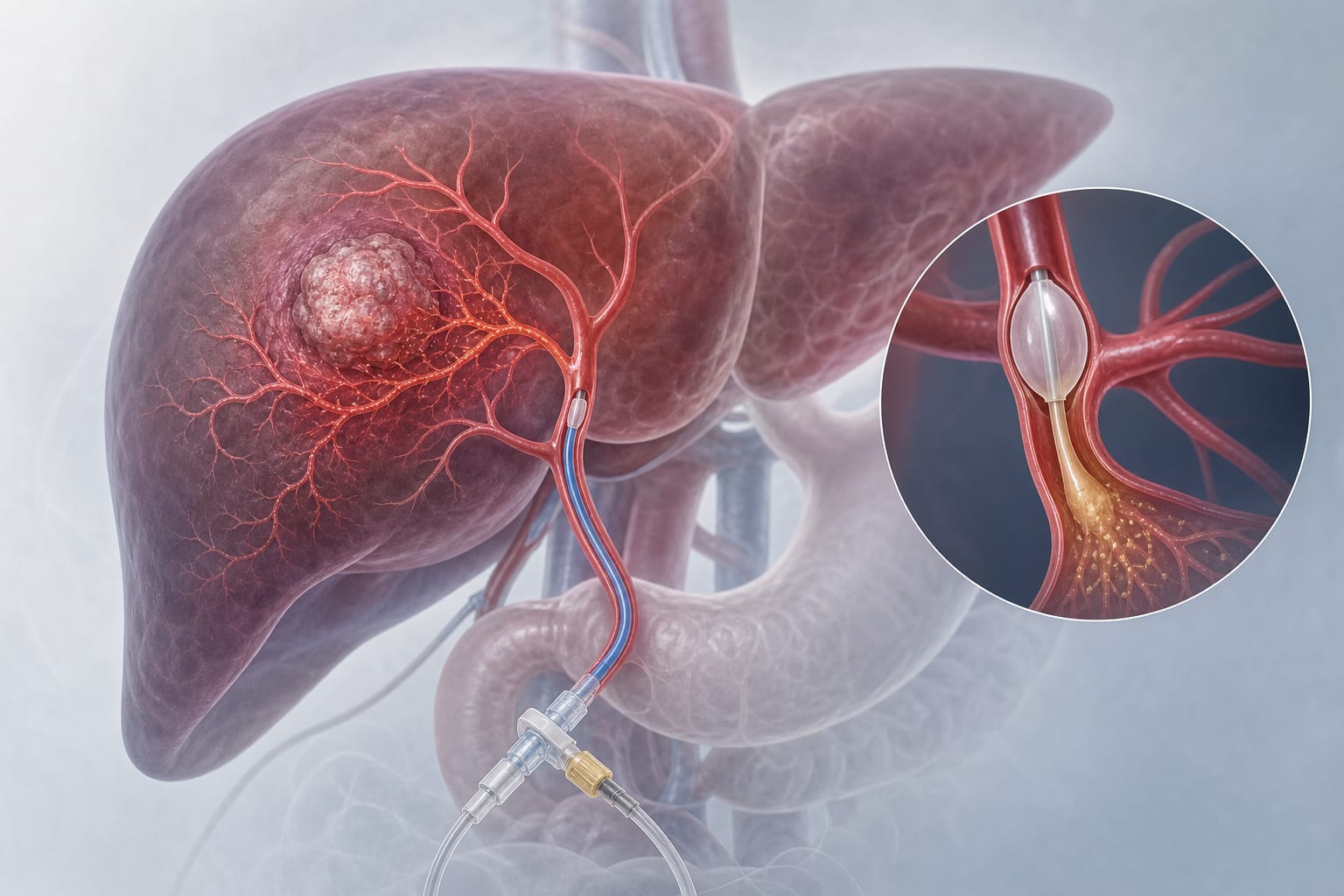
This interim analysis evaluates the efficacy and safety of balloon-occluded hepatic arterial infusion chemotherapy (bHAIC) using the FOLFOX regimen in patients with unresectable hepatocellular carcinoma (HCC). The study reports a promising objective response rate and manageable adverse events.
Background
Hepatocellular carcinoma (HCC) is a leading cause of cancer-related mortality worldwide, with many patients presenting with unresectable disease. Traditional treatments often yield limited responses, highlighting the need for more effective therapeutic strategies. Balloon-occluded hepatic arterial infusion chemotherapy (bHAIC) aims to enhance drug delivery to tumors, potentially improving outcomes for patients with unresectable HCC.
Data Highlights
Parameter
Value
Objective Response Rate (ORR) - RECIST 1.1
53.3%
Objective Response Rate (ORR) - mRECIST
82.2%
ORR in Treatment-Naive Patients
88.9%
Reduction in AFP Levels (>50%)
77.3%
Key Findings
The best ORR for evaluable patients was 53.3% (RECIST 1.1) and 82.2% (mRECIST).
Treatment-naive patients achieved an ORR of 88.9% according to mRECIST criteria.
77.3% of patients with elevated AFP levels experienced a reduction of over 50% in their AFP levels.
All adverse events were manageable through medication or dose modifications.
Clinical Implications
The findings suggest that bHAIC-FO may offer a viable treatment option for patients with unresectable HCC, particularly those who are treatment-naive. The manageable safety profile indicates that this approach could be integrated into clinical practice for selected patients.
Conclusion
The interim analysis of bHAIC-FO demonstrates promising efficacy and an acceptable safety profile in treating unresectable HCC, warranting further investigation in larger trials.
by Feng Li, Jian Zhang, Xiangbo An, Jianfei Liu, Benkei Li, Haiwei Li, Li Jun, Ningfang Wang, Guinan Jiang, Ye Jiang, Dehui Zhang, Fei Gao, Lei Song, Jun Zhou, Wenheng Zheng, Min Ji, Feng Wang