CLEAR report 1: a scoping review and meta-analysis for definitions, imaging metrics, and functional correlates of photoreceptor integrity in AMD - Report - MDSpire
Advertisement
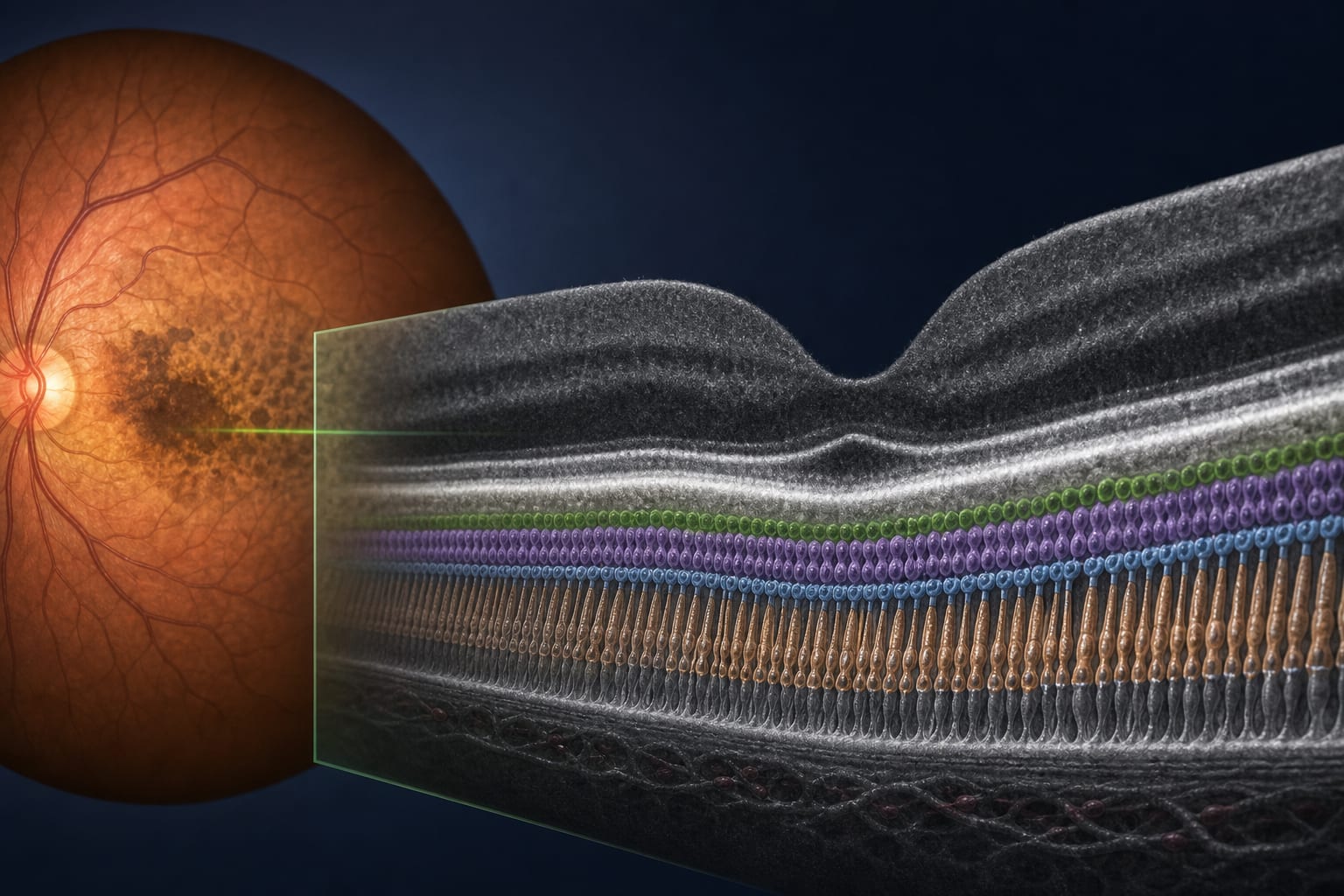
CLEAR report 1: a scoping review and meta-analysis for definitions, imaging metrics, and functional correlates of photoreceptor integrity in AMD
Clinical Report: Comprehensive Review of Photoreceptor Integrity in AMD
Background
Age-related macular degeneration (AMD) is a leading cause of irreversible vision loss, particularly affecting older adults. Photoreceptor degeneration is a critical factor in functional impairment, necessitating reliable imaging metrics for early detection and monitoring.
Data Highlights
No specific numerical data or trial results were provided in the source material.
Key Findings
High reliability (ICC > 0.90) for ellipsoid zone (EZ) and outer nuclear layer (ONL) metrics when definitions and methods are consistent.
Moderate-to-strong correlations between photoreceptor loss and microperimetry sensitivity (r = 0.50–0.80) and best-corrected visual acuity (r = 0.40–0.70).
High agreement (κ > 0.80) between OCT and fundus autofluorescence (FAF) for detecting geographic atrophy.
Significant variability in boundary definitions and measurement strategies across studies.
Need for consensus on boundary definitions and reporting standards to enhance reproducibility.
Clinical Implications
Standardized definitions and reporting practices for OCT-derived photoreceptor biomarkers are essential for improving the reliability of clinical assessments in AMD. This will facilitate better integration of these metrics into clinical trials and regulatory evaluations.
Conclusion
The review emphasizes the importance of harmonizing OCT measurement protocols to enhance the understanding and management of AMD. Establishing consensus standards is crucial for advancing research and clinical practice.
Nimesh A. Patel, MD, demonstrates management of a dislocated Akreos AO60 intraocular lens (IOL; Bausch + Lomb) that had been previously fixated with Prolene sutures, and a panel of experienced vitreoretinal surgeons discusses secondary IOL fixation, lens repositioning, suture management, and long-term considerations in complex aphakia cases.