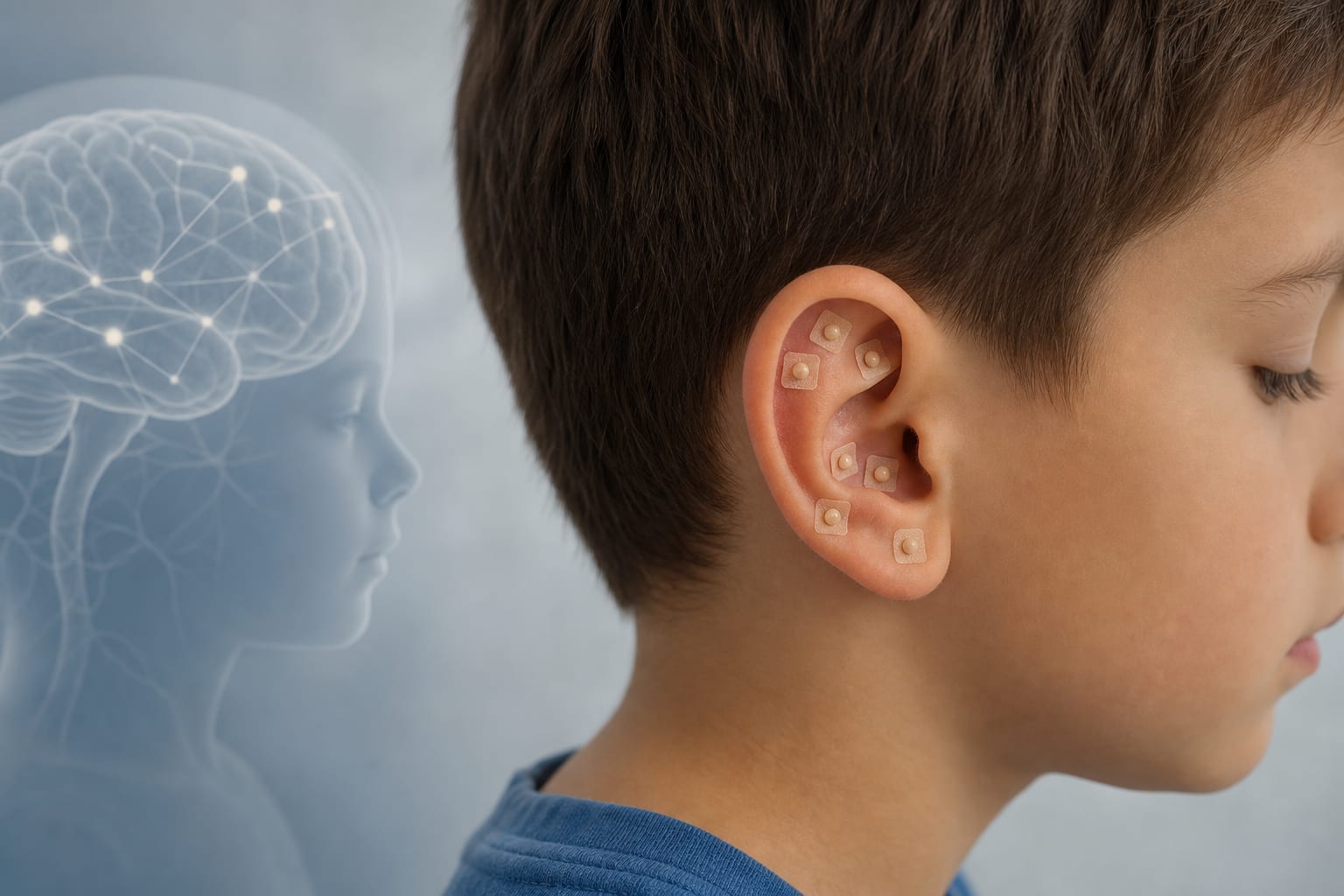
Clinical Report: Exploring Auricular Therapy for Pediatric ADHD
Overview
This scoping review synthesizes evidence on the efficacy of auricular therapy as an adjunctive treatment for pediatric ADHD. The evidence remains insufficient to draw definitive conclusions.
Background
Attention deficit hyperactivity disorder (ADHD) is a common neurodevelopmental disorder in children, characterized by hyperactivity, impulsivity, and inattention. The prevalence of ADHD necessitates effective treatment strategies, particularly as symptoms can persist into adulthood. Non-pharmacological interventions, including auricular therapy, are being explored as potential adjunctive treatments to standard pharmacological approaches.
Data Highlights
Outcome Measure
Statistical Significance
Conners' Parent Rating Scale
P < 0.05
Hamilton Anxiety Scale
P < 0.05
Hamilton Depression Rating Scale
P < 0.05
Quality of Life Questionnaire
P < 0.05
Key Findings
A total of 21 studies with 2,270 participants were included in the review.
Auricular therapy improved scores on multiple scales related to ADHD symptoms and quality of life, with statistical significance noted in several measures (P < 0.05).
No serious adverse events were reported in the studies reviewed.
The risk of bias in included studies was assessed as low to moderate certainty.
A trend toward a higher overall efficacy rate was observed, but it was not statistically significant (P > 0.05).
Clinical Implications
The current evidence base is limited, and further rigorous studies are needed.
Conclusion
Further high-quality research is necessary to establish the efficacy and safety of auricular therapy as a standard treatment option.