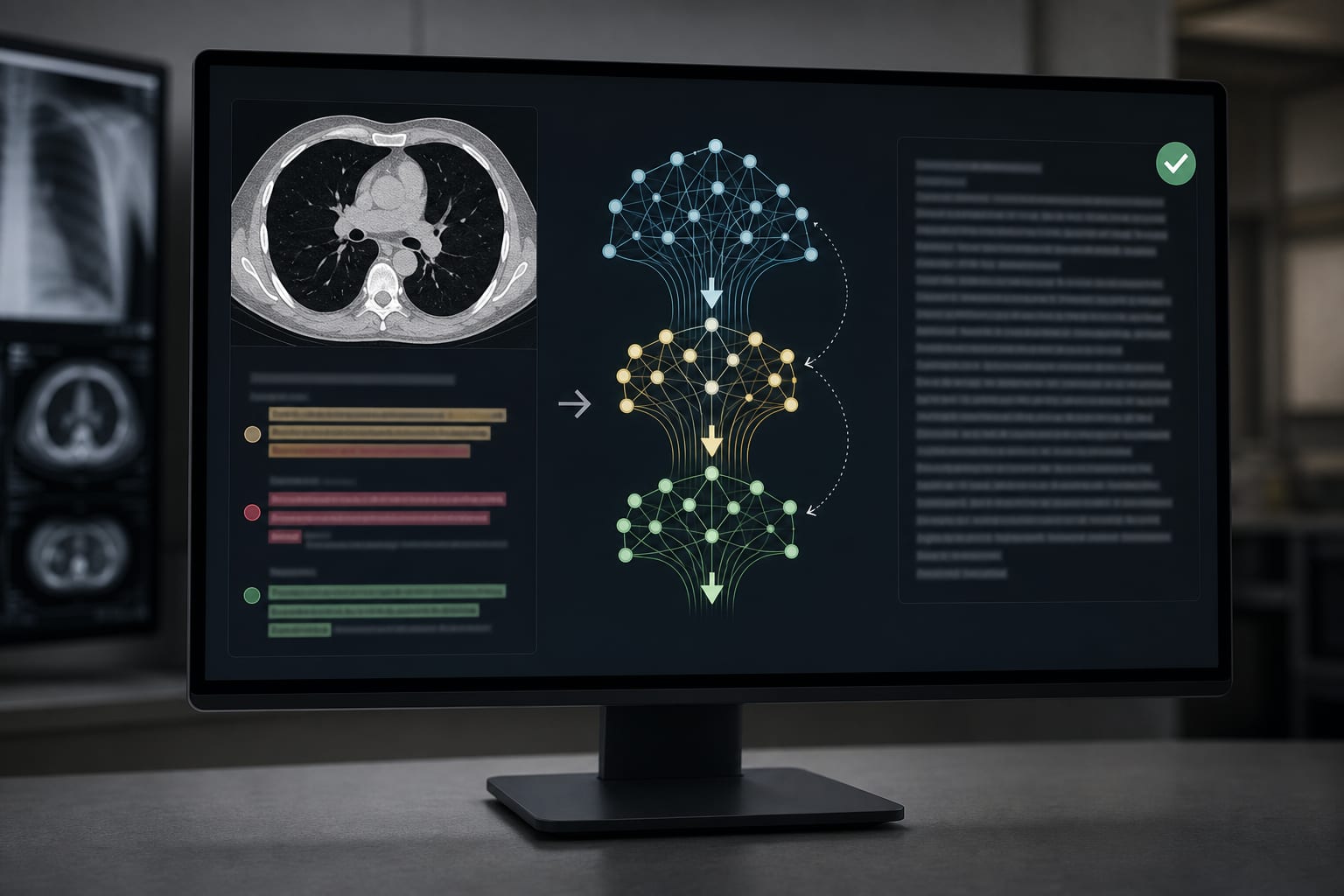
Clinical Report: Enhancing Error Detection in Radiology Reports Through a Multipass Large Language Model
Overview
This report presents a multipass large language model (LLM) framework aimed at improving the precision and efficiency of error detection in radiology reports. The framework addresses the challenges of high false alarm rates associated with traditional LLMs, ultimately enhancing the collaboration between radiologists and AI.
Background
The accuracy of radiology reports is critical for patient care, yet traditional proofreading methods can be time-consuming and prone to errors. Large language models have shown promise in automating this process, but their low positive predictive value (PPV) often leads to alert fatigue among radiologists. This study explores a new multipass framework designed to optimize both precision and efficiency in error detection.
Data Highlights
Dataset
Number of Reports
Error Rate
MIMIC-III
1000
1%
CheXpert
Varied
N/A
Open-i
Varied
N/A
Key Findings
The multipass LLM framework significantly improved the PPV compared to traditional single-pass models.
GPT-4 achieved a PPV of only 6% in a previous study, highlighting the need for improved models.
Excessive false alarms contribute to alert fatigue, which can hinder effective AI-human collaboration.
The proposed framework includes a lightweight report extractor and stepwise reasoning to enhance error detection.
Computational costs associated with larger models can be a barrier to routine clinical deployment.
Clinical Implications
Implementing the multipass LLM framework could reduce the workload on radiologists by decreasing false alarms and improving the accuracy of error detection in reports. This approach may enhance the overall efficiency of radiology workflows and facilitate better integration of AI tools in clinical practice.
Conclusion
The multipass LLM framework represents a promising advancement in the field of radiology report proofreading, addressing critical limitations of existing models. Future research should focus on validating this framework across diverse clinical settings.