Clinical Report: Activation of the Type I Interferon Pathway in ILD
Overview
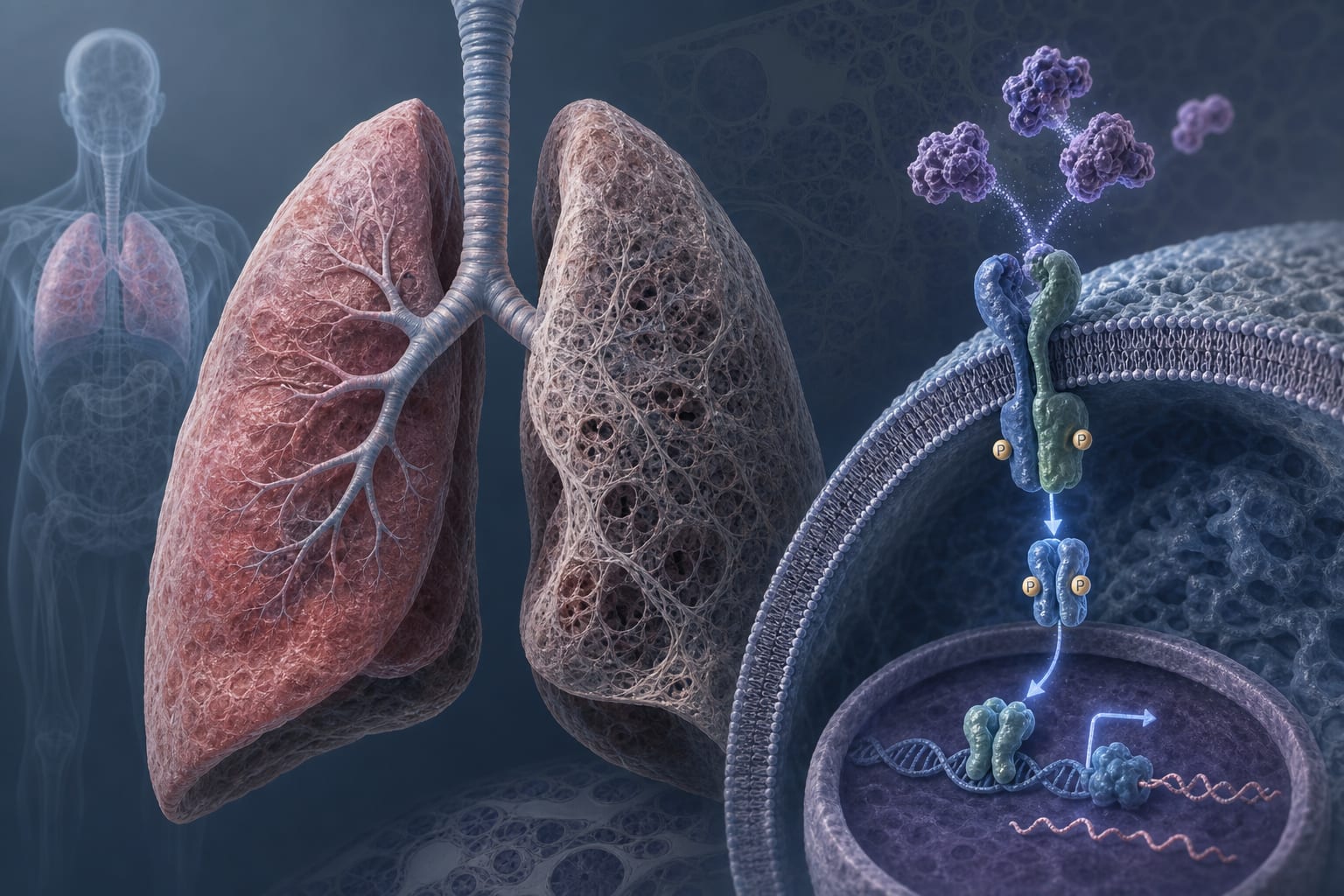
This review highlights the role of Type I interferon (IFN-I) signaling in interstitial lung disease (ILD) associated with connective tissue disorders (CTDs). It emphasizes the correlation between increased IFN-I signaling and pulmonary decline, suggesting potential for targeted therapies.
Background
Interstitial lung disease (ILD) is a significant cause of morbidity and mortality in connective tissue diseases (CTDs) such as systemic sclerosis. Up to 40% of ILDs can be progressive, leading to severe lung function decline and increased symptoms. Understanding the mechanisms, including the role of IFN-I signaling, is crucial for developing effective treatments and biomarkers.
Data Highlights
No numerical data or trial data presented in the article.
Key Findings
IFN-I activation is implicated in the development of CTD-ILD.
In CTD-ILD, forced vital capacity (FVC) decline correlates with increased IFN-I signaling.
Studies on early IFN-I modulating therapies in CTD-ILD show promising results.
Persistent alveolar inflammation in CTD-ILD leads to interstitial scarring and pulmonary fibrosis.
Up to 40% of patients with CTD-ILD develop progressive pulmonary fibrosis (PPF).
Clinical Implications
The findings suggest that monitoring IFN-I signaling may provide insights into disease progression in CTD-ILD. Targeting the IFN-I pathway could represent a novel therapeutic approach for patients who do not respond adequately to current treatments.
Conclusion
The activation of the Type I interferon pathway plays a significant role in the pathogenesis of CTD-ILD, highlighting the need for further research into targeted therapies.