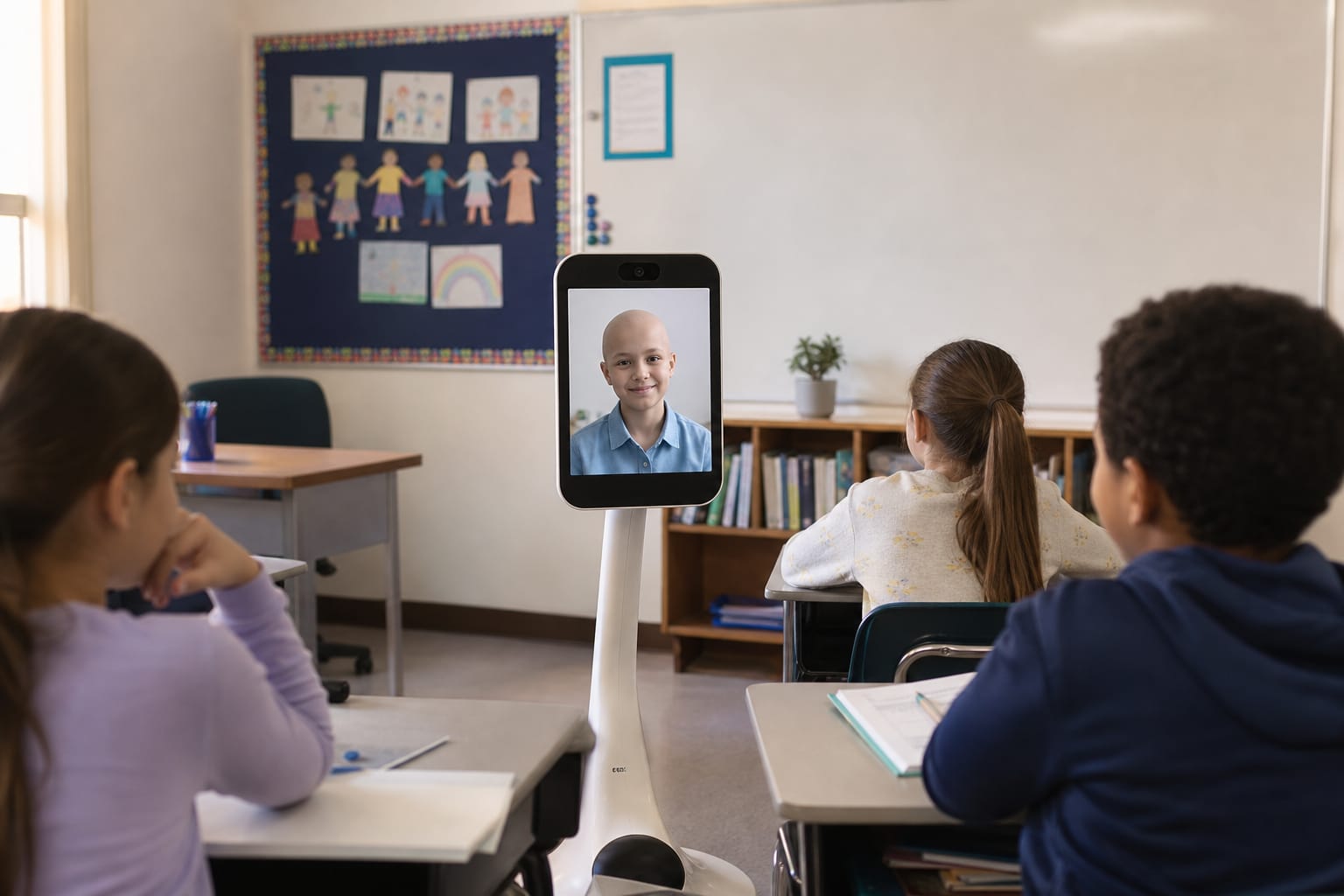
Utilization of Telepresence Avatars for School-Aged Children with Cancer
Overview
This study investigates the challenges and supportive factors related to the use of telepresence avatars in schools for children with cancer, highlighting perceived barriers and facilitators from teachers' and parents' perspectives.
Background
Children with cancer often experience significant psychosocial and educational challenges due to prolonged absences from school. Maintaining educational participation is crucial for their social and academic development.
Data Highlights
Category
Findings
Teachers Surveyed
298
Schools Contacted
5,019
Barriers Reported
Moderate technical and organizational barriers
Key Findings
Teachers reported varying levels of perceived barriers based on their experience with pediatric cancer and telepresence avatars.
Key facilitators for successful implementation included technical resources, organizational support, and leadership endorsement.
Parents highlighted the potential of telepresence avatars in maintaining academic and social participation during treatment.
Challenges identified by parents included technical instability and unclear responsibilities.
Teachers with combined experience in pediatric cancer and telepresence avatar use reported the lowest barrier levels.
Clinical Implications
The findings suggest that successful implementation of telepresence avatars in educational settings requires adequate organizational support and resources. Addressing technical challenges and clarifying roles may enhance the effectiveness of these systems for children undergoing cancer treatment.
Conclusion
Telepresence avatars hold promise for supporting the educational participation of children with cancer, but their success is contingent upon favorable contextual and organizational conditions.