Characterization of the Immune Cell Composition in the CNS of Rabies-Infected Mice
Overview
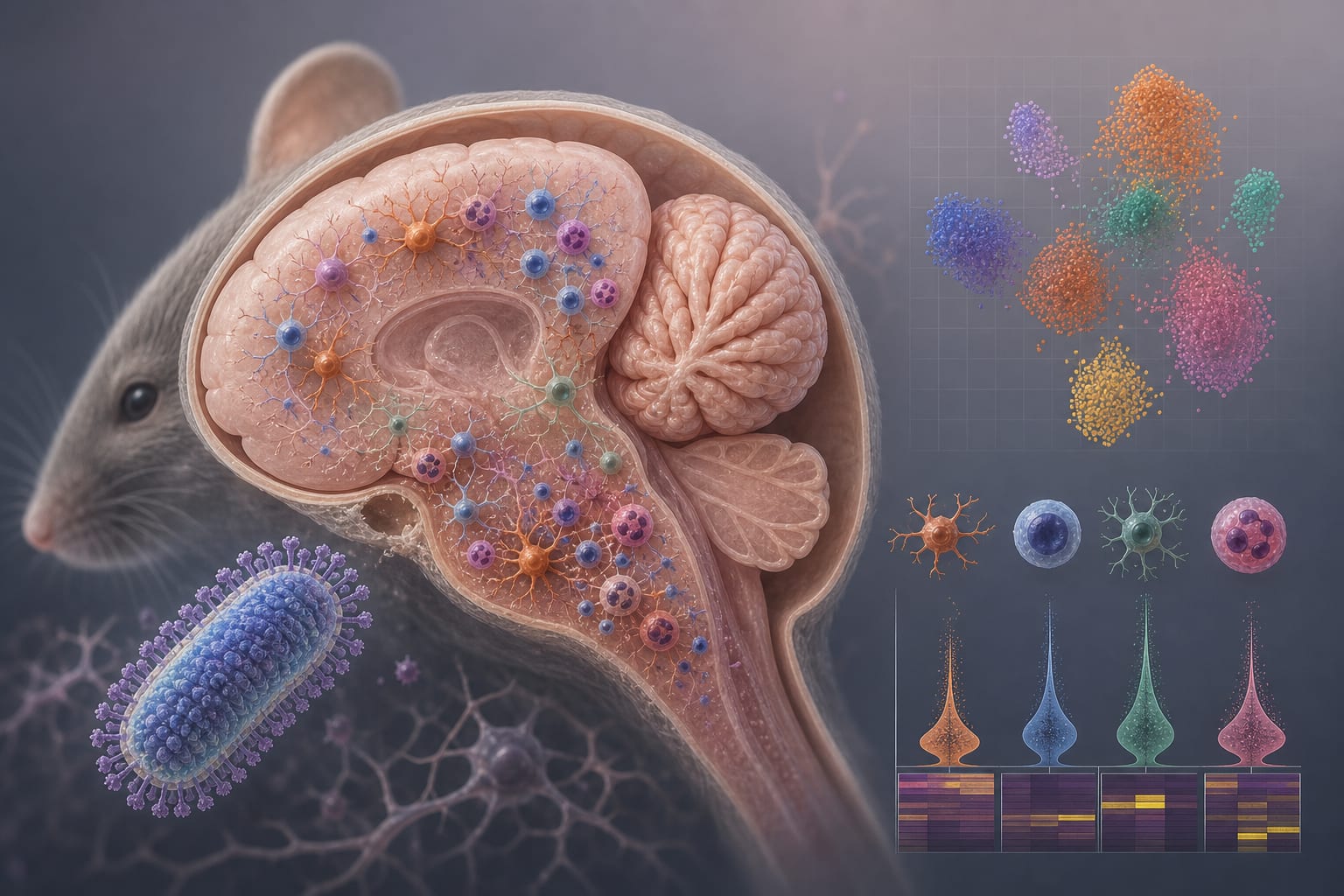
This study provides a detailed analysis of immune responses in the central nervous system (CNS) of mice infected with virulent and attenuated rabies virus strains. Using single-cell RNA sequencing, distinct immune cell profiles were identified.
Background
Rabies virus (RABV) infection leads to nearly 100% mortality once neurological symptoms appear, making it a critical public health concern. Understanding the immune response in the CNS during RABV infection is essential. This study aims to elucidate the cellular and molecular dynamics that differentiate outcomes of infections with virulent and attenuated RABV strains.
Data Highlights
Single-cell RNA sequencing was performed on over 100,000 cells from the brains of CVS-11 infected, SRV9 infected, and mock infected mice.
Key Findings
CVS-11 infection was associated with a phagocytic microglial signature and excessive neutrophilic inflammation.
SRV9 infection correlated with an immunoregulatory microglial phenotype and effective NK cell antiviral function.
Downregulation of NK cell functional genes was observed in CVS-11 infection, indicating potential dysfunction.
Increased expression of T cell exhaustion-related genes was noted in CVS-11 infection.
Distinct transcriptional signatures were identified, suggesting different immune mechanisms between virulent and attenuated strains.
A set of signature genes (Fkbp5, Apod, Klf2, Socs3) was linked to lethal RABV infection outcomes.
Clinical Implications
The findings from this study highlight the immune mechanisms associated with different outcomes of rabies virus infections.
Conclusion
This research enhances the understanding of immune responses in the CNS during rabies virus infection, revealing differences between virulent and attenuated strains.