Interaction between fatty pancreas disease and genetically predicted glucose-dependent insulinotropic polypeptide on incident type 2 diabetes: evidence from the UK Biobank - Report - MDSpire
Advertisement
Interaction between fatty pancreas disease and genetically predicted glucose-dependent insulinotropic polypeptide on incident type 2 diabetes: evidence from the UK Biobank
Clinical Report: Fatty Pancreas Disease and GIP Levels in Type 2 Diabetes
Overview
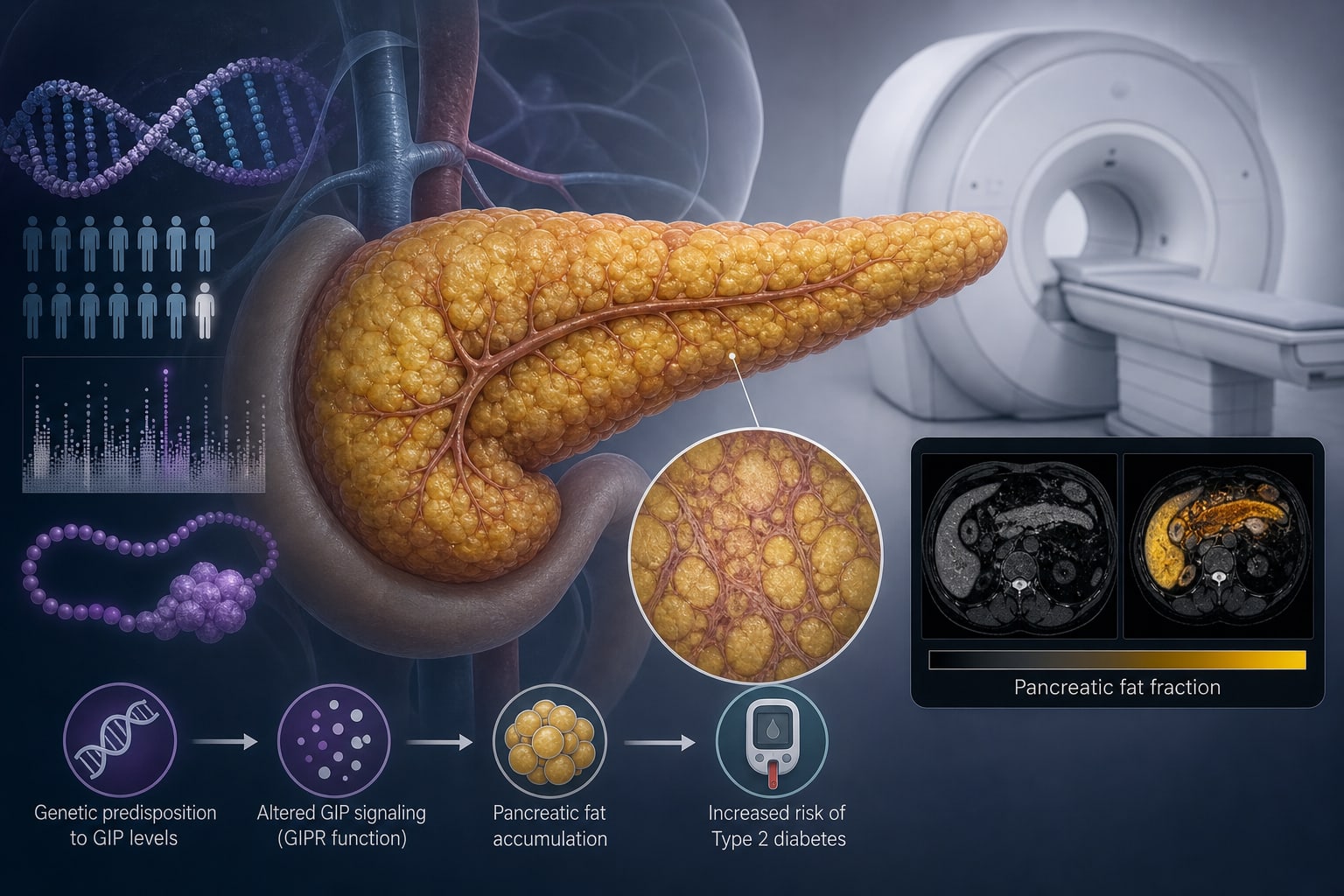
This study investigates the interaction between genetically predicted levels of glucose-dependent insulinotropic polypeptide (GIP) and fatty pancreas disease (FPD) in the development of type 2 diabetes (T2D). Findings indicate that GIP modifies the risk of T2D associated with FPD, suggesting a link between pancreatic fat accumulation and metabolic dysfunction.
Background
Fatty pancreas disease is increasingly recognized as a contributor to metabolic diseases, including type 2 diabetes. Understanding the role of GIP in lipid metabolism and its interaction with pancreatic fat is crucial for developing targeted interventions. This study leverages data from the UK Biobank to explore these relationships in a large cohort.
Data Highlights
Parameter
Value
Median follow-up duration
51 months
Incident T2D cases identified
276
HR for T2D risk without E354Q
2.44 (95% CI 1.78–3.34)
HR for T2D risk with higher postprandial GIP
2.64 (95% CI 1.86–3.76)
Key Findings
Significant interaction between E354Q variant and FPD in T2D development (p=0.018).
Significant interaction between 2hGIP PRS and FPD in T2D development (p=0.015).
FPD increases T2D risk in individuals without E354Q (HR 2.44).
Higher genetically predicted postprandial GIP levels are associated with increased T2D risk (HR 2.64).
GIP may link pancreatic fat accumulation to metabolic dysfunction.
Clinical Implications
Clinicians should consider the role of fatty pancreas disease in patients at risk for type 2 diabetes, particularly in the context of GIP levels. Targeting pancreatic fat accumulation may offer new therapeutic avenues for diabetes prevention and management.
Conclusion
The findings underscore the importance of GIP in the relationship between fatty pancreas disease and type 2 diabetes, highlighting potential pathways for intervention in metabolic disorders.