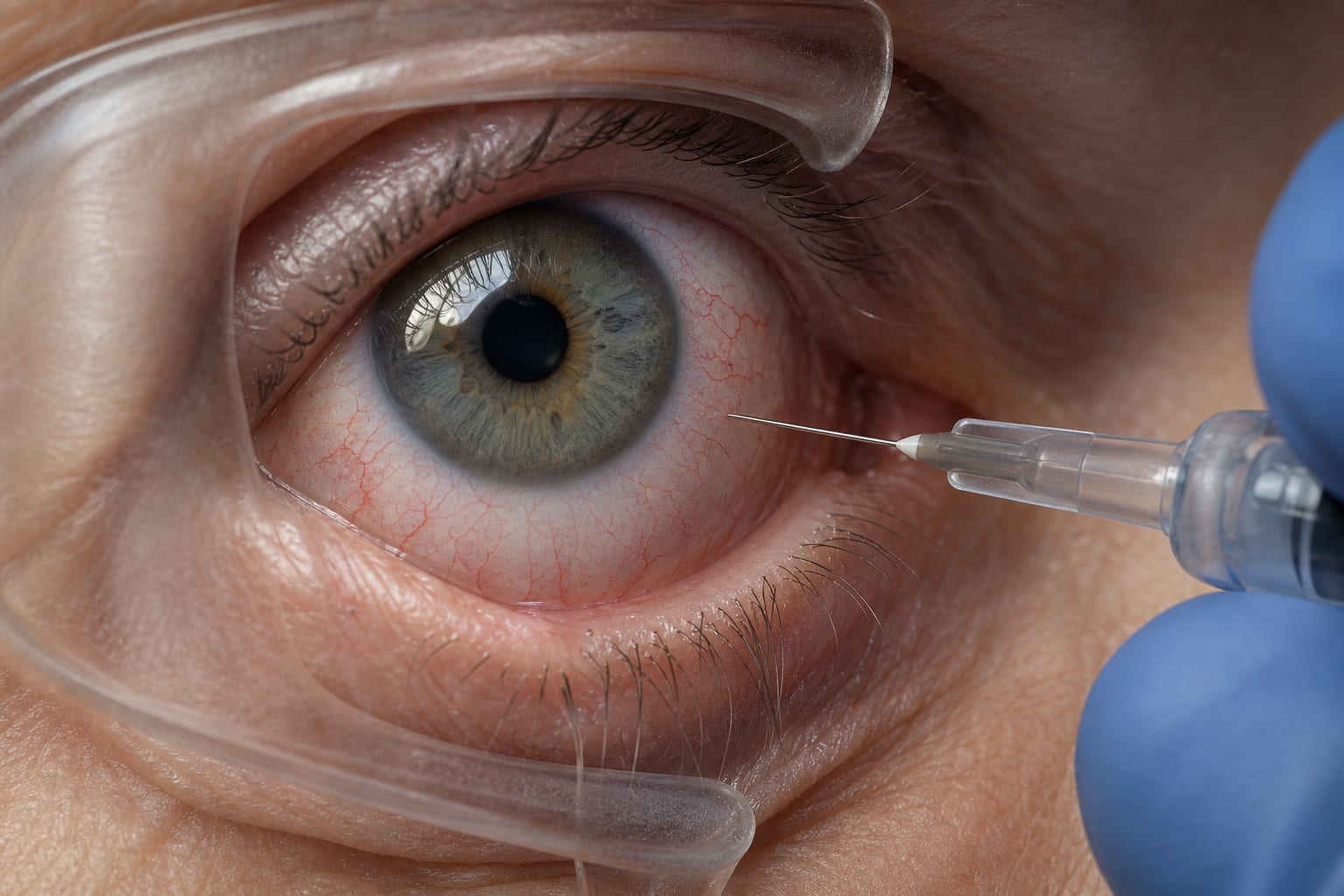
Clinical Report: Two-Year Evaluation of Ocular Surface Effects Following Intravitreal Injections
Overview
This study evaluates the ocular surface effects of two years of serial anti-VEGF intravitreal injections in patients with neovascular age-related macular degeneration. Significant changes in bulbar redness and tear meniscus height were observed.
Background
Intravitreal injection therapy is a common procedure for treating neovascular age-related macular degeneration, which can lead to significant visual impairment. The use of topical povidone-iodine as an antiseptic prior to injections raises concerns about its cytotoxic effects on the ocular surface.
Data Highlights
Parameter
Baseline
Follow-up
p-value
Bulbar Redness (BR)
1.41 ± 0.46
1.68 ± 0.47
< 0.001
Tear Meniscus Height (TMH) Untreated
0.31 mm [IQR, 0.23–0.47]
0.42 mm [IQR, 0.28–0.57]
0.003
Tear Meniscus Height (TMH) Treated
Not significant
Not significant
0.74
Key Findings
Significant increase in bulbar redness in untreated fellow eyes compared to baseline (p < 0.001).
Median tear meniscus height increased significantly in untreated eyes (p = 0.003).
No significant difference in mean tear meniscus height between treated and fellow eyes at follow-up (p = 0.15).
Both treated and untreated eyes showed significant meibomian gland loss after two years.
No significant differences in mean meibomian gland loss between treated and untreated eyes at follow-up.
Clinical Implications
Clinicians should consider ocular surface changes when planning long-term treatment for patients receiving intravitreal injections.
Conclusion
The study provides insights into the ocular surface effects of repeated intravitreal anti-VEGF injections.
Jordi Monés, MD, PhD, discusses the rationale for evaluating MCO-010 (sonpiretigene isteparvovec) in GA following encouraging findings in retinitis pigmentosa and Stargardt disease.