Albumin-to-creatinine ratio as non-invasive marker for prediction of non- bleeding esophageal varices. a cross-sectional observational study - Report - MDSpire

Albumin-to-creatinine ratio as non-invasive marker for prediction of non- bleeding esophageal varices. a cross-sectional observational study

  • By

  • Nasser Mousa

  • Alaa Elmetwalli

  • Mostafa abdelsalam

  • Mohamed Wahba

  • Niveen El-wakeel

  • Marwa Mansour

  • Mohamed Selim

  • Muhammad Diasty

  • Eman Abdelkader

  • Adel El-Assmy

  • Mohammed Abdelaziz

  • Ali El-Assmy

  • Ahmed Alhawarey

  • July 10, 2026

  • 0 min

Share

Clinical Report: Evaluating the Albumin-to-Creatinine Ratio as a Predictor for EV

Overview

This study evaluates the albumin-to-creatinine ratio (ACR) as a non-invasive predictor for non-bleeding esophageal varices in patients with liver cirrhosis.

Background

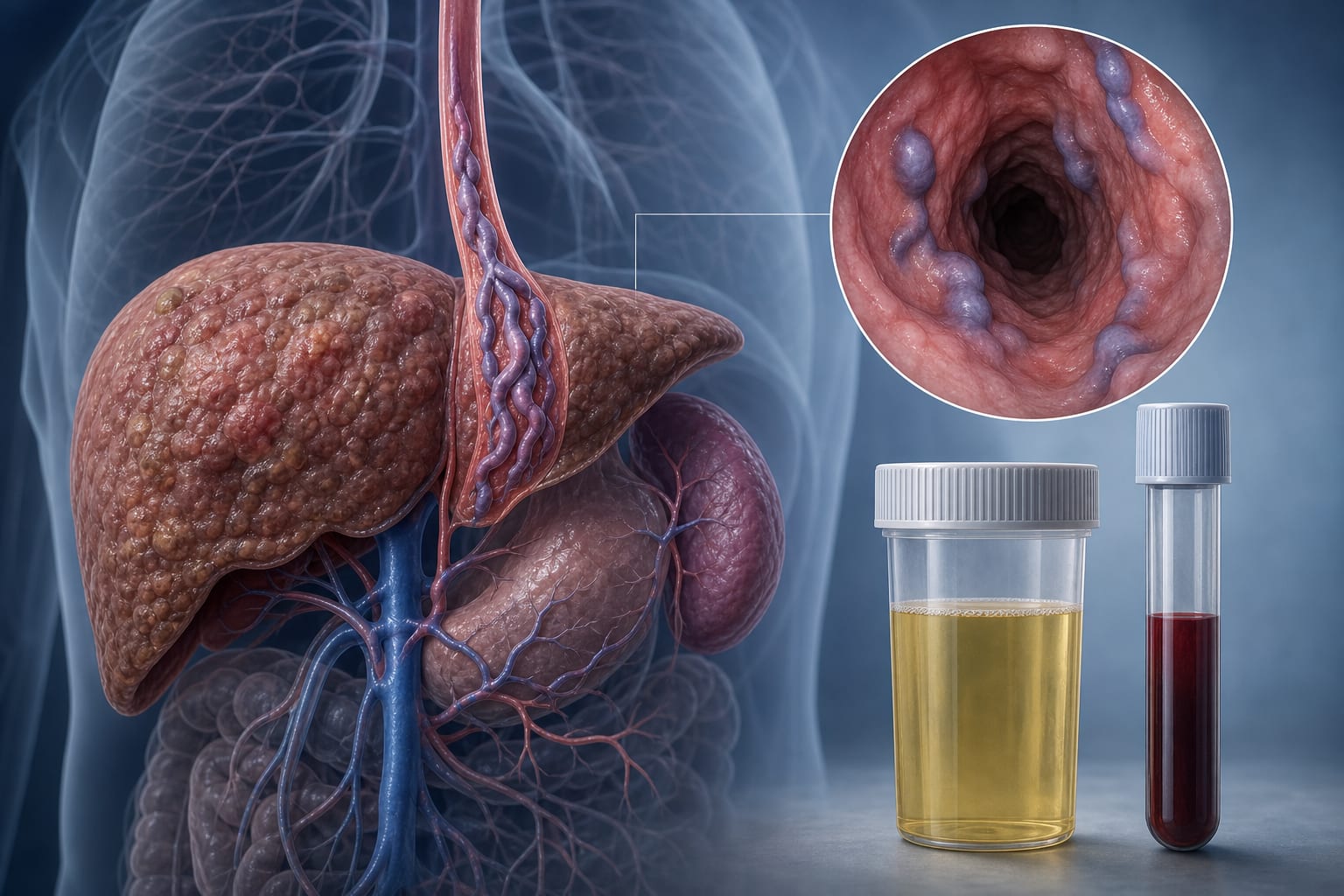
Esophageal varices are a significant complication of portal hypertension due to cirrhosis, with a notable risk of bleeding. Current diagnostic methods, primarily endoscopy, may not be accessible in all settings, particularly in low-income countries. Identifying reliable non-invasive predictors is crucial for managing patients with liver cirrhosis and preventing variceal bleeding.

Data Highlights

This study included 260 patients with liver cirrhosis, aged over 18, who had not undergone previous endoscopy or experienced variceal bleeding.

Key Findings

  • The albumin-to-creatinine ratio (ACR) is proposed as a novel non-invasive predictor for non-bleeding esophageal varices.
  • Low serum albumin levels have been consistently linked to increased mortality in cirrhotic patients.
  • Creatinine levels are critical in assessing the risk of variceal bleeding and are included in liver transplantation scoring systems.
  • Prior studies have indicated that low albumin levels can predict the presence of esophageal varices.
  • 24%-55% of patients with renal impairment experience increased bleeding complications due to uremia's effect on platelet function.

Clinical Implications

The findings indicate the albumin-to-creatinine ratio as a non-invasive tool for assessing the risk of esophageal varices in cirrhotic patients.

Conclusion

The study highlights the potential of the albumin-to-creatinine ratio as a non-invasive predictor for non-bleeding esophageal varices.

Related Resources & Content

  1. European Radiology, 2024 -- Evaluation of Esophageal and Fundic Varices Using Non-Invasive Methods in Patients Diagnosed with Primary Biliary Cholangitis
  2. Journal of Gastroenterology, 2014 -- Comparative Analysis of Nutritional Effects of Branched-Chain Amino Acid Granules Versus a BCAA-Enriched Nutrient Mixture in Patients with Esophageal Varices Post-Endoscopic Treatment
  3. Preoperative serum albumin levels are associated with in-hospital mortality, while postoperative serum lactate and aPTT measurements can indicate the risk of anastomotic leakage following Ivor-Lewis esophagectomy.
  4. Portal Hypertension Bleeding in Cirrhosis | AASLD
  5. Pediatric Cardiology — Evaluating the Diagnostic and Treatment Benefits of Routine Esophagogastroduodenoscopy in Individuals with Fontan Circulation
  6. Evaluation of spleen stiffness by 2D shear wave elastography for ruling out high risk varices in patients with chronic advanced liver disease.
  7. Portal Hypertension Bleeding in Cirrhosis | AASLD

Original Source(s)

Related Content