Clinical Report: Adverse Events Associated with the Adjustability of Light-Adjustable Lenses
Background
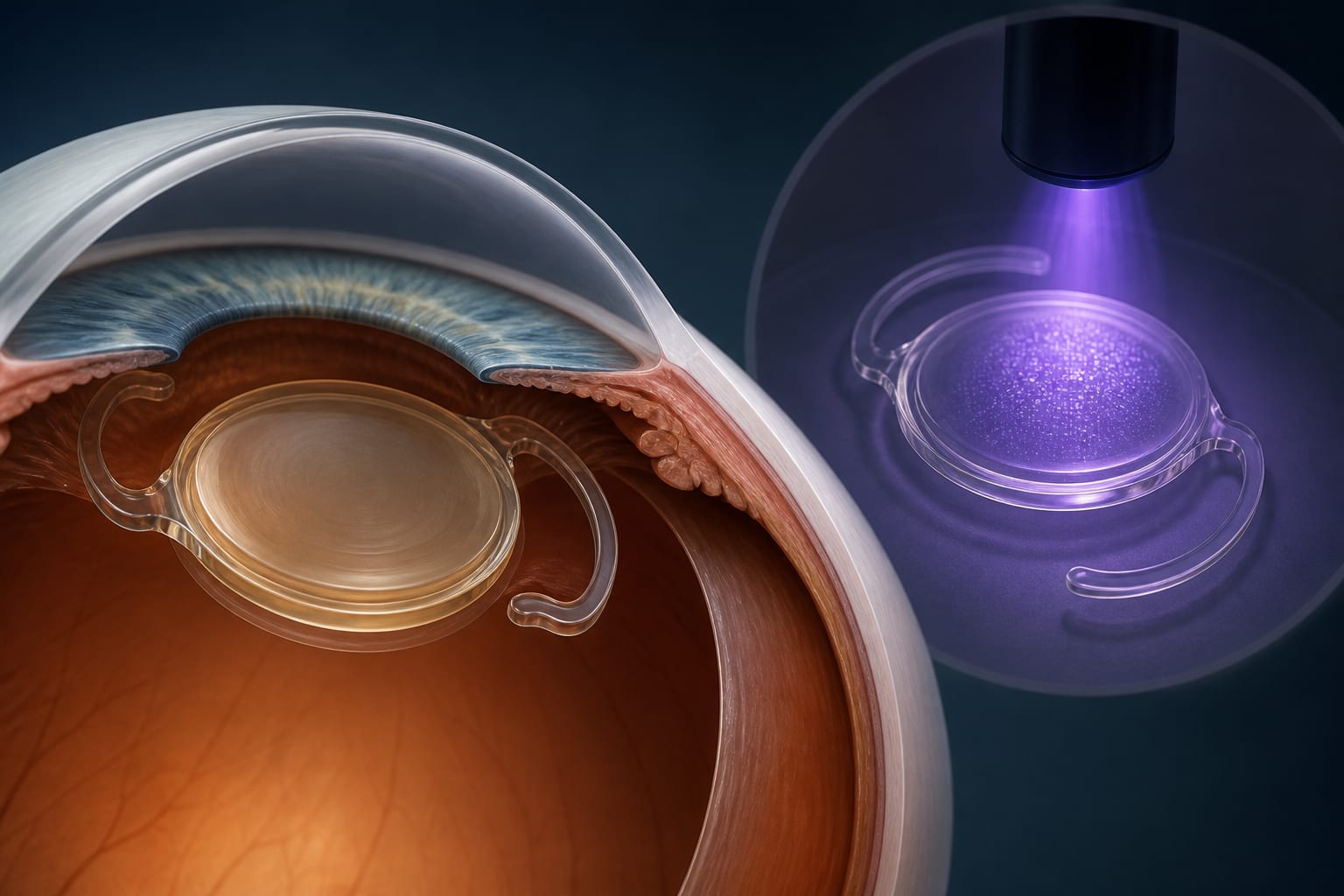
The light-adjustable lens (LAL; RxSight, Inc., Aliso Viejo, CA, USA), approved by the U.S. Food and Drug Administration (FDA) in 2017, allows for non-invasive postoperative modifications of intraocular lens power. This capability is particularly beneficial for patients at risk of refractive surprises, including those with a history of corneal refractive procedures. Emerging reports of adverse events related to the lens's adjustability highlight the importance of patient compliance with UV protection protocols during the adjustment phase.
Data Highlights
No numerical data or trial data presented in the source material.
Key Findings
Noncompliance with UV protection requirements can lead to reduced visual acuity and visual disturbances.
Case reports indicate that UV contamination can result in optical distortion, glare, and halos.
Uncontrolled polymerisation due to ambient UV exposure may cause a myopic shift in lens power.
Lens exchange was required in cases of UV contamination.
Postoperative management must consider patient adherence to UV protection protocols.
Clinical Implications
Cataract surgeons should emphasize the necessity of UV protection to patients receiving LALs to prevent adverse visual outcomes.
Conclusion
Adverse events associated with noncompliance can lead to significant visual disturbances and necessitate further surgical intervention.
Narrative review linked lower vitamin D levels to greater myopia risk and higher omega-3 intake to lower risk, though outdoor exposure may explain the vitamin D association.