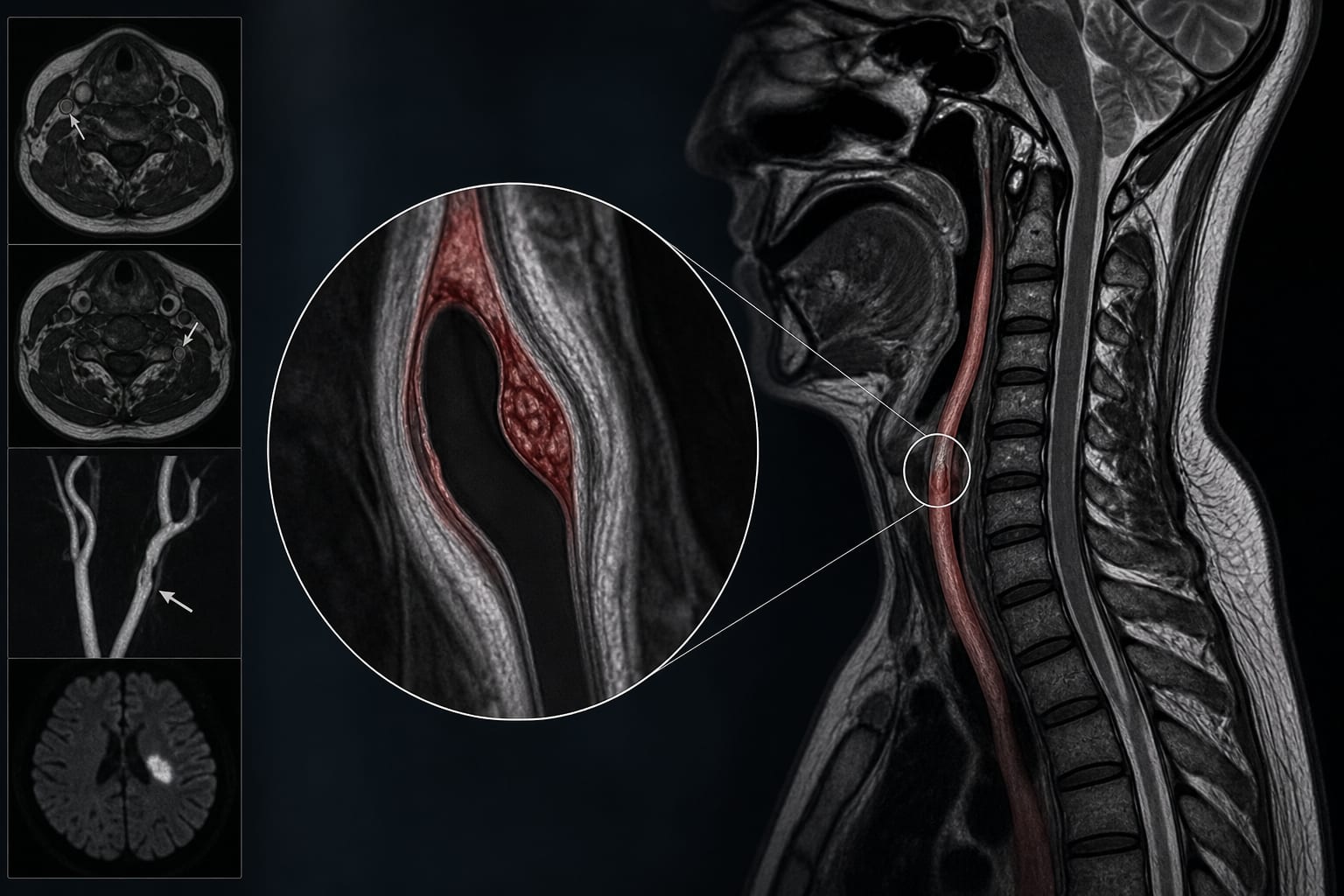
Prediction of Ischemic Stroke in Cervical Artery Dissection Using Clinical Data
Overview
This study identifies clinical and high-resolution MRI features associated with ischemic stroke in cervical artery dissection (CeAD) and develops a patient-level risk prediction model.
Background
Cervical artery dissection is a significant cause of ischemic stroke, particularly in younger adults. Early identification of patients at high risk for ischemic stroke is crucial for optimizing management and treatment strategies. High-resolution magnetic resonance imaging has emerged as a valuable tool for assessing CeAD and its associated risks.
Data Highlights
No numerical data available.
Key Findings
White blood cell count, intraluminal thrombus, severe stenosis or occlusion, and alcohol consumption are independently associated with ischemic events at the vessel level.
At the patient level, WBC count, intraluminal thrombus, male sex, and alcohol consumption are independent predictors of ischemic stroke.
The nomogram developed shows an optimism-corrected area under the curve of 0.837.
Calibration curves and decision curve analysis demonstrate satisfactory model performance.
More than 50% of patients with CeAD may develop ischemic stroke or transient ischemic attack.
Clinical Implications
The findings suggest that integrating clinical and imaging data can enhance risk prediction for ischemic stroke in patients with CeAD. This model may assist clinicians in making informed decisions regarding patient management and treatment strategies.
Conclusion
The study presents a patient-level model for predicting ischemic stroke risk in CeAD.