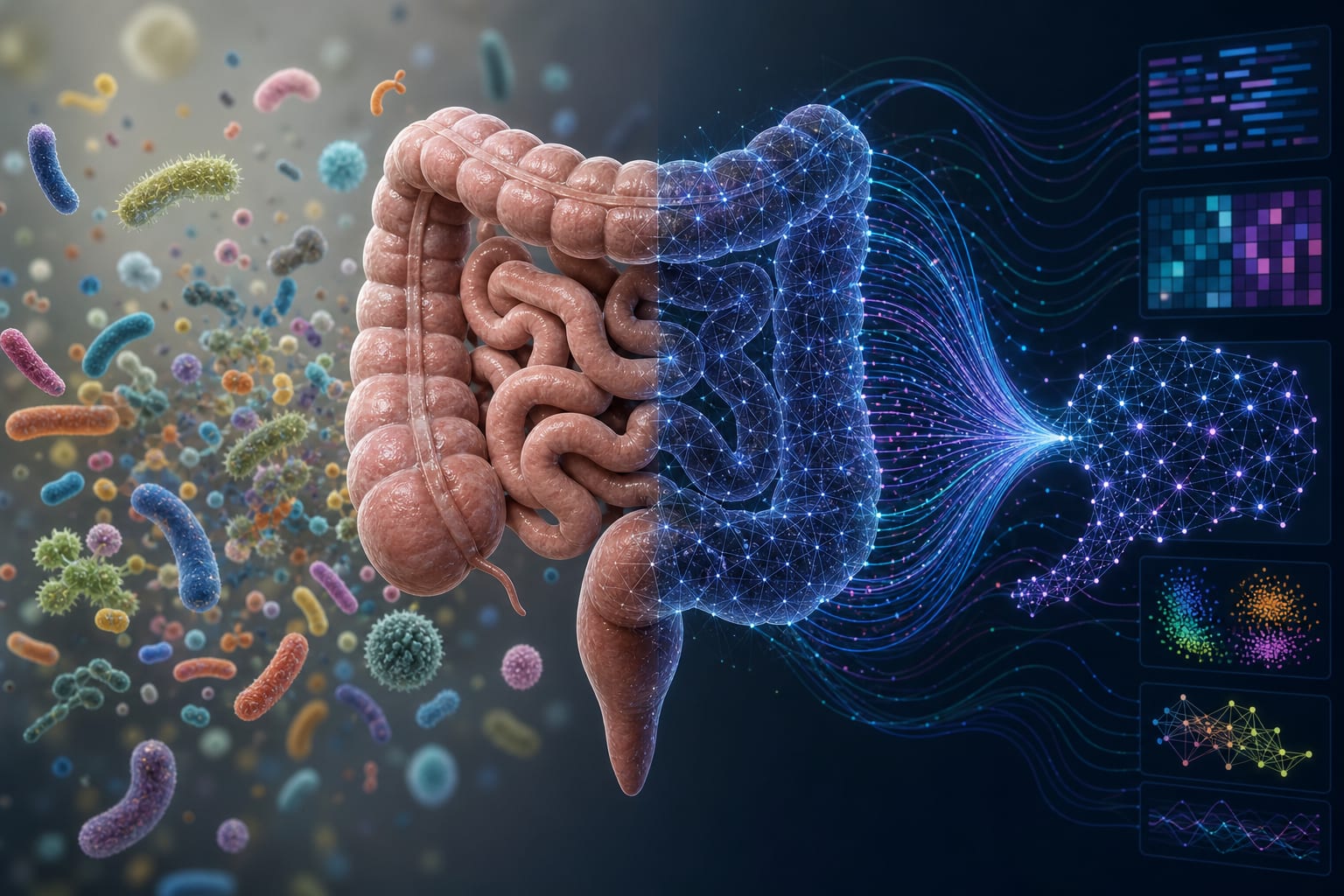
Exploring the Role of the Gut Microbiome in HIV Reservoir Behavior
-
By
-
Christopher M Basting
-
Nichole R Klatt
-
December 9, 2025
Clinical Report: Gut Microbiome Influences HIV Reservoir Dynamics in GI Tract
Overview
Recent research highlights significant heterogeneity in gut microbiome composition and HIV reservoir size across gastrointestinal segments in people with HIV (PWH). The study reveals complex associations between microbial diversity, specific bacterial taxa, and HIV transcriptional activity, underscoring the gut microbiome's potential role in modulating HIV reservoir behavior and immune activation.
Background
Antiretroviral therapy (ART) has transformed HIV infection into a chronic condition but fails to eradicate persistent viral reservoirs, particularly in the gastrointestinal (GI) tract. The GI tract harbors the highest concentration of CD4+ T cells and is a major site of HIV RNA production during ART. HIV infection induces gut microbial dysbiosis, compromising gut barrier integrity and promoting chronic systemic inflammation, which contributes to comorbidities and challenges in HIV cure strategies. Understanding the interplay between the gut microbiome and HIV reservoirs is critical for developing novel therapeutic approaches.
Data Highlights
| GI Tract Segment | Bacterial Diversity | HIV DNA Levels | HIV Transcriptional Activity |
|---|---|---|---|
| Jejunum | Lower | Higher | Variable |
| Large Intestine | Higher | Lower | Variable |
Key Findings
- Heterogeneity exists in gut microbiome composition and HIV reservoir size across GI tract segments, with higher bacterial diversity in the large intestine and increased HIV DNA in the jejunum.
- HIV transcriptional activity, measured by multispliced Tat/Rev RNA, showed no significant differences across tissue segments.
- Alpha diversity correlated positively with HIV transcriptional activity in the small bowel but negatively in the large bowel, indicating segment-specific immune interactions.
- Specific bacterial taxa such as Clostridium were associated with lower HIV DNA in the jejunum and ileum, while Veillonellaceae showed opposing associations in the colon and duodenum.
- Confounding factors like diet, sexual behavior, and ART complicate interpretation of microbiome-HIV reservoir relationships.
- Baseline gut microbiome composition may influence immune activation and outcomes of HIV immunotherapies, including latency reversal and viral rebound control.
Clinical Implications
Clinicians should recognize the gut microbiome's complex role in HIV reservoir dynamics and immune activation, which may impact therapeutic strategies including latency reversal and immunotherapy. Personalized approaches considering microbiome composition and GI segment-specific differences could optimize HIV cure efforts. Further research is needed to clarify microbiome-targeted interventions to reduce reservoir size and inflammation.
Conclusion
The gut microbiome exhibits segment-specific associations with HIV reservoirs and immune activation in PWH, highlighting its potential as a modifiable factor in HIV cure strategies. Understanding these complex interactions is essential for developing targeted therapies to overcome persistent viral reservoirs.
References
- Trunfio et al 2024 -- Gut Microbiome and HIV Reservoir Dynamics Across GI Tract
- The Journal of Infectious Diseases Editorial Commentary 2024 -- Exploring the Role of the Gut Microbiome in HIV Reservoir Behavior
Based on findings from:
Dissecting the Impact of the Gut Microbiome on HIV Reservoir Dynamics
Christopher M Basting, Nichole R Klatt. The Journal Of Infectious Diseases, 2025.
https://academic.oup.com/jid/advance-article/doi/10.1093/infdis/jiaf560/8374741
This content is an AI-generated, fully rewritten summary based on a published scholarly article. It does not reproduce the original text and is not a substitute for the original publication. Readers are encouraged to consult the source for full context, data, and methodology.