A clinically applicable nomogram predicting non-return to work in young and middle-aged patients with acute large vessel occlusion stroke: integrating neurological function and psychosocial factors for personalized rehabilitation - Report - MDSpire
Advertisement
A clinically applicable nomogram predicting non-return to work in young and middle-aged patients with acute large vessel occlusion stroke: integrating neurological function and psychosocial factors for personalized rehabilitation
Clinical Report: Nomogram for Predicting Non-Return to Work After Stroke
Overview
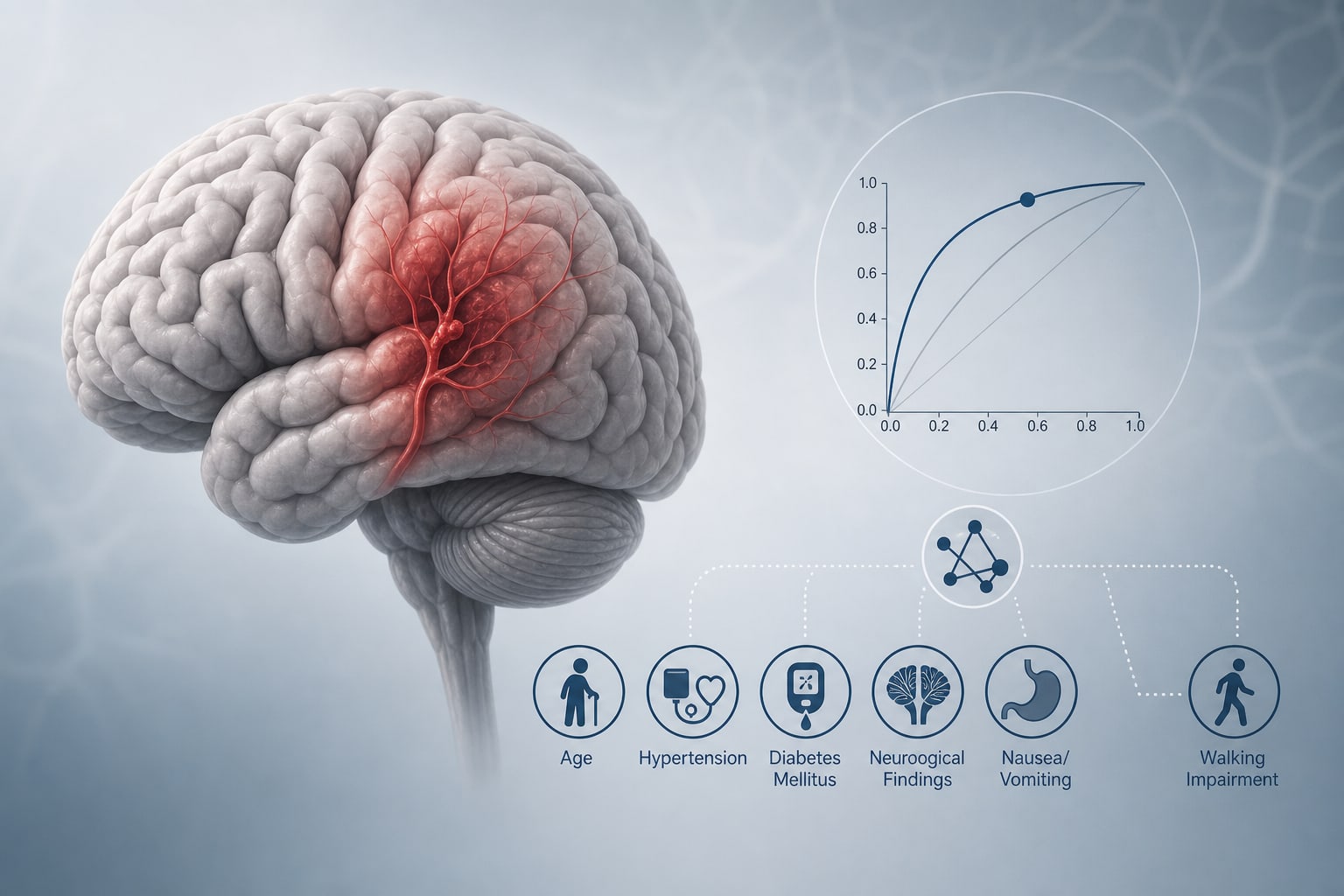
This study identifies key predictors of non-return to work (non-RTW) in young and middle-aged patients following acute ischemic stroke due to large vessel occlusion. A nomogram was developed and validated based on these predictors.
Background
Acute ischemic stroke due to large vessel occlusion significantly impacts the ability of young and middle-aged patients to return to work. Current prediction methods lack objective tools.
Data Highlights
Predictor
Type
Instrumental Activities of Daily Living (IADL)
Independent Predictor
Admission NIHSS Score
Independent Predictor
Nutritional Risk Screening 2002 (NRS-2002) Score
Independent Predictor
Balance Impairment (Berg Balance Scale)
Independent Predictor
Post-Stroke Rehabilitation (Rehab)
Independent Predictor
Anxiety-Depressive State (ADS)
Independent Predictor
Key Findings
Six independent predictors of non-RTW were identified: IADL, admission NIHSS score, NRS-2002 score, balance impairment, post-stroke rehabilitation, and anxiety-depressive state.
The nomogram demonstrated robust discriminative performance with an AUC of 0.858 (95% CI: 0.812–0.903).
Calibration curves confirmed favorable calibration between predicted and observed probabilities.
Decision curve analysis revealed net benefit across most threshold probabilities.
Approximately 40–60% of stroke survivors are non-RTW.
Clinical Implications
The developed nomogram can assist clinicians in identifying patients at high risk for non-RTW.
Conclusion
The nomogram provides a tool for predicting non-RTW in young and middle-aged AIS-LVO patients after EVT.