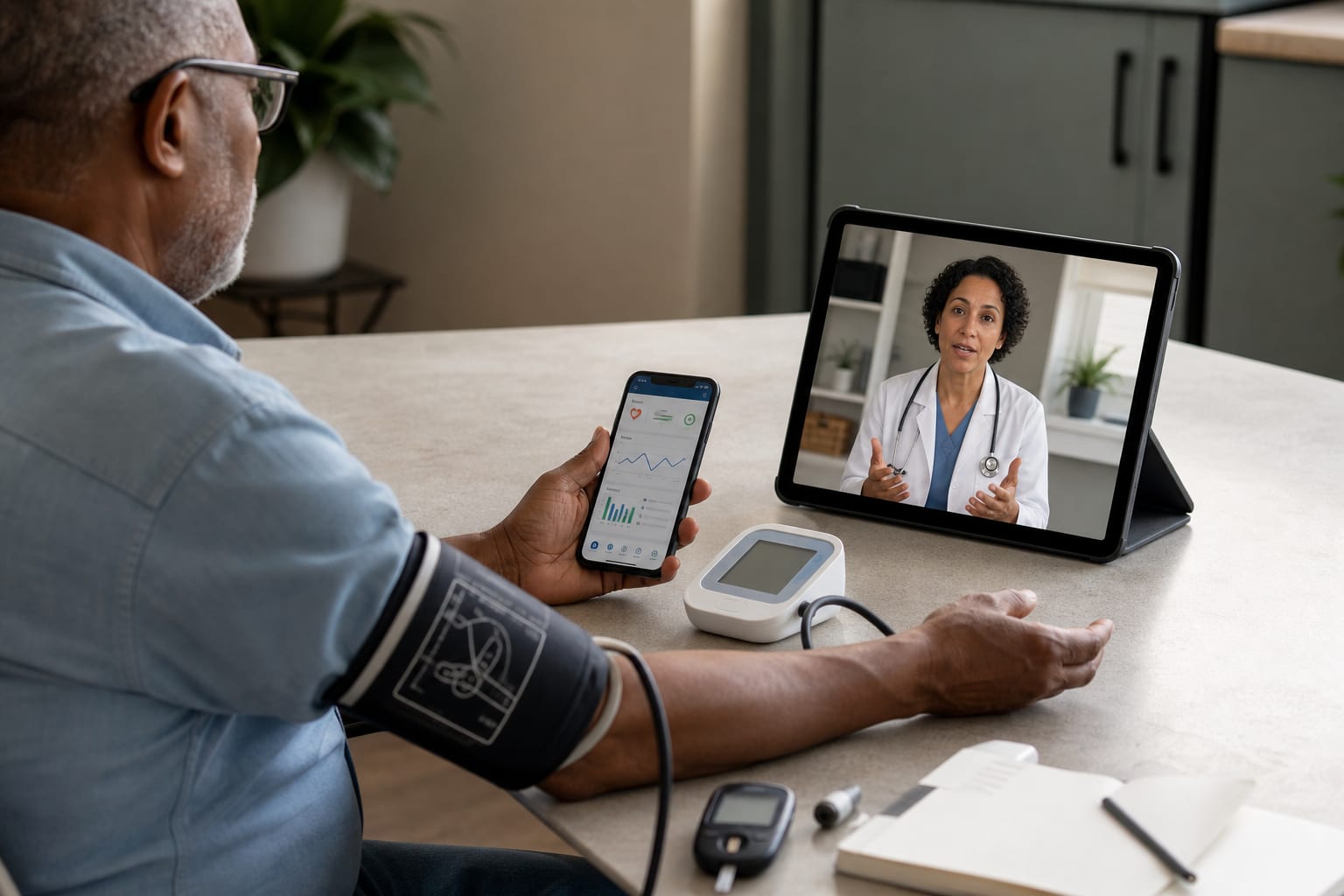
Exploring the impact of digital care delivery for patients with diabetes and hypertension: A longitudinal qualitative study - Report - MDSpire

Exploring the impact of digital care delivery for patients with diabetes and hypertension: A longitudinal qualitative study

  • By

  • Matthew D. Dalstrom

  • Colleen J. Klein

  • Deanna Latino

  • Melinda Cooling

  • May 12, 2026

  • 0 min

Share

Clinical Report: Assessing the Effects of Digital Healthcare Solutions on Diabetes and Hypertension Patients

Overview

This study explores the impact of the OnCall Advanced Care program on patient-reported outcomes for diabetes and hypertension management. It highlights the importance of understanding patient experiences and perceptions in the context of digital health interventions.

Background

Chronic conditions like diabetes and hypertension are increasingly prevalent, particularly among socioeconomically disadvantaged populations. Telehealth has emerged as a potential solution to enhance access to care and improve disease management. However, the effectiveness of these digital health interventions, particularly from the perspective of patients, remains underexplored.

Data Highlights

No numerical data available in the source material.

Key Findings

  • Telehealth programs can improve access to care and clinical outcomes for diabetes and hypertension patients.
  • Patient-reported outcomes (PROs) are crucial for assessing the effectiveness of digital health interventions.
  • Only 48% of randomized trials on digital health interventions for cardiovascular disease included PROs.
  • Socioeconomic factors significantly impact the ability of Medicaid patients to access and benefit from telehealth.
  • Digital literacy and access to technology are critical barriers to the successful implementation of telehealth solutions.

Clinical Implications

Healthcare providers should prioritize the integration of patient-reported outcomes in evaluating digital health interventions. Addressing barriers such as digital literacy and access to technology is essential for optimizing telehealth solutions for chronic disease management.

Conclusion

Understanding patient experiences with digital health interventions is vital for improving chronic disease management. Future research should focus on enhancing access and engagement among socioeconomically disadvantaged populations.

Related Resources & Content

  1. npj Digital Medicine, 2025 -- Network meta analysis of contributions by different healthcare practitioners in digital self care for hypertension
  2. Journal of Medical Internet Research (JMIR), 2026 -- Digital Quality Monitoring for Type 2 Diabetes in Swiss Primary Care: Qualitative Interview Study
  3. npj Digital Medicine, 2026 -- Evaluating the Impact of Digital Health Interventions on Patient-Reported Outcomes in Perioperative Care: A Network Meta-Analysis
  4. DIGITAL HEALTH, 2026 -- Evaluation of a pharmacist-led digital hypertension management program in a tertiary hospital in Singapore
  5. ADA's Standards of Care for 2026 released | ACP Diabetes Monthly
  6. Overview of the 2025 American Heart Association/American College of Cardiology Blood Pressure Guideline: Perspective From Editors at the American Journal of Hypertension
  7. Frontiers | The effectiveness of digital health intervention on glycemic control and physical activity in patients with type 2 diabetes: a systematic review and meta-analysis
  8. ADA's Standards of Care for 2026 released | ACP Diabetes Monthly
  9. Overview of the 2025 American Heart Association/American College of Cardiology Blood Pressure Guideline: Perspective From Editors at the American Journal of Hypertension | American Journal of Hypertension | Oxford Academic
  10. Frontiers | The effectiveness of digital health intervention on glycemic control and physical activity in patients with type 2 diabetes: a systematic review and meta-analysis

Original Source(s)

Related Content