Harmonic analysis of radial pulse in traditional Chinese medicine: physiological alterations associated with hepatitis B and hepatitis C infections - Report - MDSpire
Clinical Report: Harmonic Assessment of Radial Pulse in Hepatitis Infections
Overview
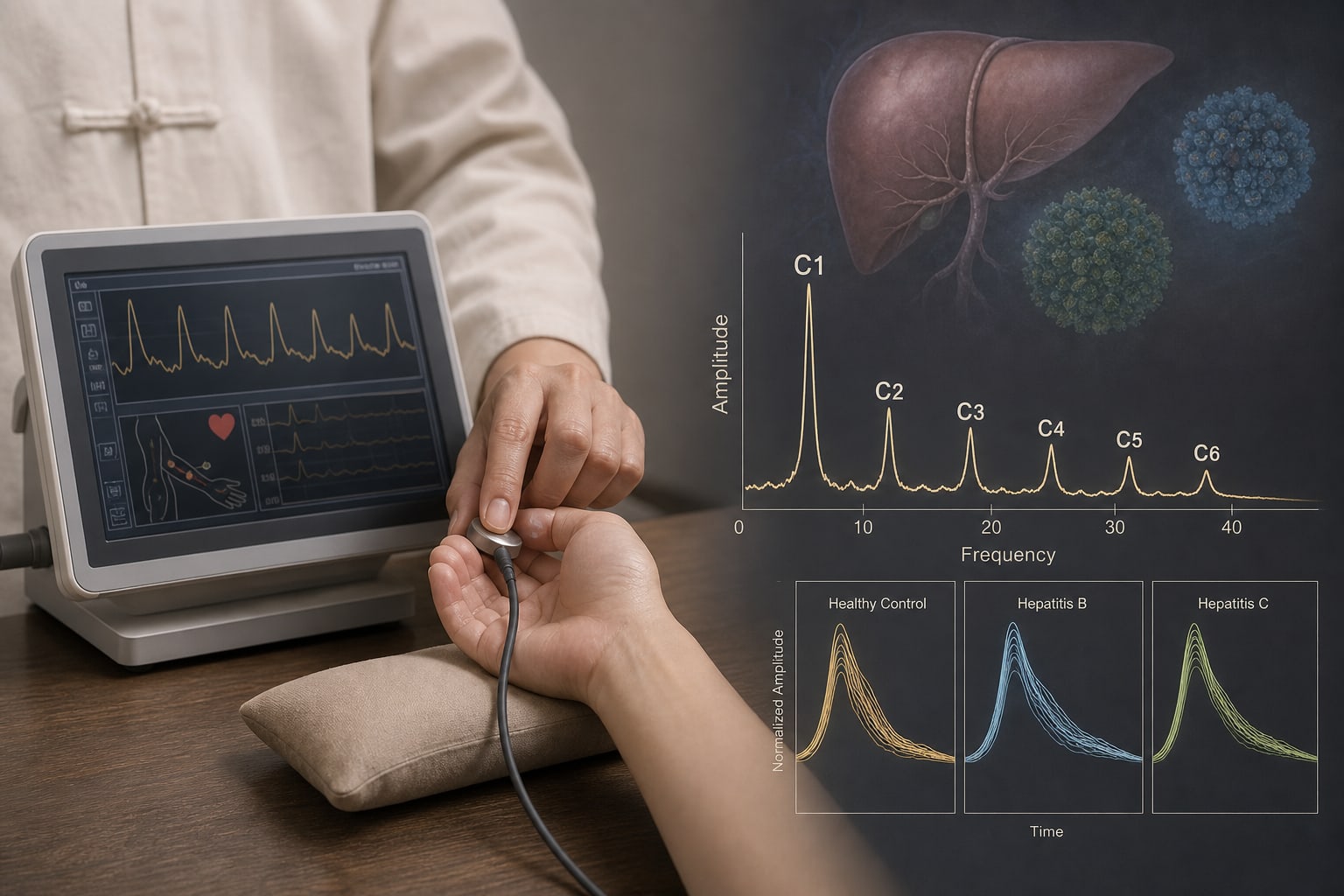
This study explores the relationship between harmonic analysis of radial pulse signals and physiological changes in patients with hepatitis B and C infections.
Background
Hepatitis B and C infections are major global health concerns, leading to severe liver complications. Current diagnostic methods often involve invasive procedures, which can deter patients from seeking screening.
Data Highlights
Group
C1 Value (Mean ± SD)
p-value
HCV
529.09 ± 57.99
0.047
HBV
503.65 ± 64.51
0.481
Healthy Controls
477.78 ± 100.49
Key Findings
The first harmonic component (C1) showed significant differences among healthy controls, HBV, and HCV groups (p = 0.014).
HCV patients had significantly higher C1 values compared to healthy controls (p = 0.047).
No significant difference was found between HBV and HCV groups (p = 0.098).
Exploratory logistic regression indicated an independent association between C1 and HCV infection status (OR = 1.008, p = 0.047).
Clinical Implications
The findings indicate that harmonic analysis of radial pulse may serve as a non-invasive diagnostic tool for assessing physiological changes in patients with hepatitis infections. Further research is necessary to validate these observations and explore their clinical significance.
Conclusion
Alterations in the first harmonic component of radial pulse waveforms may reflect physiological changes in chronic viral hepatitis, particularly in HCV infection.
The goal of this clinical trial is to find out if giving extra adaptive radiation therapy after standard chemoradiation treatment is safe and helpful for people with rectal cancer.
The goal of this clinical trial is to learn if Adaptive Radiation Therapy (ART) is safe and effective in treating patients with locally advanced pancreatic cancer.